












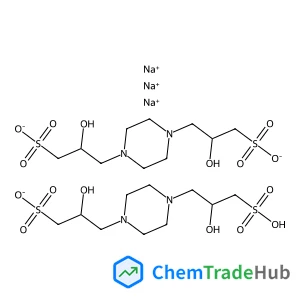
3,3'-(Piperazine-1,4-diyl)bis(2-hydroxypropane-1-sulfonic acid) Sodium Salt
CAS番号:
108321-08-0
分子式:
C20H41N4Na3O16S4
Yuxi Ma, Jason D. Nicholas
This work demonstrates, for the first time, that a variety of disparate and technologically-relevent thermal, mechanical, and electrochemical oxygen-exchange material properties can all be obtained from in situ, current-collector-free wafer curvature measurements. Specifically, temperature or oxygen partial pressure induced changes in the curvature of 230 nm thick (100)-oriented Pr0.1Ce0.9O1.95−x (10PCO) films atop 200 μm thick single crystal yttria stabilized zirconia or magnesium oxide substrates were used to measure the biaxial modulus, Young's modulus, thermal expansion coefficient, thermo-chemical expansion coefficient, oxygen nonstoichiometry, chemical oxygen surface exchange coefficient, oxygen surface exchange resistance, thermal stress, chemical stress, thermal strain, and chemical strain of the model mixed ionic electronic conducting material 10PCO. The (100)-oriented thin film 10PCO thermal expansion coefficient, thermo-chemical expansion coefficient, oxygen nonstoichiometry, and Young's modulus (which is essentially constant, at ∼200 MPa, over the entire 280–700 °C temperature range in air) measured here were similar to those from other bulk and thin film 10PCO studies. In addition, the measured PCO10 oxygen surface coefficients were in agreement with those reported by other in situ, current-collector-free techniques. Taken together, this work highlights the advantages of using a sample's mechanical response, instead of the more traditional electrical response, to probe the electrochemical properties of the ion-exchange materials used in solid oxide fuel cell, solid oxide electrolysis cell, gas-sensing, battery, emission control, water splitting, water purification, and other electrochemically-active devices.
DOI: 10.1039/A809548E
DOI: 10.1039/A903282G
DOI: 10.1039/A900749K
DOI: 10.1039/A902365H
間 brom 苯甲酰腈は、合成化学や薬物化学において重要な Intermediate として使用されています。市場動向としては、その合成性と機能性により、研究開...
CAS番号117324-58-0の塩酸メチル2アミノ-5-トリフルオロメチルベンゼートは、GHS分類により腐食性物質と判定されます。REACH規則では、製造、販...
毒性があるため、適切な安全対策が必須です。皮膚や粘膜への刺激性が強く、吸入や誤飲により健康被害を引き起こす可能性があります。取扱時にはガスマスクや手袋、眼鏡を使...
三氟甲基ピリジン-2-甲アミン塩酸塩は安全性に注意が必要です。毒性は低レベルですが、直接的接触や吸入は避けるべきです。適切な手袋や防塵マスクを着用し、密閉された...
1-エチル-4-(4-硝基フェニル)ピペリジンは有毒であり、取扱には注意が必要です。保管や作業中に手袋を着用し、目や皮膚に接触しないように注意する必要があります...
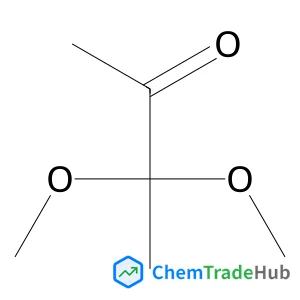
1,1-ジメトキシプロパン-2-オンは一般的に低毒性ですが、皮膚や目への刺激性があるため、取扱いには注意が必要です。蒸気や液体の吸入には有害な可能性があり、適切...
この化合物はCAS番号259259-80-8に対応しています。GHS分類では、毒性、燃焼性、反応性、炎症性を考慮に入れ、適切な危険性分類が行われます。REACH...
この化合物は、冷却庫で-20℃の温度、乾燥した容器に保管し、直日光から保護する必要があります。湿度の高い環境や高温は避けてください。

Physical Chemistry Chemical Physics (PCCP) is an international journal co-owned by 19 physical chemistry and physics societies from around the world. This journal publishes original, cutting-edge research in physical chemistry, chemical physics and biophysical chemistry. To be suitable for publication in PCCP, articles must include significant innovation and/or insight into physical chemistry; this is the most important criterion that reviewers and Editors will judge against when evaluating submissions. The journal has a broad scope and welcomes contributions spanning experiment, theory, computation and data science. Topical coverage includes spectroscopy, dynamics, kinetics, statistical mechanics, thermodynamics, electrochemistry, catalysis, surface science, quantum mechanics, quantum computing and machine learning. Interdisciplinary research areas such as polymers and soft matter, materials, nanoscience, energy, surfaces/interfaces, and biophysical chemistry are welcomed if they demonstrate significant innovation and/or insight into physical chemistry. Joined experimental/theoretical studies are particularly appreciated when complementary and based on up-to-date approaches.
![(1S,4aR,5R,7S,7aS)-1-(beta-D-Glucopyranosyloxy)-5-hydroxy-7-methyl-1,4a,5,6,7,7a-hexahydrocyclopenta[c]pyran-7-yl alpha-D-galactopyranoside structure](https://static.chemtradehub.com/structs/817/81720-07-2-4ffd.webp "(1S,4aR,5R,7S,7aS)-1-(beta-D-Glucopyranosyloxy)-5-hydroxy-7-methyl-1,4a,5,6,7,7a-hexahydrocyclopenta[c]pyran-7-yl alpha-D-galactopyranoside structure")







