


The nature of binding of quinolate complex on the surface of ZnS quantum dots
文献情報
出版日
2018-11-28
DOI
10.1039/C8CP06235H
インパクトファクター
3.676
著者
Shilaj Roy, Satyapriya Bhandari, Mihir Manna, Suranjan De
原文を見る
要旨
We report that the Z-type binding rather than X-type binding was favored when 8-hydroxyquinoline (HQ) reacted with presynthesized ZnS quantum dots (Qdots) to form surface zinc quinolinate complexes having a preferred stoichiometry of 1 : 2 (surface Zn2+ : HQ). Importantly, the higher solubility in polar solvents and high desorption coefficient (following Langmuir binding isotherm) of HQ-treated ZnS Qdot in DMSO solvent compared with those in methanol clearly indicated the favorable Z-type binding of HQ and thus the formation of surface octahedral ZnQ2 complex. Furthermore, the characteristics peaks in the 1H-nuclear magnetic resonance (NMR) spectrum of the desorbed species and the ligand density calculation of the surface complex (formed due to the reaction between HQ and ZnS Qdot) supported the octahedral ZnQ2 complex formation. Interestingly, the presence of dangling sulphide and the loss of planarity of ZnQ2 complex on the surface of ZnS Qdots (in turn gaining structural rigidity) may be the reasons for the Z-type binding of HQ. The specific binding might be the reason for superior optical properties and thermal stability of the surface ZnQ2 complex compared to the free ZnQ2 complex as such. The results can be considered important towards understanding the coordination chemistry of inorganic complex on the surface of Qdots and thus for their application potential.
おすすめジャーナル

Acta Materialia

Drug Discovery Today

Journal of Natural Medicines

Chemical Communications

Russian Journal of General Chemistry

Russian Journal of Coordination Chemistry

Current Opinion in Colloid & Interface Science

Saudi Pharmaceutical Journal

Crystallography Reports

Current Opinion in Solid State & Materials Science
関連文献
Role of electron and hole doping in the NdNi1−xVxO3 nanostructure
Raktima Basu, Reshma Kumawat, Mrinmay Sahu, Abu Bakkar Miah, Partha Mitra, Goutam Dev Mukherjee
2023-11-03
Paper
DOI: 10.1039/D3CP01409F
Correction: Understanding the charge transfer dynamics of the Cu2WS4–CNT–FeOOH ternary composite for photo-electrochemical studies
Preeti Dagar, Nandan Ghorai, Manisha Bungla, Hirendra N. Ghosh
2023-11-27
Correction
DOI: 10.1039/D3CP90230G
Cryogenic fluorescence spectroscopy of oxazine ions isolated in vacuo
Christina Kjær, Emil Vogt, Jeppe Langeland, Nanna Falk Christensen, Thomas Toft Lindkvist, Henrik G. Kjaergaard, Steen Brøndsted Nielsen
2023-11-22
Paper
DOI: 10.1039/D3CP04615J
Computational study of the photophysical properties and electronic structure of iridium(iii) photosensitizer complexes with electron-withdrawing groups
Zhoujie Zhang, Mengping Huang, Na Shu, Hanyu Luo, Qiyan Cao, Bingbing Fan, Yu Han, Yong Wu
2023-11-15
Paper
DOI: 10.1039/D3CP04900K
Styrylpyrimidine chromophores with bulky electron-donating substituents: experimental and theoretical investigation
Maxime Hodée, Julien Massue, Sylvain Achelle, Arnaud Fihey, Gilles Ulrich, Françoise Robin-le Guen, Claudine Katan
2023-11-15
Paper
DOI: 10.1039/D3CP03705C
こちらもおすすめ
化合物よくある質問
6- bromo-1-cyclopropyl-1H-benzimidazoleの市場動向や研究トレンドはどうですか?
6- bromo-1-cyclopropyl-1H-benzimidazoleは、抗炎症、抗ウイルス作用を持つことが報告されており、新薬開発の研究対象として注目...
1416713-53-56-Bromo-1-cyclopropy...
化合物よくある質問
環氧プロpanol-d5を取り扱う際の実験室安全事項は何ですか?
取り扱う際には、防護眼鏡と手袋を使用し、ドラフトチャンバー内で操作することを推奨します。漏洩時には適切な手順で処理し、安全データシートを常に参照してください。
1246819-20-4Glycidol-d5
化合物よくある質問
2,2’-ジメチル-3,3’-ビピリジンはどのように合成されますか?
2,2’-ジメチル-3,3’-ビピリジンは、ピリジンと2-メチルアクリルアミドを有機合成反応で合成します。この反応では、ピリジンと2-メチルアクリルアミドを含有...
86156-55-02,2’-Dimethyl-3,3’-b...
化合物よくある質問
6-甲基ピリジン-2-ボリック酸の主な用途は何ですか?
6-甲基ピリジン-2-ボリック酸は、合成化学、医薬品合成、以及研究用途などに広く使用され、特に組換えDNA技術や分子生物学の研究において重要な役割を果たします。
372963-50-3(6-Methyl-2-pyridiny...
化合物よくある質問
(R)-3-(1-甲基-2-氧環己基)プロpano酸メチルは安全ですか?
(R)-3-(1-甲基-2-氧環己基)プロpano酸メチルは一定の安全性がありますが、直接的な皮膚接触や吸入は避けるべきです。使用する際は適切な個々の安全データ...
94089-47-1methyl 3-[(1R)-1-met...
化合物よくある質問
ketorolacはどのように保存すればよいですか?
ketorolacは、密封して遮光容器に保管し、直射日光や高温を避けて保存してください。温度は常温で保存し、湿度をなるべく低く保つことが推奨されます。
74103-06-3rac Ketorolac
化合物よくある質問
L-2,3-二氨基丙酸二盐酸盐を取り扱う際の実験室安全事項は何ですか?
L-2,3-二氨基丙酸二盐酸盐は腐食性が強く、皮膚や粘膜に刺激を与える可能性があります。取り扱う際は、防塵マスク、ゴーグル、手袋を使用し、適切な排気設備を使用し...
19777-68-5(S)-2,3-Diaminopropa...
化合物よくある質問
2-(4-溴ピリジン-2-基)乙腈の物理化学的性質は何ですか?
2-(4-溴ピリジン-2-基)乙腈のCAS番号は312325-73-8です。主に結晶形態で存在し、分子量は159.01 g/molです。この化合物は水に溶けやす...
312325-73-8(4-Bromo-2-pyridinyl...
化合物よくある質問
3-フローロ-[1,1-ベンジレン]-3,4-ジカルボン酸を取り扱う際の実験室安全事項は何ですか?
この化合物は毒性は低いですが、直接的な接触や吸入に注意が必要です。PPE(個人防護具)を着用し、ドラフトチャンバーを使用して操作することを推奨します。また、漏洩...
1261915-32-53'-Fluoro-[1,1'-biph...
化合物よくある質問
3-(1-氧代-1,3-二氢-2H-2-异吲哚)丙酸の主な用途は何ですか?
3-(1-氧代-1,3-二氢-2H-2-异吲哚)丙酸は、薬理学研究や医薬品製造において広く用いられる化合物です。また、工業的な用途でも一部の化学反応の触媒や助剤...
83747-30-23-(1-Oxo-1,3-dihydro...
掲載誌
Physical Chemistry Chemical Physics

CiteScore:
5.5
自己引用率:
10.3%
年間論文数:
3036
Physical Chemistry Chemical Physics (PCCP) is an international journal co-owned by 19 physical chemistry and physics societies from around the world. This journal publishes original, cutting-edge research in physical chemistry, chemical physics and biophysical chemistry. To be suitable for publication in PCCP, articles must include significant innovation and/or insight into physical chemistry; this is the most important criterion that reviewers and Editors will judge against when evaluating submissions. The journal has a broad scope and welcomes contributions spanning experiment, theory, computation and data science. Topical coverage includes spectroscopy, dynamics, kinetics, statistical mechanics, thermodynamics, electrochemistry, catalysis, surface science, quantum mechanics, quantum computing and machine learning. Interdisciplinary research areas such as polymers and soft matter, materials, nanoscience, energy, surfaces/interfaces, and biophysical chemistry are welcomed if they demonstrate significant innovation and/or insight into physical chemistry. Joined experimental/theoretical studies are particularly appreciated when complementary and based on up-to-date approaches.
おすすめ化合物
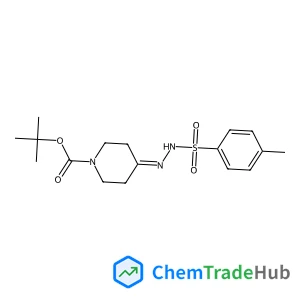
tert-Butyl 4-(2-(p-Tolylsulfonyl)hydrazono)piperidine-1-carboxylate
CAS番号:
1046478-89-0
分子式:
C17H25N3O4S
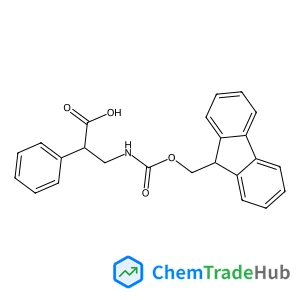
(S)-3-((((9H-Fluoren-9-yl)methoxy)carbonyl)amino)-2-phenylpropanoic acid
CAS番号:
1217663-60-9
分子式:
C24H21NO4
おすすめサプライヤー




免責事項
このページに表示される学術雑誌情報は、参考および研究目的のみを目的としています。当社は雑誌出版社とは提携しておらず、投稿の取り扱いも行っておりません。出版に関するお問い合わせは、各雑誌出版社に直接ご連絡ください。
表示されている情報に誤りがある場合は、support@chemtradehub.com までご連絡ください。迅速に確認し、対応いたします。