











Tuning polaronic redox behavior in olivine phosphate
文献情報
出版日
2019-01-31
DOI
10.1039/C8CP06083E
インパクトファクター
3.676
著者
Yue Gu, Mouyi Weng, Gaofeng Teng, Hua Zeng, Jianshu Jie, Weiji Xiao, Jiaxin Zheng, Feng Pan
原文を見る
要旨
In order to understand and improve the conductivity of LiFePO4, lots of attempts have been made both experimentally and theoretically. Here we performed hybrid density functional theory calculations to systematically investigate the electronic structures with polaronic redox behavior of polyanionic intercalation compounds similar to LiFePO4, such as in XMPO4 (X = Li, Na; M = Mn, Fe, Co, Ni). It is proved that the replacement of Li ions does not eliminate the polaronic redox behavior of Fe ions during delithiation and hence does not lead to a significant improvement in electronic conductivity. By contrast, replacing Fe with Mn, Co or Ni can tune the polaronic redox behavior during delithiation by varying degrees. For Ni, the polaronic redox behavior has almost disappeared, and band gaps disappear during delithiation, indicating a better electronic conductivity. For Mn or Co, the polaronic redox behavior is still obvious with little improvement in the electronic conductivity. This study provides important clues to improve the electronic conductivity of LiFePO4-like cathode materials.
関連文献
Strain induced reactivity of cyclic iminoboranes: the (2 + 2) cycloaddition of a 1H-1,3,2-diazaborepine with ethene
Divanshu Gupta, Ralf Einholz, Holger F. Bettinger
2023-12-12
Edge Article
DOI: 10.1039/D3SC04901A
A library of vinyl phosphonate anions dimerize with cyanostars, form supramolecular polymers and undergo statistical sorting
Yusheng Chen, Anastasia Kuvayskaya, Maren Pink, Amar H. Flood
2023-11-29
Edge Article
DOI: 10.1039/D3SC03685E
Metal selectivity and translocation mechanism characterization in proteoliposomes of the transmembrane NiCoT transporter NixA from Helicobacter pylori
Jayoh A. Hernandez, Paul S. Micus, Sean Alec Lois Sunga, Luca Mazzei, Stefano Ciurli, Gabriele Meloni
2023-11-29
Edge Article
DOI: 10.1039/D3SC05135H
Triplet dynamic nuclear polarization of pyruvate via supramolecular chemistry
Tomoyuki Hamachi, Koki Nishimura, Keita Sakamoto, Yusuke Kawashima, Hironori Kouno, Shunsuke Sato
2023-11-21
Edge Article
DOI: 10.1039/D3SC04123A
Photoredox-catalyzed stereo- and regioselective vicinal fluorosulfonyl-borylation of unsaturated hydrocarbons
Heyin Li, Mengjun Huang, Zhenlei Zou, Zhen Wang, Yifan Li, Chao Sun, Wangzhe Chen, Yi Pan, Weigang Zhang, Yi Wang
2023-11-13
Edge Article
DOI: 10.1039/D3SC03101B
Organic metal chalcogenide-assisted metabolic molecular diagnosis of central precocious puberty
Dan Ouyang, Chuanzhe Wang, Chao Zhong, Juan Lin, Gang Xu, Guane Wang, Zian Lin
2023-11-27
Edge Article
DOI: 10.1039/D3SC05633C
From non-conductive MOF to proton-conducting metal-HOFs: a new class of reversible transformations induced by solvent-free mechanochemistry
Marcin Oszajca, Dariusz Matoga
2023-11-27
Edge Article
DOI: 10.1039/D3SC04401G
こちらもおすすめ
化合物よくある質問
2-ブロモ-9,9-ジフェニル-9H-フルオレンの主な用途は何ですか?
2-溴-9,9-二苯基芴は、医薬品、工業材料、有機合成の研究分野で応用されます。特に、レーザー材料や機能性ポリマーの合成に使用されることがあります。また、蛍光色...
474918-32-62-Bromo-9,9-diphenyl...
化合物よくある質問
四氯化铱の市場動向や研究トレンドはどうですか?
四氯化铱の市場は研究開発分野で注目されており、特にナノ技術や金属有機框架(MOFs)の分野での需要が増加傾向にあります。価格は安定しており、中国や韓国での生産が...
207399-11-9Tetrachloroiridium h...
882-06-44-Nitrocinnamic acid
化合物よくある質問
1-(4-溴-3-氟苯基)-2-氯乙酮を含む廃棄物はどのように処理すべきですか?
1-(4-溴-3-氟苯基)-2-氯乙酮 (CAS番号: 1260857-14-4) の廃棄物は専門的な廃棄処理が必要です。まず、廃棄物は密閉された容器に収集し、...
1260857-14-41-(4-Bromo-3-fluorop...
化合物よくある質問
苦参酚Kとは何ですか?
苦参酚Kは、CAS番号101236-49-1を持つ化合物で、主に天然由来の生薬から抽出されます。この化合物は、抗炎症作用や抗癌作用を持つことが報告されています。
101236-49-1Kushenol K
化合物よくある質問
POTASSIUM (1-(TERTBUTOXYCARBONYL)AZETIDIN-3-YL)TRIFLUOROBORATE を含む廃棄物はどのように処理すべきですか?
POTASSIUM (1-(TERTBUTOXYCARBONYL)AZETIDIN-3-YL)TRIFLUOROBORATE を含む廃棄物は、まず安全なエント...
1430219-73-0Potassium (1-(tert-b...
化合物よくある質問
4-庚基-4’-联苯羧酸の市場動向や研究トレンドはどうですか?
4-庚基-4’-聯苯羧酸は、特殊化学品や合成化学の分野で用いられる化学物質ですが、市場動向としては、研究開発の進展とともに需要が増加しています。また、環境配慮型...
58573-94-74'-Heptyl-4-biphenyl...
化合物よくある質問
6-ブロモ-3-メトキシ-1-フェニル-1H-インドゾールを含む廃棄物はどのように処理すべきですか?
6-ブロモ-3-メトキシ-1-フェニル-1H-インドゾールを含む廃棄物は、適切な化学廃棄処理が必要です。通常、廃棄物は密閉容器に収集され、専門の廃棄処理業者に引...
1332527-03-36-Bromo-3-methoxy-1-...
化合物よくある質問
4,4-二甲基-2-吡咯烷酮はどの業界で使用されていますか?
4,4-二甲基-2-吡咯烷酮は医薬、ポリマー、センサー、半導体などの業界で広く使用されています。特に溶媒としての性能が高く評価されています。
66899-02-34,4-dimethylpyrrolid...
51312-42-6Sodium Phosphotungst...
掲載誌
Physical Chemistry Chemical Physics

CiteScore:
5.5
自己引用率:
10.3%
年間論文数:
3036
Physical Chemistry Chemical Physics (PCCP) is an international journal co-owned by 19 physical chemistry and physics societies from around the world. This journal publishes original, cutting-edge research in physical chemistry, chemical physics and biophysical chemistry. To be suitable for publication in PCCP, articles must include significant innovation and/or insight into physical chemistry; this is the most important criterion that reviewers and Editors will judge against when evaluating submissions. The journal has a broad scope and welcomes contributions spanning experiment, theory, computation and data science. Topical coverage includes spectroscopy, dynamics, kinetics, statistical mechanics, thermodynamics, electrochemistry, catalysis, surface science, quantum mechanics, quantum computing and machine learning. Interdisciplinary research areas such as polymers and soft matter, materials, nanoscience, energy, surfaces/interfaces, and biophysical chemistry are welcomed if they demonstrate significant innovation and/or insight into physical chemistry. Joined experimental/theoretical studies are particularly appreciated when complementary and based on up-to-date approaches.
おすすめ化合物
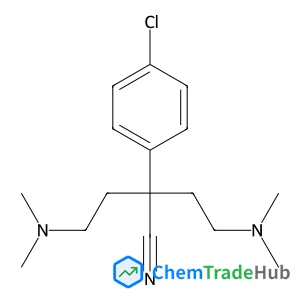
2-(4-Chlorophenyl)-4-(dimethylamino)-2-(2-(dimethylamino)ethyl)butanenitrile
CAS番号:
1246816-57-8
分子式:
C16H24ClN3
おすすめサプライヤー




免責事項
このページに表示される学術雑誌情報は、参考および研究目的のみを目的としています。当社は雑誌出版社とは提携しておらず、投稿の取り扱いも行っておりません。出版に関するお問い合わせは、各雑誌出版社に直接ご連絡ください。
表示されている情報に誤りがある場合は、support@chemtradehub.com までご連絡ください。迅速に確認し、対応いたします。