


Novel isochoric measurement of the onset of vapor–liquid phase transition using differential scanning calorimetry
文献情報
出版日
2018-10-01
DOI
10.1039/C8CP05613G
インパクトファクター
3.676
著者
Xingdong Qiu, Sugata P. Tan, Morteza Dejam, Hertanto Adidharma
原文を見る
要旨
A novel method for measuring the onset of vapor–liquid phase transition applying an isochoric procedure in a high-pressure micro differential scanning calorimeter is introduced for the first time. Isochoric dew-point measurement is used to measure vapor pressures of CO2 at different boiling temperatures and dew points of a methane/ethane gas mixture at different pressures or temperatures. The isochoric two-phase bubble-point measurement, similar to the isobaric method, is also demonstrated to measure vapor pressures of methanol at different boiling temperatures. All results are in agreement with the literature data. The isochoric method is found to be superior to the widely used isobaric method. It can be used to measure the onset of vapor–liquid phase transition for a wide range of substances and mixtures, including the ones for which the isobaric method is inapplicable, and it eliminates difficulties usually encountered in the isobaric method. The proposed method along with the findings of this study can pave the way for experimental measurements of phase equilibria in more complex systems.
おすすめジャーナル

Current Pharmaceutical Biotechnology

European Journal of Organic Chemistry

Journal of Enzyme inhibition and Medicinal Chemistry

Angewandte Chemie International Edition

Green Chemistry

Physical Chemistry Chemical Physics

Coloration Technology

Photochemical & Photobiological Sciences

Molecules

Foundations of Chemistry
関連文献
A down-scaled fluorimetric determination of the solubility properties of drugs to minimize waste generation
Víctor González-Ruiz, Ana I. Olives, M. Antonia Martín
2013-07-16
Paper
DOI: 10.1039/C3GC40974K
GAP chemistry for pyrrolyl coumarin derivatives: a highly efficient one-pot synthesis under catalyst-free conditions
Xuecheng Liu, Xian Feng, Zhibin Huang, Daqing Shi
2013-09-25
Communication
DOI: 10.1039/C3GC41799A
Ru-based magnetic nanoparticles (MNP) for succinic acid synthesis from levulinic acid
Iunia Podolean, Victor Kuncser, Nicoleta Gheorghe, Dan Macovei, Vasile I. Parvulescu, Simona M. Coman
2013-08-14
Paper
DOI: 10.1039/C3GC41120F
Shape-controlled synthesis of Ag@TiO2 cage-bell hybrid structure with enhanced photocatalytic activity and superior lithium storage
Wei Wang, Lixiang Liu, Yunbo He, Cuiping Li, Yapeng Wang
2013-08-14
Paper
DOI: 10.1039/C3GC41280F
Life cycle assessment of surfactants: the case of an alkyl polyglucoside used as a self emulsifier in cosmetics
Jérôme Guilbot, Sébastien Kerverdo, Alain Milius, Rémi Escola, Fredrik Pomrehn
2013-10-04
Paper
DOI: 10.1039/C3GC41338A
Tandem ionic liquid antimicrobial toxicity and asymmetric catalysis study: carbonyl-ene reactions with trifluoropyruvate
Rohitkumar G. Gore, Thi-Kim-Thu Truong, Milan Pour, Lauren Myles, Stephen J. Connon, Nicholas Gathergood
2013-08-13
Paper
DOI: 10.1039/C3GC40875B
Development of a robust reagent for the two-carbon homologation of aldehydes to (E)-α,β-unsaturated aldehydes in water
James McNulty, Carlos Zepeda-Velázquez, David McLeod
2013-09-09
Communication
DOI: 10.1039/C3GC41383G
Direct, one-pot synthesis of POCOP-type pincer complexes from metallic nickel
Boris Vabre, Fabien Lindeperg, Davit Zargarian
2013-07-22
Paper
DOI: 10.1039/C3GC40968F
こちらもおすすめ
化合物よくある質問
2-ヒドロキシ-5-ニトロベンジンブロモイドの代替品はありますか?
2-ヒドロキシ-5-ニトロベンジンブロモイドは特定の化学反応に適しているため、代替品は限られています。しかし、同様の構造を持つ2-ヒドロキシ-4-ニトロベンジン...
772-33-82-(Bromomethyl)-4-ni...
化合物よくある質問
N-(2-ブロモフェニル)-1-チロール-3-オキソ-3-(ピペリジニル)プロペン-2-イル)ベンゼンアミドを取り扱う際の実験室安全事項は何ですか?
N-(2-ブロモフェニル)-1-チロール-3-オキソ-3-(ピペリジニル)プロペン-2-イル)ベンゼンアミドは有毒で、皮膚や粘膜に刺激を与える可能性があります。...
1800044-77-2N-[(1Z)-1-(2-Bromoph...
化合物よくある質問
1,3プロパンジオール,2-[2-(2アミノ-6クロロ-9Hピリミジン-9-イル)エチル-1,1,2,2-D4]-2,3-ジアセタートの市場動向や研究トレンドはどうですか?
この化合物は、新規治療薬の開発に注目されています。市場では、その有効性と安全性が評価され、研究分野では、分子生物学と医薬化学の新たな発見が期待されています。
1020718-81-31,3-Propanediol, 2-[...
579-44-2Ethanone, 2-hydroxy-...
化合物よくある質問
Succinimidyl-alanyl-phenylalanyl-prolyl-phenylalanine 4-nitroanilide はどの業界で使用されていますか?
Succinimidyl-alanyl-phenylalanyl-prolyl-phenylalanine 4-nitroanilide は主に医薬品開発やポ...
128802-73-3succinimidyl-alanyl-...
化合物よくある質問
メチル6-アミノ-5-クロロピリジン-2-カーボイル酸について、適用される法規ガイドラインは何ですか?
メチル6-アミノ-5-クロロピリジン-2-カーボイル酸(CAS番号: 1256794-05-4)の使用には、GHS( Globally Harmonized S...
1256794-05-4Methyl 6-amino-5-chl...
化合物よくある質問
エチル4-(シクロ Pentagonyl)アミノ-2-メチル硫化基ピリミジン-5-カルボキシレートを取り扱う際の実験室安全事項は何ですか?
取り扱いには、耐薬品性の容器を使用し、通気性の良い場所で操作することを推奨します。漏れ時は、SDS(安全データシート)を参照して適切な措置を取ること。手洗いと洗...
211245-62-4ethyl 4-(cyclopentyl...
化合物よくある質問
(S)-3-ベンZYルピペリジン塩酸塩とは何ですか?
(S)-3-ベンZYルピペリジン塩酸塩は、CAS番号1258940-00-9で表される化合物です。これは、(S)-3-苯基哌啶的盐酸盐であり、主に医薬品の原料と...
1258940-00-9(S)-3-Phenylpiperidi...
化合物よくある質問
3,5-二甲基金剛胺の主な用途は何ですか?
3,5-二甲基金剛胺は、主に医薬品の原料として使用され、また抗うつ薬や抗アルツハイマー薬の開発に利用されます。さらに、化粧品や食品添加物の製造でも重要な役割を果...
19988-45-52-(2,3-Dihydroxyphen...
化合物よくある質問
ビス(4-メチル-2-ペンチル)フェニルカルボン酸エステルの代替品はありますか?
ビス(4-メチル-2-ペンチル)フェニルカルボン酸エステル (CAS番号: 1398066-13-1) の代替品には、ビス(2-エチルヘキシル)フェノールカルボ...
1398066-13-1Bis(4-methyl-2-penty...
掲載誌
Physical Chemistry Chemical Physics
CiteScore:
5.5
自己引用率:
10.3%
年間論文数:
3036
Physical Chemistry Chemical Physics (PCCP) is an international journal co-owned by 19 physical chemistry and physics societies from around the world. This journal publishes original, cutting-edge research in physical chemistry, chemical physics and biophysical chemistry. To be suitable for publication in PCCP, articles must include significant innovation and/or insight into physical chemistry; this is the most important criterion that reviewers and Editors will judge against when evaluating submissions. The journal has a broad scope and welcomes contributions spanning experiment, theory, computation and data science. Topical coverage includes spectroscopy, dynamics, kinetics, statistical mechanics, thermodynamics, electrochemistry, catalysis, surface science, quantum mechanics, quantum computing and machine learning. Interdisciplinary research areas such as polymers and soft matter, materials, nanoscience, energy, surfaces/interfaces, and biophysical chemistry are welcomed if they demonstrate significant innovation and/or insight into physical chemistry. Joined experimental/theoretical studies are particularly appreciated when complementary and based on up-to-date approaches.
おすすめ化合物
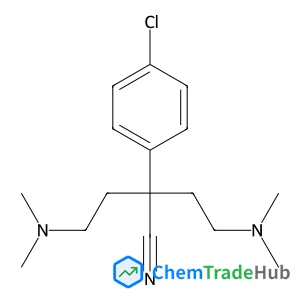
2-(4-Chlorophenyl)-4-(dimethylamino)-2-(2-(dimethylamino)ethyl)butanenitrile
CAS番号:
1246816-57-8
分子式:
C16H24ClN3

おすすめサプライヤー


免責事項
このページに表示される学術雑誌情報は、参考および研究目的のみを目的としています。当社は雑誌出版社とは提携しておらず、投稿の取り扱いも行っておりません。出版に関するお問い合わせは、各雑誌出版社に直接ご連絡ください。
表示されている情報に誤りがある場合は、support@chemtradehub.com までご連絡ください。迅速に確認し、対応いたします。