












Magnetic studies of layer-by-layer assembled polyvinyl alcohol/iron oxide nanofilms
文献情報
出版日
2018-09-28
DOI
10.1039/C8CP05404E
インパクトファクター
3.676
著者
Ewa Mosiniewicz-Szablewska, Antonia R. Clavijo, Ana P. O. R. Castilho, Leonardo G. Paterno, Jarosław Więckowski, Maria A. G. Soler
原文を見る
要旨
This study reports on investigation of the magnetic properties of layer-by-layer (LbL) assembled nanofilms comprising polyvinyl alcohol (PVA) and citrate-coated magnetite (cit-MAG) nanoparticles deposited onto silicon (SF sample) and glass (GF sample) substrates. DC magnetization measurements were performed over the temperature range of 4 K to 300 K, in the applied magnetic field range of ±60 kOe. The magnetic data of the as-synthesized cit-MAG nanoparticles (F sample) are also collected for comparison. The three as-fabricated samples reveal perfect superparamagnetic (SPM) behavior only around room temperature; at temperatures lower than 200 K the SPM scaling is not observed and all samples behave as interacting superparamagnetic (ISPM) materials. The evolution from the ISPM to the SPM regime is marked by a steady decrease in the hysteretic properties of all samples, with the temperature-dependence of the coercivity decreasing slower than the T1/2 behavior predicted for non-interacting superparamagnetic particles. The modified Bloch's law used to assess information on nanoparticles’ surface spins gives the Bloch's exponent close to 2 (for the F and SF samples) and close to 1 (for the GF sample). Interestingly, the surface spin freezing temperature (Tf) is 8 ± 1 K for all samples. The magnetic behavior of all three samples can be described within the model picture of a core–shell structure for the cit-MAG nanoparticles; the core comprising magnetically-ordered spins whereas the shell behaving as a spin-glass-like system. However, the contribution of the shell magnetism to the effective magnetic properties is much more evident in the GF sample in which magnetic dipole–dipole interaction is three-times weaker than in the SF sample and two times weaker than in the F sample. In contrast, the strong magnetic dipole–dipole interaction in the SF sample affects the surface spins, hindering the onset of magnetically-ordered regions in the nanoparticle's shell, making the surface magnetism contribution negligible. The LbL-fabricated nanofilms herein reported and the presented analysis of their magnetic properties we envisage can support the engineering of magnetic nanofilms for multiple applications.
おすすめジャーナル
関連文献
Indented Cu2MoS4 nanosheets with enhanced electrocatalytic and photocatalytic activities realized through edge engineering
Bang-Bao Chen, De-Kun Ma, Qing-Ping Ke, Wei Chen, Shao-Ming Huang
2016-02-08
Paper
DOI: 10.1039/C5CP07900D
Selective adsorption of arsenate and the reversible structure transformation of the mesoporous metal–organic framework MIL-100(Fe)
Li Jiang, Chunru Wang
2016-04-01
Communication
DOI: 10.1039/C6CP00249H
Linkage-specific conformational ensembles of non-canonical polyubiquitin chains
Carlos A. Castañeda, Apurva Chaturvedi, Christina M. Camara, Joseph E. Curtis, Susan Krueger, David Fushman
2015-09-21
Paper
DOI: 10.1039/C5CP04601G
Effect of the alkaline cation size on the conductivity in gel polymer electrolytes and their influence on photo electrochemical solar cells
M. Furlani, I. Albinsson, J. L. Ratnasekera, B.-E. Mellander
2016-03-16
Paper
DOI: 10.1039/C6CP00013D
Self-assembled nanoparticle patterns on carbon nanowall surfaces
N. V. Suetin, S. A. Evlashin, A. V. Egorov, K. V. Mironovich, S. A. Dagesyan, L. V. Yashina, E. A. Goodilin, V. A. Krivchenko
2016-03-31
Paper
DOI: 10.1039/C6CP01638C
Dynamic and static behavior of the H⋯π and E⋯π interactions in EH2 adducts of benzene π-system (E = O, S, Se and Te), elucidated by QTAIM dual functional analysis
Satoko Hayashi, Yuji Sugibayashi, Waro Nakanishi
2016-01-05
Paper
DOI: 10.1039/C5CP06062A
Theoretical predictions of structures in dispersions containing charged colloidal particles and non-adsorbing polymers
Fei Xie, Martin Turesson, Clifford E. Woodward, Kitty van Gruijthuijsen, Anna Stradner, Jan Forsman
2016-03-30
Paper
DOI: 10.1039/C5CP07814H
Robust half-metallic ferromagnetism and curvature dependent magnetic coupling in fluorinated boron nitride nanotubes
Chunsheng Guo, Yu Zhou, Xin-Qiang Shi, Li-Yong Gan, Hong Jiang
2016-04-04
Paper
DOI: 10.1039/C6CP01477A
Charge carrier dynamics of methylammonium lead iodide: from PbI2-rich to low-dimensional broadly emitting perovskites
Johannes R. Klein, Oliver Flender, Mirko Scholz, Kawon Oum, Thomas Lenzer
2016-03-14
Paper
DOI: 10.1039/C5CP07167D
こちらもおすすめ
化合物よくある質問
2-ヒドロキシ-5-ニトロベンジンブロモイドの代替品はありますか?
2-ヒドロキシ-5-ニトロベンジンブロモイドは特定の化学反応に適しているため、代替品は限られています。しかし、同様の構造を持つ2-ヒドロキシ-4-ニトロベンジン...
772-33-82-(Bromomethyl)-4-ni...
化合物よくある質問
N-(2-ブロモフェニル)-1-チロール-3-オキソ-3-(ピペリジニル)プロペン-2-イル)ベンゼンアミドを取り扱う際の実験室安全事項は何ですか?
N-(2-ブロモフェニル)-1-チロール-3-オキソ-3-(ピペリジニル)プロペン-2-イル)ベンゼンアミドは有毒で、皮膚や粘膜に刺激を与える可能性があります。...
1800044-77-2N-[(1Z)-1-(2-Bromoph...
化合物よくある質問
1,3プロパンジオール,2-[2-(2アミノ-6クロロ-9Hピリミジン-9-イル)エチル-1,1,2,2-D4]-2,3-ジアセタートの市場動向や研究トレンドはどうですか?
この化合物は、新規治療薬の開発に注目されています。市場では、その有効性と安全性が評価され、研究分野では、分子生物学と医薬化学の新たな発見が期待されています。
1020718-81-31,3-Propanediol, 2-[...
579-44-2Ethanone, 2-hydroxy-...
化合物よくある質問
Succinimidyl-alanyl-phenylalanyl-prolyl-phenylalanine 4-nitroanilide はどの業界で使用されていますか?
Succinimidyl-alanyl-phenylalanyl-prolyl-phenylalanine 4-nitroanilide は主に医薬品開発やポ...
128802-73-3succinimidyl-alanyl-...
化合物よくある質問
メチル6-アミノ-5-クロロピリジン-2-カーボイル酸について、適用される法規ガイドラインは何ですか?
メチル6-アミノ-5-クロロピリジン-2-カーボイル酸(CAS番号: 1256794-05-4)の使用には、GHS( Globally Harmonized S...
1256794-05-4Methyl 6-amino-5-chl...
化合物よくある質問
エチル4-(シクロ Pentagonyl)アミノ-2-メチル硫化基ピリミジン-5-カルボキシレートを取り扱う際の実験室安全事項は何ですか?
取り扱いには、耐薬品性の容器を使用し、通気性の良い場所で操作することを推奨します。漏れ時は、SDS(安全データシート)を参照して適切な措置を取ること。手洗いと洗...
211245-62-4ethyl 4-(cyclopentyl...
化合物よくある質問
(S)-3-ベンZYルピペリジン塩酸塩とは何ですか?
(S)-3-ベンZYルピペリジン塩酸塩は、CAS番号1258940-00-9で表される化合物です。これは、(S)-3-苯基哌啶的盐酸盐であり、主に医薬品の原料と...
1258940-00-9(S)-3-Phenylpiperidi...
化合物よくある質問
3,5-二甲基金剛胺の主な用途は何ですか?
3,5-二甲基金剛胺は、主に医薬品の原料として使用され、また抗うつ薬や抗アルツハイマー薬の開発に利用されます。さらに、化粧品や食品添加物の製造でも重要な役割を果...
19988-45-52-(2,3-Dihydroxyphen...
化合物よくある質問
ビス(4-メチル-2-ペンチル)フェニルカルボン酸エステルの代替品はありますか?
ビス(4-メチル-2-ペンチル)フェニルカルボン酸エステル (CAS番号: 1398066-13-1) の代替品には、ビス(2-エチルヘキシル)フェノールカルボ...
1398066-13-1Bis(4-methyl-2-penty...
掲載誌
Physical Chemistry Chemical Physics

CiteScore:
5.5
自己引用率:
10.3%
年間論文数:
3036
Physical Chemistry Chemical Physics (PCCP) is an international journal co-owned by 19 physical chemistry and physics societies from around the world. This journal publishes original, cutting-edge research in physical chemistry, chemical physics and biophysical chemistry. To be suitable for publication in PCCP, articles must include significant innovation and/or insight into physical chemistry; this is the most important criterion that reviewers and Editors will judge against when evaluating submissions. The journal has a broad scope and welcomes contributions spanning experiment, theory, computation and data science. Topical coverage includes spectroscopy, dynamics, kinetics, statistical mechanics, thermodynamics, electrochemistry, catalysis, surface science, quantum mechanics, quantum computing and machine learning. Interdisciplinary research areas such as polymers and soft matter, materials, nanoscience, energy, surfaces/interfaces, and biophysical chemistry are welcomed if they demonstrate significant innovation and/or insight into physical chemistry. Joined experimental/theoretical studies are particularly appreciated when complementary and based on up-to-date approaches.
おすすめ化合物
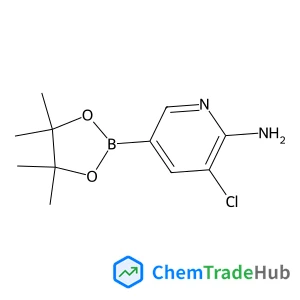
3-Chloro-5-(4,4,5,5-tetramethyl-1,3,2-dioxaborolan-2-yl)-2-pyridinamine
CAS番号:
1032758-99-8
分子式:
C11H16BClN2O2
おすすめサプライヤー







免責事項
このページに表示される学術雑誌情報は、参考および研究目的のみを目的としています。当社は雑誌出版社とは提携しておらず、投稿の取り扱いも行っておりません。出版に関するお問い合わせは、各雑誌出版社に直接ご連絡ください。
表示されている情報に誤りがある場合は、support@chemtradehub.com までご連絡ください。迅速に確認し、対応いたします。