











![6-Benzyl-4,5,6,7-tetrahydro-1H-pyrazolo[3,4-c]pyridin-3(2H)-one structure](https://static.chemtradehub.com/structs/909/909187-64-0-f54f.webp "6-Benzyl-4,5,6,7-tetrahydro-1H-pyrazolo[3,4-c]pyridin-3(2H)-one structure")
Temperature-dependent crystalline structure and phase transition of poly(butylene adipate) end-functionalized by multiple hydrogen-bonding groups
文献情報
出版日
2018-09-19
DOI
10.1039/C8CP05066J
インパクトファクター
3.676
著者
Jianna Bao, Huabo Fan, Xiaojia Xue, Qing Xie, Pengju Pan
原文を見る
要旨
Because of the different crystallization behaviors of semicrystalline supramolecular polymers (SMPs) from conventional polymers, investigation on the unique crystallization kinetics and crystalline structures of SMPs is of fundamental importance to tune their physical properties and functions in processing. Herein, we chose the multiple hydrogen-bonding 2-ureido-4[1H]-pyrimidinone (UPy) group as the supramolecular unit and poly(butylene adipate) (PBA) as the polymorphic polymer block, and synthesized UPy-functionalized PBAs (i.e., UPy-bonded supramolecular PBAs). The crystallization kinetics, polymorphic crystalline structure, phase transition, and lamellar morphology of the UPy-functionalized PBAs were investigated and compared with those of the pristine PBA. UPy end functionalization suppressed the crystallization rate and crystallinity of the linked PBA chains. Compared to the pristine PBA, the UPy-functionalized PBAs preferred to form the thermally-stable α crystals at the same temperature; this was more obvious for the samples with a high content of the UPy end group. The facilitated formation of α crystals in the UPy-functionalized PBAs was attributed to the decreased equilibrium melting temperature. UPy end functionalization also decreased the critical temperature and broadened the temperature range for the β-to-α phase transition of PBA during heating. Due to the segregation of the UPy unit in the amorphous phase, the UPy-functionalized PBAs exhibited larger long periods than the pristine PBA, even though they had a lower degree of crystallinity.
関連文献
Hydroxyapatite nanoparticle-modified porous bone grafts with improved cell attachment
Prachi Dhavalikar, Dana Jenkins, Natalie Rosen, Aparajith Kannapiran, Karim Salhadar, Orren Shachaf, Michael Silverstein, Elizabeth Cosgriff-Hernández
2023-10-19
Paper
DOI: 10.1039/D3TB01839C
Direct osteogenesis and immunomodulation dual function via sustained release of naringin from the polymer scaffold
Wei Xiong, Lingmei Yuan, Jinyang Huang, Bin Pan, Ling Guo, Guowen Qian
2023-10-18
Paper
DOI: 10.1039/D3TB01555F
Manganese-mineralized cancer cells as immunogenic cancer vaccines for tumor immunotherapy
Zhenyu Liu, Benke Li, Chen Li, Yihao Cui, Fengchao Tian, Ruikang Tang, Xiaoyu Wang
2023-11-01
Paper
DOI: 10.1039/D3TB01538F
Near-infrared dye IRDye800CW-NHS coupled to Trastuzumab for near-infrared II fluorescence imaging in tumor xenograft models of HER-2-positive breast cancer
Junhui Xiao, Qiufeng Ma, Silan Bai, Xinrong Guo, Lishi Wang
2023-10-31
Paper
DOI: 10.1039/D3TB01486J
Construction of ZnCo2O4 decorated ZnO heterostructure materials for sensing triethylamine with dramatically enhanced performance
Xiaodong Wang, Juanmei Zhou, Yan Wang, Guiyun Yi, Guang Sun, Tielang Wang, Bin Yang, Zhanying Zhang
2023-11-16
Paper
DOI: 10.1039/D3NJ04388F
Exploring the antimicrobial potential of isoniazid loaded Cu-based metal–organic frameworks as a novel strategy for effective killing of Mycobacterium tuberculosis
Pawan Kumar, Ananyaashree Behera, Pranav Tiwari, Sibi Karthik, Mainak Biswas
2023-10-24
Paper
DOI: 10.1039/D3TB02292G
Design and photovoltaic studies of W@TiO2/rGO nanocomposites with polymer gel electrolyte
Pramod A. Koyale, Swapnajit V. Mulik, Yash G. Kapdi, Saurabh S. Soni, Sagar D. Delekar
2023-11-06
Paper
DOI: 10.1039/D3NJ04205G
2-(Indol-3-yl)- and 6-(pyrrol-2-yl)-substituted (bi)pyridine-based AIE-probes/fluorophores: synthesis and photophysical studies
Olga S. Taniya, Albert F. Khasanov, Sougata Santra
2023-11-03
Paper
DOI: 10.1039/D3NJ04051H
Effect of SO2 introduction into CeO2 on its surface acidity and redox property for the selective catalytic reduction of NO with NH3
Xuejun Zhang, Dujuan Mo, Zhongxian Song, Wei Liu, Haiyang Li, Nana Guan, Mengru Zhang, Ruihua Guo, Zhenzhen Huang
2023-11-27
Paper
DOI: 10.1039/D3NJ03924B
A metal–organic framework complex for enhancing tumor treatments through synergistic effect of chemotherapy and photodynamic therapy
Yuewu Zhao, Shengkai Sun, Li Wang, Lina Sun, Wenjing Li, Zheng Wang, Renjun Pei
2023-10-23
Paper
DOI: 10.1039/D3TB01592K
こちらもおすすめ
化合物よくある質問
2-ブロモ-9,9-ジフェニル-9H-フルオレンの主な用途は何ですか?
2-溴-9,9-二苯基芴は、医薬品、工業材料、有機合成の研究分野で応用されます。特に、レーザー材料や機能性ポリマーの合成に使用されることがあります。また、蛍光色...
474918-32-62-Bromo-9,9-diphenyl...
化合物よくある質問
四氯化铱の市場動向や研究トレンドはどうですか?
四氯化铱の市場は研究開発分野で注目されており、特にナノ技術や金属有機框架(MOFs)の分野での需要が増加傾向にあります。価格は安定しており、中国や韓国での生産が...
207399-11-9Tetrachloroiridium h...
882-06-44-Nitrocinnamic acid
化合物よくある質問
1-(4-溴-3-氟苯基)-2-氯乙酮を含む廃棄物はどのように処理すべきですか?
1-(4-溴-3-氟苯基)-2-氯乙酮 (CAS番号: 1260857-14-4) の廃棄物は専門的な廃棄処理が必要です。まず、廃棄物は密閉された容器に収集し、...
1260857-14-41-(4-Bromo-3-fluorop...
化合物よくある質問
苦参酚Kとは何ですか?
苦参酚Kは、CAS番号101236-49-1を持つ化合物で、主に天然由来の生薬から抽出されます。この化合物は、抗炎症作用や抗癌作用を持つことが報告されています。
101236-49-1Kushenol K
化合物よくある質問
POTASSIUM (1-(TERTBUTOXYCARBONYL)AZETIDIN-3-YL)TRIFLUOROBORATE を含む廃棄物はどのように処理すべきですか?
POTASSIUM (1-(TERTBUTOXYCARBONYL)AZETIDIN-3-YL)TRIFLUOROBORATE を含む廃棄物は、まず安全なエント...
1430219-73-0Potassium (1-(tert-b...
化合物よくある質問
4-庚基-4’-联苯羧酸の市場動向や研究トレンドはどうですか?
4-庚基-4’-聯苯羧酸は、特殊化学品や合成化学の分野で用いられる化学物質ですが、市場動向としては、研究開発の進展とともに需要が増加しています。また、環境配慮型...
58573-94-74'-Heptyl-4-biphenyl...
化合物よくある質問
6-ブロモ-3-メトキシ-1-フェニル-1H-インドゾールを含む廃棄物はどのように処理すべきですか?
6-ブロモ-3-メトキシ-1-フェニル-1H-インドゾールを含む廃棄物は、適切な化学廃棄処理が必要です。通常、廃棄物は密閉容器に収集され、専門の廃棄処理業者に引...
1332527-03-36-Bromo-3-methoxy-1-...
化合物よくある質問
4,4-二甲基-2-吡咯烷酮はどの業界で使用されていますか?
4,4-二甲基-2-吡咯烷酮は医薬、ポリマー、センサー、半導体などの業界で広く使用されています。特に溶媒としての性能が高く評価されています。
66899-02-34,4-dimethylpyrrolid...
51312-42-6Sodium Phosphotungst...
掲載誌
Physical Chemistry Chemical Physics

CiteScore:
5.5
自己引用率:
10.3%
年間論文数:
3036
Physical Chemistry Chemical Physics (PCCP) is an international journal co-owned by 19 physical chemistry and physics societies from around the world. This journal publishes original, cutting-edge research in physical chemistry, chemical physics and biophysical chemistry. To be suitable for publication in PCCP, articles must include significant innovation and/or insight into physical chemistry; this is the most important criterion that reviewers and Editors will judge against when evaluating submissions. The journal has a broad scope and welcomes contributions spanning experiment, theory, computation and data science. Topical coverage includes spectroscopy, dynamics, kinetics, statistical mechanics, thermodynamics, electrochemistry, catalysis, surface science, quantum mechanics, quantum computing and machine learning. Interdisciplinary research areas such as polymers and soft matter, materials, nanoscience, energy, surfaces/interfaces, and biophysical chemistry are welcomed if they demonstrate significant innovation and/or insight into physical chemistry. Joined experimental/theoretical studies are particularly appreciated when complementary and based on up-to-date approaches.
おすすめ化合物
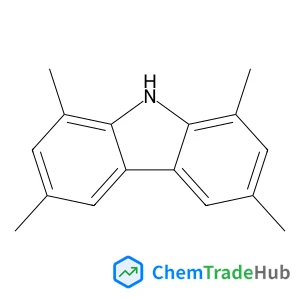
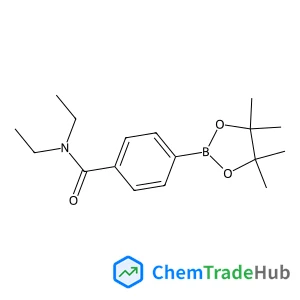
N,N-Diethyl-4-(4,4,5,5-tetramethyl-1,3,2-dioxaborolan-2-yl)benzamide
CAS番号:
325142-99-2
分子式:
C17H26BNO3
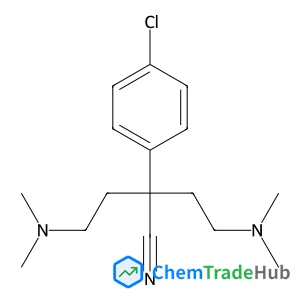
2-(4-Chlorophenyl)-4-(dimethylamino)-2-(2-(dimethylamino)ethyl)butanenitrile
CAS番号:
1246816-57-8
分子式:
C16H24ClN3
![4-Chloro-3-(trifluoromethyl)-1H-pyrrolo[2,3-b]pyridine structure](https://static.chemtradehub.com/structs/869/869335-75-1-a9d0.webp "4-Chloro-3-(trifluoromethyl)-1H-pyrrolo[2,3-b]pyridine structure")
おすすめサプライヤー





免責事項
このページに表示される学術雑誌情報は、参考および研究目的のみを目的としています。当社は雑誌出版社とは提携しておらず、投稿の取り扱いも行っておりません。出版に関するお問い合わせは、各雑誌出版社に直接ご連絡ください。
表示されている情報に誤りがある場合は、support@chemtradehub.com までご連絡ください。迅速に確認し、対応いたします。