












Hydroxyapatite nanoparticle-modified porous bone grafts with improved cell attachment
文献情報
出版日
2023-10-19
DOI
10.1039/D3TB01839C
インパクトファクター
6.331
著者
Prachi Dhavalikar, Dana Jenkins, Natalie Rosen, Aparajith Kannapiran, Karim Salhadar, Orren Shachaf, Michael Silverstein, Elizabeth Cosgriff-Hernández
原文を見る
要旨
Emulsion-templated foams have displayed promise as injectable bone grafts; however, the use of a surfactant as an emulsifier resulted in relatively small pores and impedes cell attachment. Hydroxyapatite nanoparticles were explored as an alternative stabilizer to address these limitations. To this end, hydroxyapatite nanoparticles were first modified with myristic acid to generate the appropriate balance of hydrophobicity to stabilize a water-in-oil emulsion of neopentyl glycol diacrylate and 1,4-butanedithiol. In situ surface modification of the resulting foam with hydroxyapatite was confirmed with elemental mapping and transmission electron microscopy. Nanoparticle-stabilized foams displayed improved human mesenchymal stem cell viability (91 ± 5%) over surfactant-stabilized foams (23 ± 11%). Although the pore size was appropriate for bone grafting applications (115 ± 71 μm), the foams lacked the interconnected architecture necessary for cell infiltration. We hypothesized that a co-stabilization approach with both surfactant and nanoparticles could be used to achieve interconnected pores while maintaining improved cell attachment and larger pore sizes. A range of hydroxyapatite nanoparticle and surfactant concentrations were investigated to determine the effects on microarchitecture and cell behavior. By balancing these interactions, a co-stabilized foam was identified that possessed large, interconnected pores (108 ± 67 μm) and improved cell viability and attachment. The co-stabilized foam was then evaluated as an injectable bone graft including network formation, microscale integration with bone, push out strength, and compressive properties. Overall, this work demonstrated that in situ surface modification with nHA improved cell attachment while retaining desirable bone grafting features and injectability.
関連文献
High-yield graphene produced from the synergistic effect of inflated temperature and gelatin offers high stability and cellular compatibility
Pranav Tiwari, Navpreet Kaur, Vinay Sharma
2018-07-04
Paper
DOI: 10.1039/C8CP02263A
Theoretical and experimental investigations of 129Xe NMR chemical shift isotherms in metal–organic frameworks
Sebastian Schwalbe, Jana Schaber, Simon Krause, Irena Senkovska, Stefan Kaskel, Eike Brunner, Jens Kortus, Gotthard Seifert
2018-09-10
Paper
DOI: 10.1039/C8CP04025G
A DFT analysis of the ground and charge-transfer excited states of Sc3N@Ih–C80 fullerene coupled with metal-free and zinc-phthalocyanine
Carlos Diaz, Neetha Mohan
2018-09-14
Paper
DOI: 10.1039/C8CP03849J
Multiporous sp2-hybridized boron nitride (d-BN): stability, mechanical properties, lattice thermal conductivity and promising application in energy storage
Yingxiang Cai, Li Zeng, Yu Zhang, Xuechun Xu
2018-07-23
Paper
DOI: 10.1039/C8CP03447H
Relativistic corrections to the ground states of HD and D2 calculated without using the Born–Oppenheimer approximation
2018-09-06
Paper
DOI: 10.1039/C8CP04586K
Efficient intersystem crossing in 2-aminopurine riboside probed by femtosecond time-resolved transient vibrational absorption spectroscopy
Hendrik Böhnke, Rebecca A. Ingle, Hugo J. B. Marroux, Mats Bohnsack, Andrew J. Orr-Ewing, Friedrich Temps
2018-07-12
Paper
DOI: 10.1039/C8CP02664E
CO2 interaction with violarite (FeNi2S4) surfaces: a dispersion-corrected DFT study
Sergio Posada-Pérez, David Santos-Carballal, Umberto Terranova, Alberto Roldan, Francesc Illas
2018-07-16
Paper
DOI: 10.1039/C8CP03430C
An insight into the effects of transition metals on the thermal expansion of complex perovskite compounds: an experimental and density functional theory investigation
Xiao Wang, Ye Han, Xiaojie Song, Weihui Liu, Yinxi Jin, Wentao Liu, Hongzhi Cui
2018-06-05
Paper
DOI: 10.1039/C8CP02451K
こちらもおすすめ
化合物よくある質問
2-ブロモ-9,9-ジフェニル-9H-フルオレンの主な用途は何ですか?
2-溴-9,9-二苯基芴は、医薬品、工業材料、有機合成の研究分野で応用されます。特に、レーザー材料や機能性ポリマーの合成に使用されることがあります。また、蛍光色...
474918-32-62-Bromo-9,9-diphenyl...
化合物よくある質問
四氯化铱の市場動向や研究トレンドはどうですか?
四氯化铱の市場は研究開発分野で注目されており、特にナノ技術や金属有機框架(MOFs)の分野での需要が増加傾向にあります。価格は安定しており、中国や韓国での生産が...
207399-11-9Tetrachloroiridium h...
882-06-44-Nitrocinnamic acid
化合物よくある質問
1-(4-溴-3-氟苯基)-2-氯乙酮を含む廃棄物はどのように処理すべきですか?
1-(4-溴-3-氟苯基)-2-氯乙酮 (CAS番号: 1260857-14-4) の廃棄物は専門的な廃棄処理が必要です。まず、廃棄物は密閉された容器に収集し、...
1260857-14-41-(4-Bromo-3-fluorop...
化合物よくある質問
苦参酚Kとは何ですか?
苦参酚Kは、CAS番号101236-49-1を持つ化合物で、主に天然由来の生薬から抽出されます。この化合物は、抗炎症作用や抗癌作用を持つことが報告されています。
101236-49-1Kushenol K
化合物よくある質問
POTASSIUM (1-(TERTBUTOXYCARBONYL)AZETIDIN-3-YL)TRIFLUOROBORATE を含む廃棄物はどのように処理すべきですか?
POTASSIUM (1-(TERTBUTOXYCARBONYL)AZETIDIN-3-YL)TRIFLUOROBORATE を含む廃棄物は、まず安全なエント...
1430219-73-0Potassium (1-(tert-b...
化合物よくある質問
4-庚基-4’-联苯羧酸の市場動向や研究トレンドはどうですか?
4-庚基-4’-聯苯羧酸は、特殊化学品や合成化学の分野で用いられる化学物質ですが、市場動向としては、研究開発の進展とともに需要が増加しています。また、環境配慮型...
58573-94-74'-Heptyl-4-biphenyl...
化合物よくある質問
6-ブロモ-3-メトキシ-1-フェニル-1H-インドゾールを含む廃棄物はどのように処理すべきですか?
6-ブロモ-3-メトキシ-1-フェニル-1H-インドゾールを含む廃棄物は、適切な化学廃棄処理が必要です。通常、廃棄物は密閉容器に収集され、専門の廃棄処理業者に引...
1332527-03-36-Bromo-3-methoxy-1-...
化合物よくある質問
4,4-二甲基-2-吡咯烷酮はどの業界で使用されていますか?
4,4-二甲基-2-吡咯烷酮は医薬、ポリマー、センサー、半導体などの業界で広く使用されています。特に溶媒としての性能が高く評価されています。
66899-02-34,4-dimethylpyrrolid...
51312-42-6Sodium Phosphotungst...
掲載誌
Journal of Materials Chemistry B
CiteScore:
12
自己引用率:
4.9%
年間論文数:
831
Journal of Materials Chemistry A, B & C cover high quality studies across all fields of materials chemistry. The journals focus on those theoretical or experimental studies that report new understanding, applications, properties and synthesis of materials. The journals have a strong history of publishing quality reports of interest to interdisciplinary communities and providing an efficient and rigorous service through peer review and publication. The journals are led by an international team of Editors-in-Chief and Associate Editors who are all active researchers in their fields. Journal of Materials Chemistry A, B & C are separated by the intended application of the material studied. Broadly, applications in energy and sustainability are of interest to Journal of Materials Chemistry A, applications in biology and medicine are of interest to Journal of Materials Chemistry B, and applications in optical, magnetic and electronic devices are of interest to Journal of Materials Chemistry C. More than one Journal of Materials Chemistry journal may be suitable for certain fields and researchers are encouraged to submit their paper to the journal that they feel best fits for their particular article. Example topic areas within the scope of Journal of Materials Chemistry B are listed below. This list is neither exhaustive nor exclusive. Antifouling coatings Biocompatible materials Bioelectronics Bioimaging Biomimetics Biomineralisation Bionics Biosensors Diagnostics Drug delivery Gene delivery Immunobiology Nanomedicine Regenerative medicine & Tissue engineering Scaffolds Soft robotics Stem cells Therapeutic devices image block All articles published in Journal of Materials Chemistry B from 2019 onwards will be indexed in MEDLINE®. Articles that primarily focus on providing insight into the underlying science and performance of biomaterials within a biological environment are more suited to our companion journal, Biomaterials Science.
おすすめ化合物
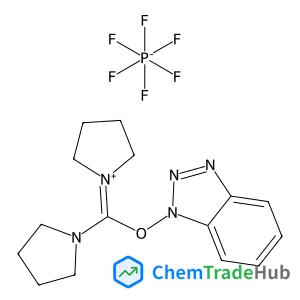
(1H-Benzotriazol-1-yloxy)(di-1-pyrrolidinyl)methylium hexafluorophosphate
CAS番号:
105379-24-6
分子式:
C15H21F6N5OP
おすすめサプライヤー



免責事項
このページに表示される学術雑誌情報は、参考および研究目的のみを目的としています。当社は雑誌出版社とは提携しておらず、投稿の取り扱いも行っておりません。出版に関するお問い合わせは、各雑誌出版社に直接ご連絡ください。
表示されている情報に誤りがある場合は、support@chemtradehub.com までご連絡ください。迅速に確認し、対応いたします。