












Molecular simulations of nitrogen-doped hierarchical carbon adsorbents for post-combustion CO2 capture
文献情報
出版日
2016-10-03
DOI
10.1039/C6CP05865E
インパクトファクター
3.676
著者
Peter Psarras, Jiajun He, Jennifer Wilcox
原文を見る
要旨
A present challenge in the mitigation of anthropogenic CO2 emissions involves the design of less energy- and water-intensive capture technologies. Sorbent-based capture represents a promising solution, as these materials have negligible water requirements and do not incur the heavy energy penalties associated with solvent regeneration. However, to be considered competitive with traditional technologies (i.e., MEA capture), these sorbents must exhibit a high CO2 loading capacity and high CO2/N2 selectivity. It has been reported that ultramicroporous character and surface nitrogen functionality are of great importance to the enhancement of CO2 capacity and CO2/N2 selectivity. However, the role of pore size in combination with surface functionality in the enhancement of these properties remains unclear. To investigate these effects, grand canonical Monte Carlo (GCMC) simulations were carried out on pure and N-functionalized 3-layer graphitic slit-pore models and compared to experimental results for two high performing materials reported elsewhere. We show that the quaternary, pyridinic, and especially the oxidized pyridinic group lend to enhanced performance, with the latter providing exceptional CO2 loading (4.31 mmol g−1) and CO2/N2 selectivity (138.3 : 1). Increasing surface nitrogen content resulted in enhanced loading and excellent CO2/N2 selectivity (45.8 : 1–55.9 : 1), provided that the sorbent has significant ultramicroporous character. Additionally, we elucidate a threshold pore width, under which N-functionalization becomes increasingly influential on performance parameters, and show how this threshold changes with application (PC vs. NGCC capture). Finally, we propose that an alternative functionality – the nitroso group – may be responsible for the enhanced performance of some recent materials reported in the literature.
関連文献
Deconstructing the behavior of donor–acceptor copolymers in solution & the melt: the case of PTB7
Sean M. Ryno, Chad Risko
2019-03-26
Paper
DOI: 10.1039/C9CP00777F
Electrochemical tuning of Pd100−xAux bimetallics towards ethanol oxidation: effect of an induced d-band center shift and oxophilicity
Sreejith P. Babu, Perumal Elumalai
2019-03-21
Paper
DOI: 10.1039/C8CP07500J
Depletion driven self-assembly of block copolymer solutions by homopolymers
Tao Yang, Zhen Lei, Shuang Yang, Er-Qiang Chen
2019-01-03
Paper
DOI: 10.1039/C8CP06679E
Mechanisms of phase separation in temperature-responsive acidic aqueous biphasic systems
Nicolas Schaeffer, German Pérez-Sánchez, Helena Passos, José R. B. Gomes, Nicolas Papaiconomou, João A. P. Coutinho
2019-03-12
Paper
DOI: 10.1039/C8CP07750A
Spin and valley dependent electronic transport in molybdenum disulfide considering up to the second order k-dependent terms: a more exact solution
H. Khani, M. Esmaeilzadeh, F. Kanjouri
2019-03-15
Paper
DOI: 10.1039/C8CP07395C
Computational study of the mixed B-site perovskite SmBxCo1−xO3−d (B = Mn, Fe, Ni, Cu) for next generation solid oxide fuel cell cathodes
Emilia Olsson, Jonathon Cottom, Xavier Aparicio-Anglès
2019-04-18
Paper
DOI: 10.1039/C9CP00995G
Using hydrogenated and perfluorinated gases to probe the interactions and structure of fluorinated ionic liquids
Luiz Fernando Lepre, Laure Pison, Ines Otero, Arnaud Gautier, Julien Dévemy, Pascale Husson, Agilio A. H. Pádua, Margarida Costa Gomes
2019-04-09
Paper
DOI: 10.1039/C9CP00593E
Thermochemistry of germanium and organogermanium compounds
Rosa Becerra, Robin Walsh
2018-11-28
Perspective
DOI: 10.1039/C8CP06208K
Thermodynamic limits of countercurrent reactor systems, with examples in membrane reactors and the ceria redox cycle
2019-01-08
Paper
DOI: 10.1039/C8CP07077F
Ultrafast photoinduced flavin dynamics in the unusual active site of the tRNA methyltransferase TrmFO
Nadia Dozova, Fabien Lacombat, Charles Bou-Nader, Djemel Hamdane, Pascal Plaza
2019-04-01
Paper
DOI: 10.1039/C8CP06072J
こちらもおすすめ
化合物よくある質問
6- bromo-1-cyclopropyl-1H-benzimidazoleの市場動向や研究トレンドはどうですか?
6- bromo-1-cyclopropyl-1H-benzimidazoleは、抗炎症、抗ウイルス作用を持つことが報告されており、新薬開発の研究対象として注目...
1416713-53-56-Bromo-1-cyclopropy...
化合物よくある質問
環氧プロpanol-d5を取り扱う際の実験室安全事項は何ですか?
取り扱う際には、防護眼鏡と手袋を使用し、ドラフトチャンバー内で操作することを推奨します。漏洩時には適切な手順で処理し、安全データシートを常に参照してください。
1246819-20-4Glycidol-d5
化合物よくある質問
2,2’-ジメチル-3,3’-ビピリジンはどのように合成されますか?
2,2’-ジメチル-3,3’-ビピリジンは、ピリジンと2-メチルアクリルアミドを有機合成反応で合成します。この反応では、ピリジンと2-メチルアクリルアミドを含有...
86156-55-02,2’-Dimethyl-3,3’-b...
化合物よくある質問
6-甲基ピリジン-2-ボリック酸の主な用途は何ですか?
6-甲基ピリジン-2-ボリック酸は、合成化学、医薬品合成、以及研究用途などに広く使用され、特に組換えDNA技術や分子生物学の研究において重要な役割を果たします。
372963-50-3(6-Methyl-2-pyridiny...
化合物よくある質問
(R)-3-(1-甲基-2-氧環己基)プロpano酸メチルは安全ですか?
(R)-3-(1-甲基-2-氧環己基)プロpano酸メチルは一定の安全性がありますが、直接的な皮膚接触や吸入は避けるべきです。使用する際は適切な個々の安全データ...
94089-47-1methyl 3-[(1R)-1-met...
化合物よくある質問
ketorolacはどのように保存すればよいですか?
ketorolacは、密封して遮光容器に保管し、直射日光や高温を避けて保存してください。温度は常温で保存し、湿度をなるべく低く保つことが推奨されます。
74103-06-3rac Ketorolac
化合物よくある質問
L-2,3-二氨基丙酸二盐酸盐を取り扱う際の実験室安全事項は何ですか?
L-2,3-二氨基丙酸二盐酸盐は腐食性が強く、皮膚や粘膜に刺激を与える可能性があります。取り扱う際は、防塵マスク、ゴーグル、手袋を使用し、適切な排気設備を使用し...
19777-68-5(S)-2,3-Diaminopropa...
化合物よくある質問
2-(4-溴ピリジン-2-基)乙腈の物理化学的性質は何ですか?
2-(4-溴ピリジン-2-基)乙腈のCAS番号は312325-73-8です。主に結晶形態で存在し、分子量は159.01 g/molです。この化合物は水に溶けやす...
312325-73-8(4-Bromo-2-pyridinyl...
化合物よくある質問
3-フローロ-[1,1-ベンジレン]-3,4-ジカルボン酸を取り扱う際の実験室安全事項は何ですか?
この化合物は毒性は低いですが、直接的な接触や吸入に注意が必要です。PPE(個人防護具)を着用し、ドラフトチャンバーを使用して操作することを推奨します。また、漏洩...
1261915-32-53'-Fluoro-[1,1'-biph...
化合物よくある質問
3-(1-氧代-1,3-二氢-2H-2-异吲哚)丙酸の主な用途は何ですか?
3-(1-氧代-1,3-二氢-2H-2-异吲哚)丙酸は、薬理学研究や医薬品製造において広く用いられる化合物です。また、工業的な用途でも一部の化学反応の触媒や助剤...
83747-30-23-(1-Oxo-1,3-dihydro...
掲載誌
Physical Chemistry Chemical Physics

CiteScore:
5.5
自己引用率:
10.3%
年間論文数:
3036
Physical Chemistry Chemical Physics (PCCP) is an international journal co-owned by 19 physical chemistry and physics societies from around the world. This journal publishes original, cutting-edge research in physical chemistry, chemical physics and biophysical chemistry. To be suitable for publication in PCCP, articles must include significant innovation and/or insight into physical chemistry; this is the most important criterion that reviewers and Editors will judge against when evaluating submissions. The journal has a broad scope and welcomes contributions spanning experiment, theory, computation and data science. Topical coverage includes spectroscopy, dynamics, kinetics, statistical mechanics, thermodynamics, electrochemistry, catalysis, surface science, quantum mechanics, quantum computing and machine learning. Interdisciplinary research areas such as polymers and soft matter, materials, nanoscience, energy, surfaces/interfaces, and biophysical chemistry are welcomed if they demonstrate significant innovation and/or insight into physical chemistry. Joined experimental/theoretical studies are particularly appreciated when complementary and based on up-to-date approaches.
おすすめ化合物
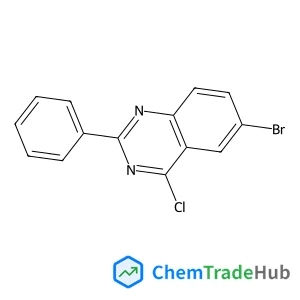
![4-[(3-Chloro-2-fluorophenyl)amino]-7-methoxy-6-quinazolinyl acetate structure](https://static.chemtradehub.com/structs/740/740081-22-5-f58f.webp "4-[(3-Chloro-2-fluorophenyl)amino]-7-methoxy-6-quinazolinyl acetate structure")
4-[(3-Chloro-2-fluorophenyl)amino]-7-methoxy-6-quinazolinyl acetate
CAS番号:
740081-22-5
分子式:
C17H13ClFN3O3
おすすめサプライヤー





免責事項
このページに表示される学術雑誌情報は、参考および研究目的のみを目的としています。当社は雑誌出版社とは提携しておらず、投稿の取り扱いも行っておりません。出版に関するお問い合わせは、各雑誌出版社に直接ご連絡ください。
表示されている情報に誤りがある場合は、support@chemtradehub.com までご連絡ください。迅速に確認し、対応いたします。