












Thermodynamic and kinetic isotope effects on the order–disorder transition of ice XIV to ice XII
文献情報
出版日
2018-08-13
DOI
10.1039/C8CP03786H
インパクトファクター
3.676
著者
Violeta Fuentes-Landete, Karsten W. Köster, Roland Böhmer, Thomas Loerting
原文を見る
要旨
Isotope effects accompanying the order–disorder transition of ice XIV to ice XII are studied using calorimetry, X-ray diffraction, and dielectric spectroscopy. Particular emphasis is placed on the impact of the cooling rate applied during high-pressure production and during ambient-pressure recooling on the degree of hydrogen order in the low-temperature ice XIV phase. For specimens from D2O, ordering is harder to achieve in the sense that despite smaller cooling rates, the degree of order is less than in crystals produced from H2O. The degree of ordering can be quantified in terms of the Pauling entropy using calorimetry and manifests itself in structural and dynamical features that were examined using X-ray diffraction and dielectric spectroscopy, respectively. In hydrogen chloride doped samples, H/D substitution was found to slow down the dipolar dynamics up to about 30-fold and shifts the order–disorder transition by 4–6 K. By contrast to earlier assumptions it is possible to reach a high degree of ordering also at ambient pressure, provided the cooling rate is small enough. That is, at ambient pressure, orthorhombic stress slows down the dipolar reorientation near the ordering transition by a factor of 300–2000 for H2O and 30–100 for D2O samples. Furthermore, by long-term storage of our samples at 77 K we have reached surprisingly large increases in degree of order. For the D2O samples we observed an unprecedented high order, corresponding to more than 45% of the Pauling entropy.
関連文献
Nitrogen doping in coexposed (001)–(101) anatase TiO2 surfaces: a DFT study
Giovanni Di Liberto, Sergio Tosoni, Gianfranco Pacchioni
2019-09-10
Paper
DOI: 10.1039/C9CP03930A
Vibronic spectroscopy of methyl anthranilate and its water complex: hydrogen atom dislocation in the excited state
Karl N. Blodgett, Dewei Sun, Joshua L. Fischer, Edwin L. Sibert, III, Timothy S. Zwier
2019-09-11
Paper
DOI: 10.1039/C9CP04556B
Gauging stability and reactivity of carbonyl O-oxide Criegee intermediates
J. Philipp Wagner
2019-09-13
Paper
DOI: 10.1039/C9CP03790J
Structural interpretation of the energetic performances of a pure silica LTA-type zeolite
Giorgia Confalonieri, Rossella Arletti, Simona Quartieri, Giovanna Vezzalini
2020-02-11
Paper
DOI: 10.1039/C9CP06760D
The durability of carbon nanotubes in the selective reduction of nitrobenzene
Zhenzhen Guo, Nuoyi Zheng, Liyun Zhang, Zhijun Xia, Dehua Wang, Jianfen Shen, Hua Yan, Shuchang Wu, Hongyang Liu
2020-02-26
Communication
DOI: 10.1039/D0CP00186D
Large scale quantum dynamics investigations on the sensing mechanism of H2O, acetone, NO2 and O3 adsorption on the (MA)2Pb(SCN)2I2 surface
Shijie Zhou, Lei Tong, Yinjie Liao, Juxia Yi, Yao Qi
2019-07-12
Paper
DOI: 10.1039/C9CP02703C
Strain analysis from M-edge resonant inelastic X-ray scattering of nickel oxide films
P. S. Miedema, I. Alonso Calafell, C. Schüßler-Langeheine, M. Beye
2019-09-20
Paper
DOI: 10.1039/C9CP03593A
Two-dimensional infrared spectroscopy from the gas to liquid phase: density dependent J-scrambling, vibrational relaxation, and the onset of liquid character
Aritra Mandal
2019-09-13
Paper
DOI: 10.1039/C9CP04101J
A ReaxFF molecular dynamics study of molecular-level interactions during binder jetting 3D-printing
Yawei Gao, Yun Kyung Shin, Daniel Martinez, Guha Manogharan, Adri C. T. van Duin
2019-09-10
Paper
DOI: 10.1039/C9CP03585K
Kinetics of pressure-induced nanocrystal superlattice formation
Martin A. Schroer, Verena Markmann, Johannes Möller
2019-09-12
Paper
DOI: 10.1039/C9CP04658E
こちらもおすすめ
化合物よくある質問
3-(2-オキサプロピル)ベンzoic酸はどのように合成されますか?
3-(2-オキサプロピル)ベンzoic酸は、ベンzoic酸とプロパノ酸をヒドロキシム化合物として反応させて生成します。具体的には、ベンzoic酸とプロパノ酸を反...
205927-63-53-(2-Oxopropyl)benzo...
114873-01-73-Fluoro-N-{[(2-meth...
化合物よくある質問
4-メチル-4-ピペリジニル-1-ピロリドイン甲酸の主な用途は何ですか?
4-メチル-4-ピペリジニル-1-ピロリドイン甲酸は、主に医薬品の合成材料や研究用物質として使用されます。さらに、一部の薬理学的研究にも応用されています。
885523-47-7(4-Methyl-4-piperidi...
化合物よくある質問
Biotin-PEG3-oxyamine HCl塩について、適切な化合物名称に適用される法規ガイドラインは何ですか?
Biotin-PEG3-oxyamine HCl塩は、GHS( Globally Harmonized System of Classification and...
1786206-22-1Biotin-PEG3-oxyamine...
化合物よくある質問
N-(4-イソチオシアネートフェニル)-2-メトキシアリニンはどのように合成されますか?
N-(4-イソチオシアネートフェニル)-2-メトキシアリニンは、4-イソチオシアノフェノールと2-メトキシアリニルアミンのアミニド反応を用いて合成されます。この...
915919-57-2N-(4-Isothiocyanatop...
化合物よくある質問
金粉蕨亭2'-O-葡萄糖甙の主な用途は何ですか?
金粉蕨亭2'-O-葡萄糖甙は主に薬理研究や医薬品製造に使用され、抗炎症作用や抗がん作用などがあります。また、その構造や性質から、合成化学や化学生理学の研究にも用...
76947-60-92-(7-Hydroxy-2,2,4,6...
化合物よくある質問
2-(2-ニトロフェニル)酢酸ヒドライドの物理化学的性質は何ですか?
2-(2-ニトロフェニル)酢酸ヒドライドのCAS番号は114953-81-0です。この化合物は白色結晶性粉末で、分子量は244.12です。水溶性は限られており、...
114953-81-02-(2-Nitrophenyl)ace...
化合物よくある質問
5-(ヒドロキシメチル)-2-チオキソ-2,3-ジヒドロピリミジン-4(1H)-オンを取り扱う際の実験室安全事項は何ですか?
この化合物は高活性のため、取り扱いには注意が必要です。PPE(個人保護具)としてゴーグル、ガントリー、および防滴シールドを着用することが推奨されます。ドラフトチ...
93185-31-05-(Hydroxymethyl)-2-...
化合物よくある質問
11-脱氢血栓烷 b2の市場動向や研究トレンドはどうですか?
11-脱氢血栓烷 b2は、血栓溶解・抗凝固作用に関する研究で注目を集めています。特に心血管疾患の治療法開発において、市場の需要が高まっています。研究トレンドとし...
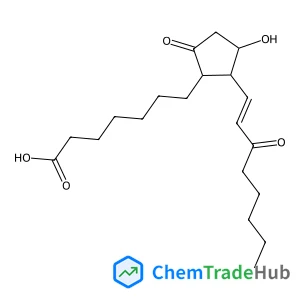
67910-12-77-{(2R,3S,4S)-4-Hydr...
化合物よくある質問
3,3-二甲基哌啶-4-酮はどのように保存すればよいですか?
3,3-二甲基哌啶-4-酮は避光、常温、乾燥した場所で保存してください。容器は密閉し、遠くから火源を離して保管することを確認してください。
150668-82-93,3-Dimethyl-4-piper...
掲載誌
Physical Chemistry Chemical Physics

CiteScore:
5.5
自己引用率:
10.3%
年間論文数:
3036
Physical Chemistry Chemical Physics (PCCP) is an international journal co-owned by 19 physical chemistry and physics societies from around the world. This journal publishes original, cutting-edge research in physical chemistry, chemical physics and biophysical chemistry. To be suitable for publication in PCCP, articles must include significant innovation and/or insight into physical chemistry; this is the most important criterion that reviewers and Editors will judge against when evaluating submissions. The journal has a broad scope and welcomes contributions spanning experiment, theory, computation and data science. Topical coverage includes spectroscopy, dynamics, kinetics, statistical mechanics, thermodynamics, electrochemistry, catalysis, surface science, quantum mechanics, quantum computing and machine learning. Interdisciplinary research areas such as polymers and soft matter, materials, nanoscience, energy, surfaces/interfaces, and biophysical chemistry are welcomed if they demonstrate significant innovation and/or insight into physical chemistry. Joined experimental/theoretical studies are particularly appreciated when complementary and based on up-to-date approaches.
おすすめ化合物
![[4-Chloro-3-(diethylcarbamoyl)phenyl]boronic acid structure](https://static.chemtradehub.com/structs/871/871332-68-2-0e3b.webp "[4-Chloro-3-(diethylcarbamoyl)phenyl]boronic acid structure")
おすすめサプライヤー





免責事項
このページに表示される学術雑誌情報は、参考および研究目的のみを目的としています。当社は雑誌出版社とは提携しておらず、投稿の取り扱いも行っておりません。出版に関するお問い合わせは、各雑誌出版社に直接ご連絡ください。
表示されている情報に誤りがある場合は、support@chemtradehub.com までご連絡ください。迅速に確認し、対応いたします。