![2-[({[(2-Methyl-2-propanyl)oxy]carbonyl}amino)methyl]isonicotinic acid structure](https://static.chemtradehub.com/structs/473/473924-63-9-973b.webp "2-[({[(2-Methyl-2-propanyl)oxy]carbonyl}amino)methyl]isonicotinic acid structure")
2-[({[(2-Methyl-2-propanyl)oxy]carbonyl}amino)methyl]isonicotinic acid
CAS番号:
473924-63-9
分子式:
C12H16N2O4
Karl N. Blodgett, Dewei Sun, Joshua L. Fischer, Edwin L. Sibert, III, Timothy S. Zwier
Laser-induced fluorescence (LIF) excitation, dispersed fluorescence (DFL), UV–UV-hole burning, and UV-depletion spectra have been collected on methyl anthranilate (MA, methyl 2-aminobenzoate) and its water-containing complex (MA–H2O), under jet-cooled conditions in the gas phase. As a close structural analog of a sunscreen agent, MA has a strong absorption due to the S0–S1 transition that begins in the UV-A region, with the electronic origin at 28 852 cm−1 (346.6 nm). Unlike most sunscreens that have fast non-radiative pathways back to the ground state, MA fluoresces efficiently, with an excited state lifetime of 27 ns. Relative to methyl benzoate, inter-system crossing to the triplet manifold is shut off in MA by the strong intramolecular NH⋯OC H-bond, which shifts the 3nπ* state well above the 1ππ* S1 state. Single vibronic level DFL spectra are used to obtain a near-complete assignment of the vibronic structure in the excited state. Much of the vibrational structure in the excitation spectrum is Franck–Condon activity due to three in-plane vibrations that modulate the distance between the NH2 and CO2Me groups, ν33 (421 cm−1), ν34 (366 cm−1), and ν36 (179 cm−1). Based on the close correspondence between experiment and theory at the TD-DFT B3LYP-D3BJ/def2TZVP level of theory, the major structural changes associated with electronic excitation are evaluated, leading to the conclusion that the major motion is a reorientation and constriction of the 6-membered H-bonded ring closed by the intramolecular NH⋯OC H-bond. This leads to a shortening of the NH⋯OC H-bond distance from 1.926 Å to 1.723 Å, equivalent to about a 25% reduction in the H⋯O distance compared to full H-atom transfer. As a result, the excited state process near the S1 origin is a hydrogen atom dislocation that is brought about primarily by heavy atom motion, since the shortened H-bond distance results from extensive heavy-atom motion, with only a 0.03 Å increase in the NH bond length relative to its ground state value.

Chemical Communications

Russian Journal of Organic Chemistry

Current Opinion in Colloid & Interface Science

Russian Journal of Coordination Chemistry

Russian Journal of General Chemistry

Journal of Natural Medicines

Russian Journal of Bioorganic Chemistry

Journal of Saudi Chemical Society

Nature Medicine

Drug Discovery Today
O. Deparis, S. R. Mouchet, B.-L. Su
DOI: 10.1039/C5CP04983K
Baiqing You, Xiaocha Wang, Wenbo Mi
DOI: 10.1039/C5CP05068E
Laura Berstis, Kim K. Baldridge
DOI: 10.1039/C5CP01861G
C. Colleoni, S. Esposito, R. Grasso, D. Romeli, G. Rosace
DOI: 10.1039/C5CP03420E
Silvia Carlotto, Mauro Sambi, Andrea Vittadini
DOI: 10.1039/C5CP06844D
Marc Nadal-Ferret, Ricard Gelabert, Miquel Moreno
DOI: 10.1039/C5CP01067E
Min-Sik Park, Jeonghun Kim, Ki Jae Kim, Jong-Won Lee, Jung Ho Kim
DOI: 10.1039/C5CP05936D
Jin-Yong Hong, Jeong Jae Wie, Yu Xu, Ho Seok Park
DOI: 10.1039/C5CP04203H
G. K. S. Prameela, B. V. N. Phani Kumar, A. Pan, V. K. Aswal, J. Subramanian, A. B. Mandal, S. P. Moulik
DOI: 10.1039/C5CP04910E
3-(2-オキサプロピル)ベンzoic酸は、ベンzoic酸とプロパノ酸をヒドロキシム化合物として反応させて生成します。具体的には、ベンzoic酸とプロパノ酸を反...
4-メチル-4-ピペリジニル-1-ピロリドイン甲酸は、主に医薬品の合成材料や研究用物質として使用されます。さらに、一部の薬理学的研究にも応用されています。
Biotin-PEG3-oxyamine HCl塩は、GHS( Globally Harmonized System of Classification and...
N-(4-イソチオシアネートフェニル)-2-メトキシアリニンは、4-イソチオシアノフェノールと2-メトキシアリニルアミンのアミニド反応を用いて合成されます。この...
金粉蕨亭2'-O-葡萄糖甙は主に薬理研究や医薬品製造に使用され、抗炎症作用や抗がん作用などがあります。また、その構造や性質から、合成化学や化学生理学の研究にも用...
2-(2-ニトロフェニル)酢酸ヒドライドのCAS番号は114953-81-0です。この化合物は白色結晶性粉末で、分子量は244.12です。水溶性は限られており、...
この化合物は高活性のため、取り扱いには注意が必要です。PPE(個人保護具)としてゴーグル、ガントリー、および防滴シールドを着用することが推奨されます。ドラフトチ...
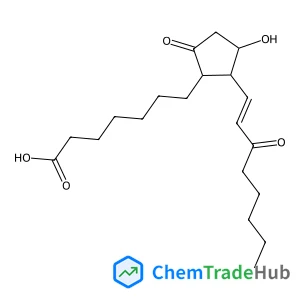
11-脱氢血栓烷 b2は、血栓溶解・抗凝固作用に関する研究で注目を集めています。特に心血管疾患の治療法開発において、市場の需要が高まっています。研究トレンドとし...
3,3-二甲基哌啶-4-酮は避光、常温、乾燥した場所で保存してください。容器は密閉し、遠くから火源を離して保管することを確認してください。

Physical Chemistry Chemical Physics (PCCP) is an international journal co-owned by 19 physical chemistry and physics societies from around the world. This journal publishes original, cutting-edge research in physical chemistry, chemical physics and biophysical chemistry. To be suitable for publication in PCCP, articles must include significant innovation and/or insight into physical chemistry; this is the most important criterion that reviewers and Editors will judge against when evaluating submissions. The journal has a broad scope and welcomes contributions spanning experiment, theory, computation and data science. Topical coverage includes spectroscopy, dynamics, kinetics, statistical mechanics, thermodynamics, electrochemistry, catalysis, surface science, quantum mechanics, quantum computing and machine learning. Interdisciplinary research areas such as polymers and soft matter, materials, nanoscience, energy, surfaces/interfaces, and biophysical chemistry are welcomed if they demonstrate significant innovation and/or insight into physical chemistry. Joined experimental/theoretical studies are particularly appreciated when complementary and based on up-to-date approaches.