












Reversible DNA compaction induced by partial intercalation of 16-Ph-16 gemini surfactants: evidence of triple helix formation
文献情報
出版日
2018-09-14
DOI
10.1039/C8CP02791A
インパクトファクター
3.676
著者
Elia Grueso, Emilio Roldan, Pilar Perez-Tejeda, Edyta Kuliszewska, Blanca Molero, Lothar Brecker, R. M. Giráldez-Pérez
原文を見る
要旨
The interaction between calf thymus DNA and the gemini surfactants N,N′-[α,ω-phenylenebis(methylene)bis [N,N′-dimethyl-N-(1-hexadecyl)]-ammonium dibromide], p-16-Ph-16 (α = 1, ω = 3) and m-16-Ph-16 (α = 1, ω = 2), has been investigated via circular dichroism, fluorescence and UV-vis spectroscopy, zeta potential, dynamic light scattering, and AFM microscopy. Measurements were carried out in aqueous media at different molar ratios, R = (C16-Ph-16)/CDNA and C16-Ph-16 always below the critical micellar concentration (CMC) of the surfactant. Under these conditions, DNA undergoes two reversible conformational changes, compaction and decompaction, due to interaction with the surfactant molecules at low and high molar ratios, respectively. The extent of such conformational changes is correlated with both the degree of surfactant partial intercalation, and the size and charge of the surfactant aggregates formed, in each case. Comparison of the results shows that the para-form of the surfactant intercalates into the DNA to a major extent; therefore, the compaction/decompaction processes are more effective. Among these, the structure of the resulting 16-Ph-16/DNA decompacted complex is worthy of note. For the first time it can be demonstrated that the partial intercalation of the 16-Ph-16 gemini surfactants induces the formation of triplex DNA-like structures at a high R ratio.
関連文献
Visible-light responsive hydrogen-bonded supramolecular polymers based on ortho-tetrafluorinated azobenzene
Meng-Di Lin, Jie Wei, Li-Juan Liu, Meng-Yan Yun, Lin Wu, Si-Tai Zheng, Huan-Huan Yin, Li-Chun Kong
2017-11-13
Paper
DOI: 10.1039/C7PY01612C
Thermoresponsive nanogels with film-forming ability
Ana S. Sonzogni, Stefanie Wedepohl, Marcelo Calderón
2018-01-18
Paper
DOI: 10.1039/C7PY01798G
Discotic columnar liquid-crystalline polymer semiconducting materials with high charge-carrier mobility via rational macromolecular engineering
Bin Mu, Xingtian Hao, Jian Chen, Qian Li, Chunxiu Zhang, Dongzhong Chen
2017-04-24
Paper
DOI: 10.1039/C7PY00364A
Grafting challenging monomers from proteins using aqueous ICAR ATRP under bio-relevant conditions
Theresa Ramelot, Dominik Konkolewicz, Scott Graner
2017-06-13
Paper
DOI: 10.1039/C7PY00669A
Electron beam lithography of poly(glycidol) nanogels for immobilization of a three-enzyme cascade
Jacob N. Lockhart, Anthony B. Hmelo, Eva Harth
2018-01-17
Paper
DOI: 10.1039/C7PY01904A
Hybrid single-chain nanoparticles via the metal induced crosslinking of N-donor functionalized polymer chains
Karen Freytag, Stefanie Säfken, Kai Wolter, Jan C. Namyslo, Eike G. Hübner
2017-11-16
Paper
DOI: 10.1039/C7PY01487B
ADMET polymerization of α,ω-unsaturated glycolipids: synthesis and physico-chemical properties of the resulting polymers
D. Pintori
2017-05-31
Paper
DOI: 10.1039/C7PY00788D
Ugi multicomponent reaction to prepare peptide–peptoid hybrid structures with diverse chemical functionalities
Manuel Hartweg, Elham Radvar, Dominic Collis, Mehedi Reza, Janne Ruokolainen, Robert Rambo, Ian W. Hamley, Helena S. Azevedo, C. Remzi Becer
2017-12-21
Paper
DOI: 10.1039/C7PY01953J
Nitroxide-mediated polymerization-induced self-assembly of amphiphilic block copolymers with a pH/temperature dual sensitive stabilizer block
P.-Y. Dugas, B. Charleux, M. Lansalot, E. Bourgeat-Lami
2017-06-14
Paper
DOI: 10.1039/C7PY00595D
Looped flow RAFT polymerization for multiblock copolymer synthesis
Agnès Kuroki, Ivan Martinez-Botella, Christian H. Hornung, Liam Martin, Elizabeth G. L. Williams, Katherine E. S. Locock, Matthias Hartlieb
2017-05-12
Communication
DOI: 10.1039/C7PY00630F
こちらもおすすめ
化合物よくある質問
2-ブロモ-9,9-ジフェニル-9H-フルオレンの主な用途は何ですか?
2-溴-9,9-二苯基芴は、医薬品、工業材料、有機合成の研究分野で応用されます。特に、レーザー材料や機能性ポリマーの合成に使用されることがあります。また、蛍光色...
474918-32-62-Bromo-9,9-diphenyl...
化合物よくある質問
四氯化铱の市場動向や研究トレンドはどうですか?
四氯化铱の市場は研究開発分野で注目されており、特にナノ技術や金属有機框架(MOFs)の分野での需要が増加傾向にあります。価格は安定しており、中国や韓国での生産が...
207399-11-9Tetrachloroiridium h...
882-06-44-Nitrocinnamic acid
化合物よくある質問
1-(4-溴-3-氟苯基)-2-氯乙酮を含む廃棄物はどのように処理すべきですか?
1-(4-溴-3-氟苯基)-2-氯乙酮 (CAS番号: 1260857-14-4) の廃棄物は専門的な廃棄処理が必要です。まず、廃棄物は密閉された容器に収集し、...
1260857-14-41-(4-Bromo-3-fluorop...
化合物よくある質問
苦参酚Kとは何ですか?
苦参酚Kは、CAS番号101236-49-1を持つ化合物で、主に天然由来の生薬から抽出されます。この化合物は、抗炎症作用や抗癌作用を持つことが報告されています。
101236-49-1Kushenol K
化合物よくある質問
POTASSIUM (1-(TERTBUTOXYCARBONYL)AZETIDIN-3-YL)TRIFLUOROBORATE を含む廃棄物はどのように処理すべきですか?
POTASSIUM (1-(TERTBUTOXYCARBONYL)AZETIDIN-3-YL)TRIFLUOROBORATE を含む廃棄物は、まず安全なエント...
1430219-73-0Potassium (1-(tert-b...
化合物よくある質問
4-庚基-4’-联苯羧酸の市場動向や研究トレンドはどうですか?
4-庚基-4’-聯苯羧酸は、特殊化学品や合成化学の分野で用いられる化学物質ですが、市場動向としては、研究開発の進展とともに需要が増加しています。また、環境配慮型...
58573-94-74'-Heptyl-4-biphenyl...
化合物よくある質問
6-ブロモ-3-メトキシ-1-フェニル-1H-インドゾールを含む廃棄物はどのように処理すべきですか?
6-ブロモ-3-メトキシ-1-フェニル-1H-インドゾールを含む廃棄物は、適切な化学廃棄処理が必要です。通常、廃棄物は密閉容器に収集され、専門の廃棄処理業者に引...
1332527-03-36-Bromo-3-methoxy-1-...
化合物よくある質問
4,4-二甲基-2-吡咯烷酮はどの業界で使用されていますか?
4,4-二甲基-2-吡咯烷酮は医薬、ポリマー、センサー、半導体などの業界で広く使用されています。特に溶媒としての性能が高く評価されています。
66899-02-34,4-dimethylpyrrolid...
51312-42-6Sodium Phosphotungst...
掲載誌
Physical Chemistry Chemical Physics

CiteScore:
5.5
自己引用率:
10.3%
年間論文数:
3036
Physical Chemistry Chemical Physics (PCCP) is an international journal co-owned by 19 physical chemistry and physics societies from around the world. This journal publishes original, cutting-edge research in physical chemistry, chemical physics and biophysical chemistry. To be suitable for publication in PCCP, articles must include significant innovation and/or insight into physical chemistry; this is the most important criterion that reviewers and Editors will judge against when evaluating submissions. The journal has a broad scope and welcomes contributions spanning experiment, theory, computation and data science. Topical coverage includes spectroscopy, dynamics, kinetics, statistical mechanics, thermodynamics, electrochemistry, catalysis, surface science, quantum mechanics, quantum computing and machine learning. Interdisciplinary research areas such as polymers and soft matter, materials, nanoscience, energy, surfaces/interfaces, and biophysical chemistry are welcomed if they demonstrate significant innovation and/or insight into physical chemistry. Joined experimental/theoretical studies are particularly appreciated when complementary and based on up-to-date approaches.
おすすめ化合物
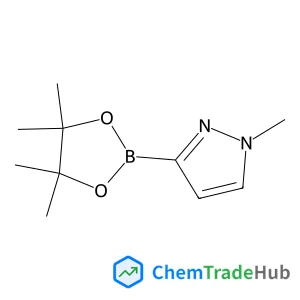
1-Methyl-3-(4,4,5,5-tetramethyl-1,3,2-dioxaborolan-2-yl)-1H-pyrazole
CAS番号:
1020174-04-2
分子式:
C10H17BN2O2
![[4-Amino-2-(methylsulfanyl)-5-pyrimidinyl]methanol structure](https://static.chemtradehub.com/structs/588/588-36-3-fc73.webp "[4-Amino-2-(methylsulfanyl)-5-pyrimidinyl]methanol structure")
おすすめサプライヤー





免責事項
このページに表示される学術雑誌情報は、参考および研究目的のみを目的としています。当社は雑誌出版社とは提携しておらず、投稿の取り扱いも行っておりません。出版に関するお問い合わせは、各雑誌出版社に直接ご連絡ください。
表示されている情報に誤りがある場合は、support@chemtradehub.com までご連絡ください。迅速に確認し、対応いたします。