












![Methyl 4-({[(2-methyl-2-propanyl)oxy]carbonyl}amino)bicyclo[2.2.2]octane-1-carboxylate structure](https://static.chemtradehub.com/structs/943/943845-74-7-b7e5.webp "Methyl 4-({[(2-methyl-2-propanyl)oxy]carbonyl}amino)bicyclo[2.2.2]octane-1-carboxylate structure")
Insight into the mechanism of methanol assistance with syngas conversion over partially hydroxylated γ-Al2O3(110D) surface in slurry bed
文献情報
出版日
2018-04-12
DOI
10.1039/C8CP02000K
インパクトファクター
3.676
著者
Bing Bai, Hui Bai, Hao-Jie Cao, Zhi-Hua Gao, Zhi-Jun Zuo, Wei Huang
原文を見る
要旨
Despite numerous studies devoted to the various properties of γ-Al2O3, the explorations of its catalytic activity remain scarce. In this study, density functional theory calculations are performed to study the elementary adsorption and reaction mechanisms for syngas conversion on partially hydroxylated γ-Al2O3(110D) surface in liquid paraffin. It is found that the partially hydroxylated γ-Al2O3(110D) surface with the hydroxyl coverage of 8.9 OH nm−2 is formed by two dissociative adsorptions of H2O on the dry γ-Al2O3(110D) surface. The hydroxyl coverage conditions play a key role in determining the dominant reaction mechanism on account of the existence of strong hydrogen bonds. The preferential pathway for syngas conversion with assistance of methanol over the partially hydroxylated γ-Al2O3(110D) surface in liquid paraffin has been proven to be CH3OH → CH3O + H → CH3 + OH, CH3 + CO → CH3CO. C2H5OH is then formed by successive hydrogenation via the pathway CH3CO + 3H → CH3CHO + 2H → CH3CH2O + H → C2H5OH. Here, CH3CHO formation by CH3CO hydrogenation is not inhibited. Actually, with the assistance of partially hydroxylated γ-Al2O3, CH3CHO has been synthesized with high selectivity in our previous experiment by the reaction of methanol and syngas, which provides favorable evidence for our results. The rate-limiting step is the formation of CH3O from CH3OH dehydrogenation with an activation barrier of 122.2 kJ mol−1. Moreover, the reaction barrier of CO insertion into the adsorbed CH3 group is at least 89.4 kJ mol−1, lower than those of CH4, C2H6, and CH3OCH3 formations. ADCH charge and ESP analyses indicate that the typical (Al, O) Lewis acid–base pair may have a significant effect upon the initial C–C chain formation. Thus, the present study provides a new approach for the rational tailoring and designing of new catalysts with superior reactivity involved in syngas conversion.
関連文献
Syntheses of the plant auxin conjugate 2-O-(indole-3-acetyl)-myo-inositol IAInos
Saúl Silva, Osvaldo S. Ascenso, Eva C. Lourenço, Margarida Archer, M. Rita Ventura
2018-09-12
Communication
DOI: 10.1039/C8OB02096E
A supramolecular red to near-infrared fluorescent probe for the detection of drugs in urine
Gyan H. Aryal, Kenneth W. Hunter, Liming Huang
2018-09-21
Paper
DOI: 10.1039/C8OB02180E
Tandem radical cyclization of N-methacryloyl benzamides with CBr4 to construct brominated isoquinolinediones
Songhai Huang, Pengfei Niu, Yingpeng Su, Dongcheng Hu, Congde Huo
2018-10-02
Paper
DOI: 10.1039/C8OB01964A
Hydroarylation of unsaturated carbon–carbon bonds in cross-conjugated enynones under the action of superacid CF3SO3H or acidic zeolite HUSY. Reaction mechanism and DFT study on cationic intermediate species
Maiia I. Aleksandrova, Stanislav V. Lozovskiy, Steve Saulnier, Alexander A. Golovanov, Irina A. Boyarskaya
2018-10-03
Paper
DOI: 10.1039/C8OB01985A
Stereo- and regioselective photocycloaddition of extended alkenes using γ-cyclodextrin
Akshay Kashyap, Treyvon K. Bokosike, Nattamai Bhuvanesh, Mahesh Pattabiraman
2018-09-12
Communication
DOI: 10.1039/C8OB01966E
tert-Butyl nitrite mediated nitrogen transfer reactions: synthesis of benzotriazoles and azides at room temperature
Sadaf Azeez, Priyanka Chaudhary, Popuri Sureshbabu, Shahulhameed Sabiah, Jeyakumar Kandasamy
2018-09-07
Paper
DOI: 10.1039/C8OB01950A
A novel synthesis of N-hydroxy-3-aroylindoles and 3-aroylindoles‡
Gabriella Ieronimo, Giovanni Palmisano, Angelo Maspero, Alessandro Marzorati, Luca Scapinello, Norberto Masciocchi, Giancarlo Cravotto, Alessandro Barge, Marco Simonetti, Keshav Lalit Ameta, Kenneth M. Nicholas, Andrea Penoni
2018-07-24
Communication
DOI: 10.1039/C8OB01471J
Organocatalysis and catalyst aggregation: a study using the asymmetric synthesis of benzofuranones as a test reaction
Luca Massaro, Antonio Puglisi, Lucrezia Angelini, Achille Antenucci, Simone Placidi, Fabio Sciubba, Luciano Galantini, Marco Bella
2018-09-12
Paper
DOI: 10.1039/C8OB01772G
Umpolung cyclization reaction of N-cinnamoylthioureas in the presence of DBU
Rei Saito, Naohiro Uemura, Hiroki Ishikawa, Akina Magara, Yoshio Kasashima
2018-10-04
Paper
DOI: 10.1039/C8OB02066C
Converting a weaker ATP-binding site inhibitor into a potent hetero-bivalent ligand by tethering to a unique peptide sequence derived from the same kinase
Samanth Reddy Kedika
2018-08-17
Paper
DOI: 10.1039/C8OB01406J
こちらもおすすめ
化合物よくある質問
2-ヒドロキシ-5-ニトロベンジンブロモイドの代替品はありますか?
2-ヒドロキシ-5-ニトロベンジンブロモイドは特定の化学反応に適しているため、代替品は限られています。しかし、同様の構造を持つ2-ヒドロキシ-4-ニトロベンジン...
772-33-82-(Bromomethyl)-4-ni...
化合物よくある質問
N-(2-ブロモフェニル)-1-チロール-3-オキソ-3-(ピペリジニル)プロペン-2-イル)ベンゼンアミドを取り扱う際の実験室安全事項は何ですか?
N-(2-ブロモフェニル)-1-チロール-3-オキソ-3-(ピペリジニル)プロペン-2-イル)ベンゼンアミドは有毒で、皮膚や粘膜に刺激を与える可能性があります。...
1800044-77-2N-[(1Z)-1-(2-Bromoph...
化合物よくある質問
1,3プロパンジオール,2-[2-(2アミノ-6クロロ-9Hピリミジン-9-イル)エチル-1,1,2,2-D4]-2,3-ジアセタートの市場動向や研究トレンドはどうですか?
この化合物は、新規治療薬の開発に注目されています。市場では、その有効性と安全性が評価され、研究分野では、分子生物学と医薬化学の新たな発見が期待されています。
1020718-81-31,3-Propanediol, 2-[...
579-44-2Ethanone, 2-hydroxy-...
化合物よくある質問
Succinimidyl-alanyl-phenylalanyl-prolyl-phenylalanine 4-nitroanilide はどの業界で使用されていますか?
Succinimidyl-alanyl-phenylalanyl-prolyl-phenylalanine 4-nitroanilide は主に医薬品開発やポ...
128802-73-3succinimidyl-alanyl-...
化合物よくある質問
メチル6-アミノ-5-クロロピリジン-2-カーボイル酸について、適用される法規ガイドラインは何ですか?
メチル6-アミノ-5-クロロピリジン-2-カーボイル酸(CAS番号: 1256794-05-4)の使用には、GHS( Globally Harmonized S...
1256794-05-4Methyl 6-amino-5-chl...
化合物よくある質問
エチル4-(シクロ Pentagonyl)アミノ-2-メチル硫化基ピリミジン-5-カルボキシレートを取り扱う際の実験室安全事項は何ですか?
取り扱いには、耐薬品性の容器を使用し、通気性の良い場所で操作することを推奨します。漏れ時は、SDS(安全データシート)を参照して適切な措置を取ること。手洗いと洗...
211245-62-4ethyl 4-(cyclopentyl...
化合物よくある質問
(S)-3-ベンZYルピペリジン塩酸塩とは何ですか?
(S)-3-ベンZYルピペリジン塩酸塩は、CAS番号1258940-00-9で表される化合物です。これは、(S)-3-苯基哌啶的盐酸盐であり、主に医薬品の原料と...
1258940-00-9(S)-3-Phenylpiperidi...
化合物よくある質問
3,5-二甲基金剛胺の主な用途は何ですか?
3,5-二甲基金剛胺は、主に医薬品の原料として使用され、また抗うつ薬や抗アルツハイマー薬の開発に利用されます。さらに、化粧品や食品添加物の製造でも重要な役割を果...
19988-45-52-(2,3-Dihydroxyphen...
化合物よくある質問
ビス(4-メチル-2-ペンチル)フェニルカルボン酸エステルの代替品はありますか?
ビス(4-メチル-2-ペンチル)フェニルカルボン酸エステル (CAS番号: 1398066-13-1) の代替品には、ビス(2-エチルヘキシル)フェノールカルボ...
1398066-13-1Bis(4-methyl-2-penty...
掲載誌
Physical Chemistry Chemical Physics

CiteScore:
5.5
自己引用率:
10.3%
年間論文数:
3036
Physical Chemistry Chemical Physics (PCCP) is an international journal co-owned by 19 physical chemistry and physics societies from around the world. This journal publishes original, cutting-edge research in physical chemistry, chemical physics and biophysical chemistry. To be suitable for publication in PCCP, articles must include significant innovation and/or insight into physical chemistry; this is the most important criterion that reviewers and Editors will judge against when evaluating submissions. The journal has a broad scope and welcomes contributions spanning experiment, theory, computation and data science. Topical coverage includes spectroscopy, dynamics, kinetics, statistical mechanics, thermodynamics, electrochemistry, catalysis, surface science, quantum mechanics, quantum computing and machine learning. Interdisciplinary research areas such as polymers and soft matter, materials, nanoscience, energy, surfaces/interfaces, and biophysical chemistry are welcomed if they demonstrate significant innovation and/or insight into physical chemistry. Joined experimental/theoretical studies are particularly appreciated when complementary and based on up-to-date approaches.
おすすめ化合物
![2,6-Bis({(2R)-2-[hydroxy(diphenyl)methyl]-1-pyrrolidinyl}methyl)-4-methylphenol structure](https://static.chemtradehub.com/structs/877/877395-58-9-70bf.webp "2,6-Bis({(2R)-2-[hydroxy(diphenyl)methyl]-1-pyrrolidinyl}methyl)-4-methylphenol structure")
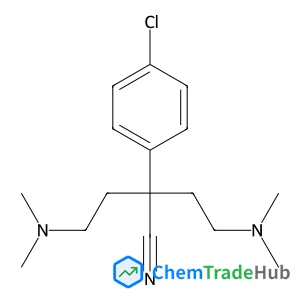
2-(4-Chlorophenyl)-4-(dimethylamino)-2-(2-(dimethylamino)ethyl)butanenitrile
CAS番号:
1246816-57-8
分子式:
C16H24ClN3
おすすめサプライヤー



免責事項
このページに表示される学術雑誌情報は、参考および研究目的のみを目的としています。当社は雑誌出版社とは提携しておらず、投稿の取り扱いも行っておりません。出版に関するお問い合わせは、各雑誌出版社に直接ご連絡ください。
表示されている情報に誤りがある場合は、support@chemtradehub.com までご連絡ください。迅速に確認し、対応いたします。