












![N,N'-1,2-Ethanediylbis[2-(vinylsulfonyl)acetamide] structure](https://static.chemtradehub.com/structs/667/66710-66-5-b556.webp "N,N'-1,2-Ethanediylbis[2-(vinylsulfonyl)acetamide] structure")
Comparing alchemical and physical pathway methods for computing the absolute binding free energy of charged ligands
文献情報
出版日
2018-05-24
DOI
10.1039/C8CP01524D
インパクトファクター
3.676
著者
Nanjie Deng, Di Cui, Bin W. Zhang, Junchao Xia, Jeffrey Cruz, Ronald Levy
原文を見る
要旨
Accurately predicting absolute binding free energies of protein–ligand complexes is important as a fundamental problem in both computational biophysics and pharmaceutical discovery. Calculating binding free energies for charged ligands is generally considered to be challenging because of the strong electrostatic interactions between the ligand and its environment in aqueous solution. In this work, we compare the performance of the potential of mean force (PMF) method and the double decoupling method (DDM) for computing absolute binding free energies for charged ligands. We first clarify an unresolved issue concerning the explicit use of the binding site volume to define the complexed state in DDM together with the use of harmonic restraints. We also provide an alternative derivation for the formula for absolute binding free energy using the PMF approach. We use these formulas to compute the binding free energy of charged ligands at an allosteric site of HIV-1 integrase, which has emerged in recent years as a promising target for developing antiviral therapy. As compared with the experimental results, the absolute binding free energies obtained by using the PMF approach show unsigned errors of 1.5–3.4 kcal mol−1, which are somewhat better than the results from DDM (unsigned errors of 1.6–4.3 kcal mol−1) using the same amount of CPU time. According to the DDM decomposition of the binding free energy, the ligand binding appears to be dominated by nonpolar interactions despite the presence of very large and favorable intermolecular ligand–receptor electrostatic interactions, which are almost completely cancelled out by the equally large free energy cost of desolvation of the charged moiety of the ligands in solution. We discuss the relative strengths of computing absolute binding free energies using the alchemical and physical pathway methods.
関連文献
Formation of polypseudorotaxane networks by cross-linking the quadruple hydrogen bonded linear supramolecular polymersviabisparaquat molecules
Shao-Lu Li, Tangxin Xiao, Bingjie Hu, Yajie Zhang, Feng Zhao, Ya Ji, Yihua Yu, Chen Lin, Leyong Wang
2011-08-26
Communication
DOI: 10.1039/C1CC14559B
Cell-like systems with riboswitch controlled gene expression
Laura Martini, Sheref S. Mansy
2011-08-25
Communication
DOI: 10.1039/C1CC13930D
Model oxide supported MoS2 HDS catalysts: structure and surface properties
Federico Cesano, Serena Bertarione, Andrea Piovano, Giovanni Agostini, Mohammed Mastabur Rahman, Elena Groppo, Francesca Bonino, Domenica Scarano, Carlo Lamberti, Silvia Bordiga, Luciano Montanari, Lucia Bonoldi, Roberto Millini, Adriano Zecchina
2011-01-31
Paper
DOI: 10.1039/C0CY00050G
A novel pathway for maytansinoid release from thioether linked antibody–drug conjugates (ADCs) under oxidative conditions
Nathan Fishkin, Erin K. Maloney, Ravi V. J. Chari, Rajeeva Singh
2011-08-26
Communication
DOI: 10.1039/C1CC14164C
Reverse orthogonal strategy for oligosaccharide synthesis‡§
Kohki Fujikawa, N. Vijaya Ganesh, Yih Horng Tan, Keith J. Stine, Alexei V. Demchenko
2011-09-05
Communication
DOI: 10.1039/C1CC13409D
A novel magnetic mesoporous silica packed S-shaped microfluidic reactor for online proteolysis of low-MW proteome
Qianhao Min, Xiaoxia Zhang, Ren'an Wu, Hanfa Zou, Jun-Jie Zhu
2011-08-24
Communication
DOI: 10.1039/C1CC13969J
Precise engineering and visualization of signs and magnitudes of DNA writhe on the basis of PNA invasion
Dawei Li, Zhaoqi Yang, Yi Long, Guanjia Zhao, Bei Lv, Shuhui Hiew, Magdeline Tao Tao Ng, Juanjuan Guo, HongKee Tan, Hao Zhang, Weixing Yuan, Haibin Su, Tianhu Li
2011-09-05
Communication
DOI: 10.1039/C1CC13158C
Empirical modelling as an experimental approach to optimize lactone production
Nelma Gomes, José A. Teixeira, Isabel Belo
2011-02-04
Paper
DOI: 10.1039/C0CY00017E
Sequential chemical deposition of metal alloy jellyfish using polyaniline: redox chemistry at the metal–polymer interface
Elshan Akhadov, Leeyih Wang, Hsing-Lin Wang
2011-08-30
Communication
DOI: 10.1039/C1CC13025K
Gold(i)-catalyzed synthesis of furans and pyrrolesviaalkyne hydration
Pierrick Nun, Stéphanie Dupuy, Albert Poater, Luigi Cavallo, Steven P. Nolan
2011-01-31
Communication
DOI: 10.1039/C0CY00055H
こちらもおすすめ
化合物よくある質問
環戊烷-1,3-二甲酸甲酯はどのように合成されますか?
環戊烷-1,3-二甲酸甲酯は、環戊烷と塩酸によるヒンデンブルク反応を経由して合成されます。この反応では、環戊烷が塩酸と作用し、1,3-ジカルボキシ基が導入されま...
2435-36-1Dimethyl 1,3-cyclope...
化合物よくある質問
4-メトキシ-1,2,3-スチアゼ-3,5-ジオンとは何ですか?
4-メトキシ-1,2,3-スチアゼ-3,5-ジオンは、CAS番号107843-77-6の化合物で、(E)-ベンジル3-(3,4-ジヒドロキシフェニル) acry...
107843-77-6(E)-Benzyl 3-(3,4-di...
化合物よくある質問
プロスタグランジンA2について「に適用される法規ガイドラインは何ですか?'
プロスタグランジンA2 (CAS番号: 41691-92-3) は、化学物質の安全管理に関する規制として、GHS (危険物質の国際的ハザード分類・ラベル付けシス...
41691-92-316,16-DIMETHYL PROST...
化合物よくある質問
4-アミノ-1-ナフタレン sulfonic 酸についての物理化学的性質は何ですか?
4-アミノ-1-ナフタレン sulfonic 酸のCAS番号は84-86-6です。この化合物は結晶性で、分子量は212.15 g/molです。アルコールや水など...
84-86-64-Amino-1-naphthalen...
化合物よくある質問
N-GlcNAc-生物素を取り扱う際の実験室安全事項は何ですか?
N-GlcNAc-生物素は吸収性があり、皮膚や目への接触を避けることが重要です。PPE(個体保護具)は使用し、ドラフトチャンバーは必要に応じて使用します。漏洩時...
1272755-69-72-Acetamido-2-deoxy-...
化合物よくある質問
3-アミノメチルフローラノピペリジン-1-カルボニル酸テルブチルエステルとは何ですか?
CAS番号1209781-11-2の3-アミノメチルフローラノピペリジン-1-カルボニル酸テルブチルエステルは、有機化合物の一種で、化学式はC10H17FNO3...
1209781-11-22-Methyl-2-propanyl ...
化合物よくある質問
6-溴-1-甲基-1H-ベンゾ[d][1,2,3]三氮唑はどのように合成されますか?
6- bromo-1-methyl-1H-benzotriazoleは、ブロモフリオリンと1-メチル-1H-ベンゾ[d][1,2,3]三氮唑の反応により合成され...
944718-32-56-Bromo-1-methyl-1H-...
化合物よくある質問
4-硫代尿苷はどのように合成されますか?
4-硫代尿苷は、尿素とD-リボシルヒドロキシアルデヒドを用いてスルホン化反応を経て合成されます。通常は塩酸ヒドロキシチオニルスルホン酸などの触媒を使用し、選択性...
6741-73-71-(4-thio-beta-D-rib...
化合物よくある質問
ブレインナトリユリックペプチド32ラットとは何ですか?
ブレインナトリユリックペプチド32ラット(CAS番号: 133448-20-1)は、心臓で作られるホルモンの一つで、心不全の診断や予後評価に使用されます。
133448-20-1Brain Natriuretic Pe...
化合物よくある質問
1-(3-氮杂啶)-4-羟基哌啶双盐酸盐の物理化学的性質は何ですか?
CAS番号810680-60-5の1-(3-氮杂啶)-4-羟基哌啶双盐酸盐は、白色の結晶性粉末である。分子量は360.84 g/molで、水に溶けやすい。反応活...
810680-60-51-(3-Azetidinyl)-4-p...
掲載誌
Physical Chemistry Chemical Physics

CiteScore:
5.5
自己引用率:
10.3%
年間論文数:
3036
Physical Chemistry Chemical Physics (PCCP) is an international journal co-owned by 19 physical chemistry and physics societies from around the world. This journal publishes original, cutting-edge research in physical chemistry, chemical physics and biophysical chemistry. To be suitable for publication in PCCP, articles must include significant innovation and/or insight into physical chemistry; this is the most important criterion that reviewers and Editors will judge against when evaluating submissions. The journal has a broad scope and welcomes contributions spanning experiment, theory, computation and data science. Topical coverage includes spectroscopy, dynamics, kinetics, statistical mechanics, thermodynamics, electrochemistry, catalysis, surface science, quantum mechanics, quantum computing and machine learning. Interdisciplinary research areas such as polymers and soft matter, materials, nanoscience, energy, surfaces/interfaces, and biophysical chemistry are welcomed if they demonstrate significant innovation and/or insight into physical chemistry. Joined experimental/theoretical studies are particularly appreciated when complementary and based on up-to-date approaches.
おすすめ化合物
![N-[(9H-Fluoren-9-ylmethoxy)carbonyl]-beta-phenyl-L-phenylalanine structure](https://static.chemtradehub.com/structs/201/201484-50-6-c2fc.webp "N-[(9H-Fluoren-9-ylmethoxy)carbonyl]-beta-phenyl-L-phenylalanine structure")
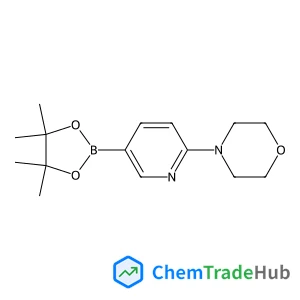
4-(5-(4,4,5,5-tetramethyl-1,3,2-dioxaborolan-2-yl)pyridin-2-yl)morpholine
CAS番号:
485799-04-0
分子式:
C15H23BN2O3
おすすめサプライヤー




免責事項
このページに表示される学術雑誌情報は、参考および研究目的のみを目的としています。当社は雑誌出版社とは提携しておらず、投稿の取り扱いも行っておりません。出版に関するお問い合わせは、各雑誌出版社に直接ご連絡ください。
表示されている情報に誤りがある場合は、support@chemtradehub.com までご連絡ください。迅速に確認し、対応いたします。