


Effects of substituents on luminescent efficiency of stable triaryl methyl radicals
文献情報
出版日
2018-06-26
DOI
10.1039/C8CP01492B
インパクトファクター
3.676
著者
Shengzhi Dong, Wei Xu, Haoqing Guo, Wenfu Yan, Ming Zhang, Feng Li
原文を見る
要旨
A series of perchlorotriphenyl methyl (PTM) and tris(2,4,6-trichlorophenyl)methyl (TTM) radical derivatives were synthesized. The factors affecting the photoluminescence quantum yields (PLQYs) of π-radicals were studied systematically for the first time through comparing the photophysical properties of the synthesized PTM and TTM radicals. The room-temperature PLQY of a PTM radical derivative achieves to be 56.6%, which is the highest value among the organic near-infrared materials with peak wavelength over 650 nm. The photostabilities of the radicals was significantly enhanced via incorporation of substituent groups. The molecular rigidity, electron donating ability of the donor and dihedral angle between D–A system were found to be the potential factors to affect the luminescent efficiency of the open-shell molecules.
おすすめジャーナル

European Journal of Organic Chemistry

Molecules

Lab on a Chip

Mini-Reviews in Medicinal Chemistry

Environmental Toxicology and Pharmacology

Photochemical & Photobiological Sciences

Nature Reviews Drug Discovery

Physical Chemistry Chemical Physics

Advanced Engineering Materials

Angewandte Chemie International Edition
関連文献
The role of the potential field on occurrence and flow of octane in quartz nanopores
Kaiyun Zhan, Wenjing Fang, Zhiming Pan, Guilei Teng, Haixia Zheng, Li Zhao, Bing Liu
2021-04-27
Paper
DOI: 10.1039/D1CP00891A
Electronic and thermodynamic properties of native point defects in V2O5: a first-principles study
2021-02-22
Paper
DOI: 10.1039/D0CP06002J
High-temperature molecular screening of hybrid polyOAPS-imide networks based on octa(aminophenyl)silsesquioxane for increased thermomechanical resistance
Sylvie Neyertz, Saman Salimi, Farzaneh Radmanesh, Nieck E. Benes, David Brown
2021-04-30
Paper
DOI: 10.1039/D1CP01052B
Insights into the sodiation mechanism of hard carbon-like materials from electrochemical impedance spectroscopy
Konstantin Schutjajew, Tim Tichter, Jonathan Schneider, Markus Antonietti, Christina Roth, Martin Oschatz
2021-04-29
Paper
DOI: 10.1039/D1CP00610J
Mechanism of chiral recognition by enantiomorphous cytosine crystals during enantiomer adsorption
Vladimir Yu. Gus’kov, Regina Kh. Shayakhmetova, Darya A. Allayarova, Yulia F. Sharafutdinova, Elmira L. Gilfanova, Irina N. Pavlova, Gulnaz Z. Garipova
2021-05-05
Paper
DOI: 10.1039/D1CP01265G
A new perspective for evaluating the photoelectric performance of organic–inorganic hybrid perovskites based on the DFT calculations of excited states
Zhengyang Gao, Shengyi Chen, Yang Bai, Min Wang, Weijie Yang, Wei Li, Xunlei Ding
2021-04-28
Paper
DOI: 10.1039/D1CP01000J
The C(3P) + O2(3Σg−) → CO2 ↔ CO(1Σ+) + O(1D)/O(3P) reaction: thermal and vibrational relaxation rates from 15 K to 20 000 K
Juan Carlos San Vicente Veliz, Debasish Koner, Raymond J. Bemish
2021-04-12
Paper
DOI: 10.1039/D1CP01101D
High oxide-ion conductivity in acceptor-doped Bi-based perovskites at modest doping levels
Linhao Li, Joe Kler, Anthony R. West, Roger A. De Souza, Derek C. Sinclair
2021-05-03
Paper
DOI: 10.1039/D1CP01120K
Modelling the non-local thermodynamic equilibrium spectra of silylene (SiH2)
Victoria H. J. Clark, Sergei N. Yurchenko
2021-04-29
Paper
DOI: 10.1039/D1CP00839K
こちらもおすすめ
化合物よくある質問
2-メトキシ-4-(メチルスルフィニル)アミンの主な用途は何ですか?
2-メトキシ-4-(メチルスルフィニル)アミンは、主に医薬品および農薬の製造に使用されます。また、合成化学の一部として研究用材料としても利用されます。
41608-73-52-Methoxy-4-(methyls...
118684-13-24-(Bromomethyl)-3-me...
化合物よくある質問
4,6-二氯-N-甲基ピラミジンアミンの代替品はありますか?
代替品としては、4,6-二クロロピラミジンアミンや他のピラミジン系化合物が考えられます。ただし、目的と用途によって最適な代替品は異なります。
10397-15-64,6-Dichloro-N-methy...
化合物よくある質問
6-氯-4-甲基-1H-吲哚を含む廃棄物はどのように処理すべきですか?
6-氯-4-甲基-1H-吲哚の廃棄物は、適切な容器に収集し、密閉して保管します。温度は常温、湿度は低く、直射日光を避けて保管することを推奨します。廃棄処理は専門...
885520-84-36-chloro-4-methyl-1H...
化合物よくある質問
2-フローユロ-4-(トリフルオロメチル)ベンゾイドについて「に適用される法規ガイドラインは何ですか」
2-フローユロ-4-(トリフルオロメチル)ベンゾイドのCAS番号は207974-08-1です。この化合物はGHS分類で毒性物質と有害な反応物質として分類されます...
207974-08-1[2-Fluoro-4-(trifluo...
化合物よくある質問
4-ニトロフェニルN-[(ベンゼルオキシルカーボンイル]グリシングリシングリシン酸はどのように保存すればよいですか?
4-ニトロフェニルN-[(ベンゼルオキシルカーボンイル]グリシングリシングリシン酸は、室温で暗所に保管し、乾燥した環境で保存することを推奨します。容器は密閉性の...
19811-64-44-Nitrophenyl N-[(be...
化合物よくある質問
イソデスロラタドリンの代替品はありますか?
イソデスロラタドリンの代替品としては、デスロラタドリンや他の抗ヒスタミン薬が挙げられます。具体的には、デスロラタドリン、ラセカミド、フェルタドリンなどが、症状や...
183198-49-4Iso Desloratadine
化合物よくある質問
5-甲氧基-1,2,3,4-四氢异喹啉盐酸盐はどのように合成されますか?
5-甲氧基-1,2,3,4-四氢异喹啉盐酸盐の一般的な合成方法は、メタノール中で5-メトキシ-1,2,3,4-四ヒュドロイソキシンを塩酸で塩化します。この反応で...
103030-69-95-Methoxy-1,2,3,4-te...
化合物よくある質問
4-アミノ-5-メトキシ-2-トルエンサルホニック酸についての法規ガイドラインは何ですか?
CAS番号6471-78-9の4-アミノ-5-メトキシ-2-トルエンサルホニック酸は、GHS分類では corrosive(腐食性)と識別されます。EUのREAC...
6471-78-94-Amino-5-Methoxy-2-...
化合物よくある質問
甲基孕酮を取り扱う際の実験室安全事項は何ですか?
甲基孕酮の取り扱いは、PPE(個人保護具)の使用が必要な重要な安全事項を伴います。防塵マスク、ゴーグル、手袋を着用することが推奨されます。ドラフトチャンバーを使...
204063-33-22-[(Diphenylmethyl)a...
掲載誌
Physical Chemistry Chemical Physics
CiteScore:
5.5
自己引用率:
10.3%
年間論文数:
3036
Physical Chemistry Chemical Physics (PCCP) is an international journal co-owned by 19 physical chemistry and physics societies from around the world. This journal publishes original, cutting-edge research in physical chemistry, chemical physics and biophysical chemistry. To be suitable for publication in PCCP, articles must include significant innovation and/or insight into physical chemistry; this is the most important criterion that reviewers and Editors will judge against when evaluating submissions. The journal has a broad scope and welcomes contributions spanning experiment, theory, computation and data science. Topical coverage includes spectroscopy, dynamics, kinetics, statistical mechanics, thermodynamics, electrochemistry, catalysis, surface science, quantum mechanics, quantum computing and machine learning. Interdisciplinary research areas such as polymers and soft matter, materials, nanoscience, energy, surfaces/interfaces, and biophysical chemistry are welcomed if they demonstrate significant innovation and/or insight into physical chemistry. Joined experimental/theoretical studies are particularly appreciated when complementary and based on up-to-date approaches.
おすすめ化合物
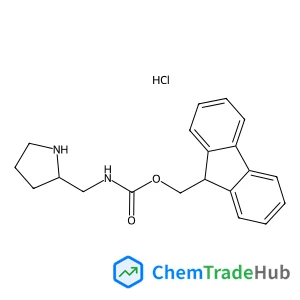
(S)-(9H-Fluoren-9-yl)methyl (pyrrolidin-2-ylmethyl)carbamate hydrochloride
CAS番号:
1217813-15-4
分子式:
C20H23ClN2O2
おすすめサプライヤー






免責事項
このページに表示される学術雑誌情報は、参考および研究目的のみを目的としています。当社は雑誌出版社とは提携しておらず、投稿の取り扱いも行っておりません。出版に関するお問い合わせは、各雑誌出版社に直接ご連絡ください。
表示されている情報に誤りがある場合は、support@chemtradehub.com までご連絡ください。迅速に確認し、対応いたします。