


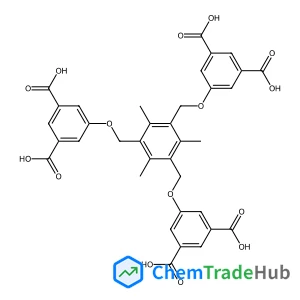
Singlet and triplet energy transfer dynamics in self-assembled axial porphyrin–anthracene complexes: towards supra-molecular structures for photon upconversion
文献情報
出版日
2018-02-12
DOI
10.1039/C8CP00884A
インパクトファクター
3.676
著者
Victor Gray, Betül Küçüköz, Fredrik Edhborg, Maria Abrahamsson, Kasper Moth-Poulsen, Bo Albinsson
原文を見る
要旨
Energy and electron transfer reactions are central to many different processes and research fields, from photosynthesis and solar energy harvesting to biological and medical applications. Herein we report a comprehensive study of the singlet and triplet energy transfer dynamics in porphyrin–anthracene coordination complexes. Seven newly synthesized pyridine functionalized anthracene ligands, five with various bridge lengths and two dendrimer structures containing three and seven anthracene units, were prepared. We found that triplet energy transfer from ruthenium octaethylporphyrin to an axially coordinated anthracene is possible, and is in some cases followed by back triplet energy transfer to the porphyrin. The triplet energy transfer follows an exponential distance dependence with an attenuation factor, β, of 0.64 Å−1. Further, singlet energy transfer from anthracene to the ruthenium porphyrin appears to follow a R6 Förster distance dependence. Porphyrin–anthracene complexes are also used as triplet sensitizers for triplet–triplet annihilation (TTA) based photon upconversion, demonstrating their potential for photophysical and photochemical applications. The triplet lifetime of the complex is extended by the anthracene ligands, resulting in a threefold increase in the upconversion efficiency, ΦUC to 4.5%, compared to the corresponding ruthenium porphyrin–pyridine complex. Based on the results herein we discuss the future design of supra-molecular structures for TTA upconversion.
おすすめジャーナル

Physical Chemistry Chemical Physics

Mini-Reviews in Medicinal Chemistry

Coloration Technology

Environmental Toxicology and Pharmacology

Contact Lens & Anterior Eye

Angewandte Chemie International Edition

CrystEngComm

Green Chemistry

Journal of Enzyme inhibition and Medicinal Chemistry

European Journal of Organic Chemistry
関連文献
Outstanding spin-transport properties of a flexible phosphorene photodetector driven by the photogalvanic effect under mechanical strains
Yufeng Xie, Juan Zhao, Yibin Hu, Xiang Ye, Yiqun Xie, Ronggen Cao
2021-05-04
Paper
DOI: 10.1039/D0CP06712A
Measurement and modelling solubility of amino acids and peptides in aqueous 2-propanol solutions
Hoang Tam Do, Patrick Franke, Sophia Volpert, Marcel Klinksiek, Max Thome, Christoph Held
2021-04-08
Paper
DOI: 10.1039/D1CP00005E
Active particle diffusion in convection roll arrays
Pulak Kumar Ghosh, Yunyun Li
2021-05-10
Paper
DOI: 10.1039/D1CP01088C
A broad-range variable-temperature solid state NMR spectral and relaxation investigation of the water state in Nafion 117
Ren-Hao Cheng, Honghao Cai, Yu-Ren Huang, Xiaohong Cui, Zhong Chen, Hsuan-Ying Chen, Shangwu Ding
2021-04-13
Paper
DOI: 10.1039/C9CP05978D
Bond dissociation energies of low-valent lanthanide hydroxides: lower limits from ion–molecule reactions and comparisons with fluorides
Mariah L. Parker, Jiwen Jian, John K. Gibson
2021-05-05
Paper
DOI: 10.1039/D1CP01362A
The molecular structure of the surface of water–ethanol mixtures
Johannes Kirschner, Anderson H. A. Gomes, Olle Björneholm, Vincenzo Carravetta, Niklas Ottosson, Arnaldo Naves de Brito, Huib J. Bakker
2021-05-11
Paper
DOI: 10.1039/D0CP06387H
Deactivation-free ethanol steam reforming at nickel-tipped carbon filaments
Yutichai Mueanngern, Cheng-Han Li, Meiling Spelic, Joshua Graham, Nathan Pimental, Yehia Khalifa, Joerg R. Jinschek, L. Robert Baker
2021-05-04
Paper
DOI: 10.1039/D1CP00637A
The many-body expansion for aqueous systems revisited: III. Hofmeister ion–water interactions
Kristina M. Herman, Joseph P. Heindel
2021-04-06
Paper
DOI: 10.1039/D1CP00409C
Capturing the dynamic association between a tris-dipicolinate lanthanide complex and a decapeptide: a combined paramagnetic NMR and molecular dynamics exploration
Sandrine Denis-Quanquin, Alessio Bartocci, Florence Szczepaniak, Francois Riobé, Olivier Maury, Nicolas Giraud
2021-03-15
Paper
DOI: 10.1039/D0CP06570F
On the adsorption mechanism of caffeine on MAPbI3 perovskite surfaces: a combined UMC-DFT study
Raphael M. Tromer, Ramiro M. dos Santos
2021-04-01
Paper
DOI: 10.1039/D0CP04308G
こちらもおすすめ
化合物よくある質問
2-メトキシ-4-(メチルスルフィニル)アミンの主な用途は何ですか?
2-メトキシ-4-(メチルスルフィニル)アミンは、主に医薬品および農薬の製造に使用されます。また、合成化学の一部として研究用材料としても利用されます。
41608-73-52-Methoxy-4-(methyls...
118684-13-24-(Bromomethyl)-3-me...
化合物よくある質問
4,6-二氯-N-甲基ピラミジンアミンの代替品はありますか?
代替品としては、4,6-二クロロピラミジンアミンや他のピラミジン系化合物が考えられます。ただし、目的と用途によって最適な代替品は異なります。
10397-15-64,6-Dichloro-N-methy...
化合物よくある質問
6-氯-4-甲基-1H-吲哚を含む廃棄物はどのように処理すべきですか?
6-氯-4-甲基-1H-吲哚の廃棄物は、適切な容器に収集し、密閉して保管します。温度は常温、湿度は低く、直射日光を避けて保管することを推奨します。廃棄処理は専門...
885520-84-36-chloro-4-methyl-1H...
化合物よくある質問
2-フローユロ-4-(トリフルオロメチル)ベンゾイドについて「に適用される法規ガイドラインは何ですか」
2-フローユロ-4-(トリフルオロメチル)ベンゾイドのCAS番号は207974-08-1です。この化合物はGHS分類で毒性物質と有害な反応物質として分類されます...
207974-08-1[2-Fluoro-4-(trifluo...
化合物よくある質問
4-ニトロフェニルN-[(ベンゼルオキシルカーボンイル]グリシングリシングリシン酸はどのように保存すればよいですか?
4-ニトロフェニルN-[(ベンゼルオキシルカーボンイル]グリシングリシングリシン酸は、室温で暗所に保管し、乾燥した環境で保存することを推奨します。容器は密閉性の...
19811-64-44-Nitrophenyl N-[(be...
化合物よくある質問
イソデスロラタドリンの代替品はありますか?
イソデスロラタドリンの代替品としては、デスロラタドリンや他の抗ヒスタミン薬が挙げられます。具体的には、デスロラタドリン、ラセカミド、フェルタドリンなどが、症状や...
183198-49-4Iso Desloratadine
化合物よくある質問
5-甲氧基-1,2,3,4-四氢异喹啉盐酸盐はどのように合成されますか?
5-甲氧基-1,2,3,4-四氢异喹啉盐酸盐の一般的な合成方法は、メタノール中で5-メトキシ-1,2,3,4-四ヒュドロイソキシンを塩酸で塩化します。この反応で...
103030-69-95-Methoxy-1,2,3,4-te...
化合物よくある質問
4-アミノ-5-メトキシ-2-トルエンサルホニック酸についての法規ガイドラインは何ですか?
CAS番号6471-78-9の4-アミノ-5-メトキシ-2-トルエンサルホニック酸は、GHS分類では corrosive(腐食性)と識別されます。EUのREAC...
6471-78-94-Amino-5-Methoxy-2-...
化合物よくある質問
甲基孕酮を取り扱う際の実験室安全事項は何ですか?
甲基孕酮の取り扱いは、PPE(個人保護具)の使用が必要な重要な安全事項を伴います。防塵マスク、ゴーグル、手袋を着用することが推奨されます。ドラフトチャンバーを使...
204063-33-22-[(Diphenylmethyl)a...
掲載誌
Physical Chemistry Chemical Physics
CiteScore:
5.5
自己引用率:
10.3%
年間論文数:
3036
Physical Chemistry Chemical Physics (PCCP) is an international journal co-owned by 19 physical chemistry and physics societies from around the world. This journal publishes original, cutting-edge research in physical chemistry, chemical physics and biophysical chemistry. To be suitable for publication in PCCP, articles must include significant innovation and/or insight into physical chemistry; this is the most important criterion that reviewers and Editors will judge against when evaluating submissions. The journal has a broad scope and welcomes contributions spanning experiment, theory, computation and data science. Topical coverage includes spectroscopy, dynamics, kinetics, statistical mechanics, thermodynamics, electrochemistry, catalysis, surface science, quantum mechanics, quantum computing and machine learning. Interdisciplinary research areas such as polymers and soft matter, materials, nanoscience, energy, surfaces/interfaces, and biophysical chemistry are welcomed if they demonstrate significant innovation and/or insight into physical chemistry. Joined experimental/theoretical studies are particularly appreciated when complementary and based on up-to-date approaches.
おすすめ化合物
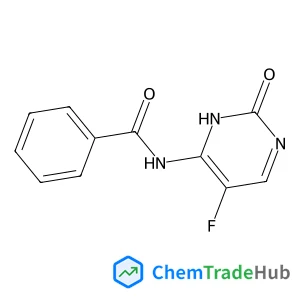
![4-Chloro-2-{[(2-chlorophenoxy)acetyl]amino}benzoic acid structure](https://static.chemtradehub.com/structs/351/351424-20-9-9467.webp "4-Chloro-2-{[(2-chlorophenoxy)acetyl]amino}benzoic acid structure")
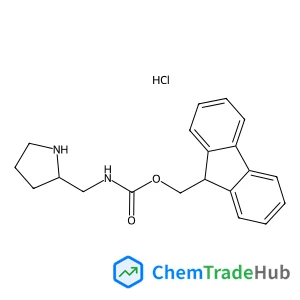
(S)-(9H-Fluoren-9-yl)methyl (pyrrolidin-2-ylmethyl)carbamate hydrochloride
CAS番号:
1217813-15-4
分子式:
C20H23ClN2O2
おすすめサプライヤー






免責事項
このページに表示される学術雑誌情報は、参考および研究目的のみを目的としています。当社は雑誌出版社とは提携しておらず、投稿の取り扱いも行っておりません。出版に関するお問い合わせは、各雑誌出版社に直接ご連絡ください。
表示されている情報に誤りがある場合は、support@chemtradehub.com までご連絡ください。迅速に確認し、対応いたします。