













A broad-range variable-temperature solid state NMR spectral and relaxation investigation of the water state in Nafion 117
文献情報
出版日
2021-04-13
DOI
10.1039/C9CP05978D
インパクトファクター
3.676
著者
Ren-Hao Cheng, Honghao Cai, Yu-Ren Huang, Xiaohong Cui, Zhong Chen, Hsuan-Ying Chen, Shangwu Ding
原文を見る
要旨
Understanding the water state in Nafion is not only crucial for operating a proton-exchange membrane (PEM)-based fuel cell, but also intimately related to the elucidation of the proton transport mechanism in a PEM. Although many studies have been published on this subject, some controversies and ambiguities remain unresolved. In this work, we design three different types of Nafion samples by substituting protons with lithium or sodium cations. We also pay special attention to the preparation of samples for carrying out broad-range variable temperature solid state NMR experiments so that no membrane dehydration occurs during the long experimental time at low temperatures. With these precautions and improvements, clear and largely straightforward information could be obtained to ensure minimal ambiguity and complexity in the interpretation of the experimental data. Our results show that about 40–60% of water remains unfrozen at −70 °C, depending on the type of the substituting cation. Both the 1H and 2H spectral and relaxation results indicate that water freezing starts from the center of the nanopores inside Nafion and increases gradually as the temperature decreases. The protons remain dissociated with sulfonate groups even at the lowest temperature we reached (−70 °C), whereas both lithium and sodium are associated with sulfonate groups at most temperatures below 0 °C. The experimental data also suggest that besides frozen and unfrozen water, there is broad distribution of water state and dynamics in Nafion as the temperature is lowered from above zero down to −70 °C. The effect of the size of the substituting cation significantly affects the properties of supercooled water by modifying the cation–water interaction and impeding the rotation of sulfonate groups. These novel results not only help us in establishing a better understanding of the water state in Nafion and its performance as a proton exchange mebrane, but also provide insights into water freezing, antifreeze and supercooling in other nanoscopic environments.
関連文献
Adsorption and interaction of CO2 on rutile TiO2(110) surfaces: a combined UHV-FTIRS and theoretical simulation study
Yunjun Cao, Shujun Hu, Min Yu, Shishen Yan, Mingchun Xu
2015-08-18
Paper
DOI: 10.1039/C5CP04013B
Isn't the space-charge potential in ceria-based solid electrolytes largely overestimated?
2016-06-27
Paper
DOI: 10.1039/C6CP02177H
Experimental and molecular dynamics studies of anthraquinone dyes in a nematic liquid-crystal host: a rationale for observed alignment trends
Mark T. Sims, Laurence C. Abbott, Stephen J. Cowling, John W. Goodby, John N. Moore
2016-07-14
Paper
DOI: 10.1039/C6CP03823A
Exploring the core level shift origin of sulfur and thiolates on Pd(111) surfaces
Roberto Carlos Salvarezza, Pilar Carro
2015-08-03
Paper
DOI: 10.1039/C5CP04180E
Solving local structure around dopants in metal nanoparticles with ab initio modeling of X-ray absorption near edge structure
Janis Timoshenko, Atal Shivhare, Robert W. J. Scott, Deyu Lu, Anatoly I. Frenkel
2016-06-30
Paper
DOI: 10.1039/C6CP04030F
Correction: A novel benzoxazine/cyanate ester blend with sea-island phase structures
Xiaoyong Luo, Yi Gu
2015-07-17
Correction
DOI: 10.1039/C5CP90128F
Comparative density functional theory and density functional tight binding study of arginine and arginine-rich cell penetrating peptide TAT adsorption on anatase TiO2
Wenxuan Li, Konstantinos Kotsis, Sergei Manzhos
2016-06-29
Paper
DOI: 10.1039/C6CP02671K
Photo-thermal effects in gold nanoparticles dispersed in thermotropic nematic liquid crystals
Luigia Pezzi, Luciano De Sio, Alessandro Veltri, Giovanna Palermo, Roberto Comparelli, Maria Lucia Curri, Nelson Tabiryan, Cesare Umeton
2015-06-29
Paper
DOI: 10.1039/C5CP01377A
Direct planting of ultrafine MoO2+δ nanoparticles in carbon nanofibers by electrospinning: self-supported mats as binder-free and long-life anodes for lithium-ion batteries
Xiaoxiao Liu, Henghui Xu, Yunhui Huang, Xianluo Hu
2016-06-27
Paper
DOI: 10.1039/C6CP01806H
こちらもおすすめ
化合物よくある質問
2-メトキシ-4-(メチルスルフィニル)アミンの主な用途は何ですか?
2-メトキシ-4-(メチルスルフィニル)アミンは、主に医薬品および農薬の製造に使用されます。また、合成化学の一部として研究用材料としても利用されます。
41608-73-52-Methoxy-4-(methyls...
118684-13-24-(Bromomethyl)-3-me...
化合物よくある質問
4,6-二氯-N-甲基ピラミジンアミンの代替品はありますか?
代替品としては、4,6-二クロロピラミジンアミンや他のピラミジン系化合物が考えられます。ただし、目的と用途によって最適な代替品は異なります。
10397-15-64,6-Dichloro-N-methy...
化合物よくある質問
6-氯-4-甲基-1H-吲哚を含む廃棄物はどのように処理すべきですか?
6-氯-4-甲基-1H-吲哚の廃棄物は、適切な容器に収集し、密閉して保管します。温度は常温、湿度は低く、直射日光を避けて保管することを推奨します。廃棄処理は専門...
885520-84-36-chloro-4-methyl-1H...
化合物よくある質問
2-フローユロ-4-(トリフルオロメチル)ベンゾイドについて「に適用される法規ガイドラインは何ですか」
2-フローユロ-4-(トリフルオロメチル)ベンゾイドのCAS番号は207974-08-1です。この化合物はGHS分類で毒性物質と有害な反応物質として分類されます...
207974-08-1[2-Fluoro-4-(trifluo...
化合物よくある質問
4-ニトロフェニルN-[(ベンゼルオキシルカーボンイル]グリシングリシングリシン酸はどのように保存すればよいですか?
4-ニトロフェニルN-[(ベンゼルオキシルカーボンイル]グリシングリシングリシン酸は、室温で暗所に保管し、乾燥した環境で保存することを推奨します。容器は密閉性の...
19811-64-44-Nitrophenyl N-[(be...
化合物よくある質問
イソデスロラタドリンの代替品はありますか?
イソデスロラタドリンの代替品としては、デスロラタドリンや他の抗ヒスタミン薬が挙げられます。具体的には、デスロラタドリン、ラセカミド、フェルタドリンなどが、症状や...
183198-49-4Iso Desloratadine
化合物よくある質問
5-甲氧基-1,2,3,4-四氢异喹啉盐酸盐はどのように合成されますか?
5-甲氧基-1,2,3,4-四氢异喹啉盐酸盐の一般的な合成方法は、メタノール中で5-メトキシ-1,2,3,4-四ヒュドロイソキシンを塩酸で塩化します。この反応で...
103030-69-95-Methoxy-1,2,3,4-te...
化合物よくある質問
4-アミノ-5-メトキシ-2-トルエンサルホニック酸についての法規ガイドラインは何ですか?
CAS番号6471-78-9の4-アミノ-5-メトキシ-2-トルエンサルホニック酸は、GHS分類では corrosive(腐食性)と識別されます。EUのREAC...
6471-78-94-Amino-5-Methoxy-2-...
化合物よくある質問
甲基孕酮を取り扱う際の実験室安全事項は何ですか?
甲基孕酮の取り扱いは、PPE(個人保護具)の使用が必要な重要な安全事項を伴います。防塵マスク、ゴーグル、手袋を着用することが推奨されます。ドラフトチャンバーを使...
204063-33-22-[(Diphenylmethyl)a...
掲載誌
Physical Chemistry Chemical Physics

CiteScore:
5.5
自己引用率:
10.3%
年間論文数:
3036
Physical Chemistry Chemical Physics (PCCP) is an international journal co-owned by 19 physical chemistry and physics societies from around the world. This journal publishes original, cutting-edge research in physical chemistry, chemical physics and biophysical chemistry. To be suitable for publication in PCCP, articles must include significant innovation and/or insight into physical chemistry; this is the most important criterion that reviewers and Editors will judge against when evaluating submissions. The journal has a broad scope and welcomes contributions spanning experiment, theory, computation and data science. Topical coverage includes spectroscopy, dynamics, kinetics, statistical mechanics, thermodynamics, electrochemistry, catalysis, surface science, quantum mechanics, quantum computing and machine learning. Interdisciplinary research areas such as polymers and soft matter, materials, nanoscience, energy, surfaces/interfaces, and biophysical chemistry are welcomed if they demonstrate significant innovation and/or insight into physical chemistry. Joined experimental/theoretical studies are particularly appreciated when complementary and based on up-to-date approaches.
おすすめ化合物
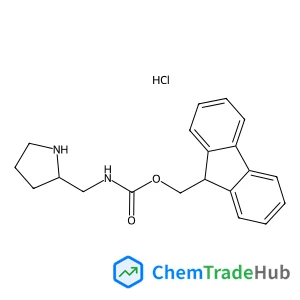
(S)-(9H-Fluoren-9-yl)methyl (pyrrolidin-2-ylmethyl)carbamate hydrochloride
CAS番号:
1217813-15-4
分子式:
C20H23ClN2O2

おすすめサプライヤー




免責事項
このページに表示される学術雑誌情報は、参考および研究目的のみを目的としています。当社は雑誌出版社とは提携しておらず、投稿の取り扱いも行っておりません。出版に関するお問い合わせは、各雑誌出版社に直接ご連絡ください。
表示されている情報に誤りがある場合は、support@chemtradehub.com までご連絡ください。迅速に確認し、対応いたします。