












Theoretical study of radiative and nonradiative decay rates for Cu(i) complexes with double heteroleptic ligands
文献情報
出版日
2018-03-07
DOI
10.1039/C8CP00525G
インパクトファクター
3.676
著者
Yuannan Chen, Aimin Ren, Zhongyue Yang, Tengfei He, Xiaoli Ding, Hongxing Zhang, Luyi Zou
原文を見る
要旨
In this paper, we conducted DFT and TDDFT calculations on three double heteroleptic Cu(I) complexes to understand how different substituents on N^N ligands influence the phosphorescence quantum yield (PLQY). Both radiative and nonradiative decay processes were thoroughly investigated. Factors that determine the rate of radiative process (kr) were considered, including the lowest triplet excited state E(T1), the transition dipole moment MSm,j of the Sm → S0 transition, the spin-coupled matrix element SOC, and the singlet–triplet splitting energies ΔE(Sm–T1). The results indicate that E(T1), MSm,j and SOC increase and ΔE(Sm–T1) decreases upon introducing –Ph and –CH2– groups on the N^N ligands. The net results lead to a gradual increase of kr in the three Cu(I) complexes, from 1 (0.48 × 10⁴ s−1) to 2 (0.64 × 10⁴ s−1) and then to 3 (1.61 × 10⁴ s−1). The rate of nonradiative decay process (knr) was computed by a convolution method. We explored how knr is determined by SOC between T1 and S0 states (〈T1|SOC|S0〉2), effective energy gap ΔE′ and the Huang–Rhys factor (S). We found that 〈T1|SOC|S0〉2 and ΔE′ contribute significantly to knr, but S does not determine the order of knr. knr gradually decreases from complex 1 (2.51 × 10⁶ s−1) to 2 (0.32 × 10⁶ s−1) and then to 3 (0.14 × 10⁶ s−1) after introducing –Ph and –CH2– groups on the N^N ligands. The computed PLQYs for the three complexes are 1: 0.0019, 2: 0.0198, and 3: 0.1011. These are quantitatively consistent with the experimental observation (1: 0.0028, 2: 0.0061, and 3: 0.1000).
関連文献
Photon upconversion: from two-photon absorption (TPA) to triplet–triplet annihilation (TTA)
Changqing Ye, Liwei Zhou, Xiaomei Wang, Zuoqin Liang
2016-01-25
Perspective
DOI: 10.1039/C5CP07296D
Numerical simulations of the role of a ferroelectric polymer interfacial layer in organic solar cells
Bo Liu, Feng Xu, Xinghua Zhang, Dadong Yan, Dan Lu
2016-01-07
Paper
DOI: 10.1039/C5CP04872A
Structural analysis of bioinspired nano materials with synchrotron far IR spectroscopy
Rania S. Seoudi, Annette Dowd, Brian J. Smith, Adam Mechler
2016-04-04
Paper
DOI: 10.1039/C6CP01355D
Effects of carbon vacancies on the structures, mechanical properties, and chemical bonding of zirconium carbides: a first-principles study
2016-03-30
Paper
DOI: 10.1039/C5CP07724A
Extreme population inversion in the fragments formed by UV photoinduced S–H bond fission in 2-thiophenethiol
Rebecca A. Ingle, Tolga N. V. Karsili, Gregg J. Dennis, Michael Staniforth, Vasilios G. Stavros, Michael N. R. Ashfold
2016-03-24
Paper
DOI: 10.1039/C6CP01593J
The structure–function relationship for alumina supported platinum during the formation of ammonia from nitrogen oxide and hydrogen in the presence of oxygen
Emma Catherine Adams, Lindsay Richard Merte, Anders Hellman, Magnus Skoglundh, Johan Gustafson, Eva Charlotte Bendixen, Pär Gabrielsson, Florian Bertram, Jonas Evertsson, Chu Zhang, Stefan Carlson, Per-Anders Carlsson
2016-03-30
Communication
DOI: 10.1039/C5CP07624B
Combined NMR and molecular dynamics modeling study of transport properties in sulfonamide based deep eutectic lithium electrolytes: LiTFSI based binary systems
Allen D. Pauric, Ion C. Halalay, Gillian R. Goward
2016-01-26
Paper
DOI: 10.1039/C5CP05811B
Proton coupled electron transfer from the excited state of a ruthenium(ii) pyridylimidazole complex
Andrea Pannwitz, Oliver S. Wenger
2016-04-08
Paper
DOI: 10.1039/C6CP00437G
Insights into the allosteric regulation of Syk association with receptor ITAM, a multi-state equilibrium
Chao Feng, Carol Beth Post
2015-10-08
Paper
DOI: 10.1039/C5CP05417F
Molecular simulations of imidazolium-based tricyanomethanide ionic liquids using an optimized classical force field
Niki Vergadou, Jörg-Rüdiger Hill
2016-02-01
Paper
DOI: 10.1039/C5CP05892A
こちらもおすすめ
化合物よくある質問
2-ヒドロキシ-5-ニトロベンジンブロモイドの代替品はありますか?
2-ヒドロキシ-5-ニトロベンジンブロモイドは特定の化学反応に適しているため、代替品は限られています。しかし、同様の構造を持つ2-ヒドロキシ-4-ニトロベンジン...
772-33-82-(Bromomethyl)-4-ni...
化合物よくある質問
N-(2-ブロモフェニル)-1-チロール-3-オキソ-3-(ピペリジニル)プロペン-2-イル)ベンゼンアミドを取り扱う際の実験室安全事項は何ですか?
N-(2-ブロモフェニル)-1-チロール-3-オキソ-3-(ピペリジニル)プロペン-2-イル)ベンゼンアミドは有毒で、皮膚や粘膜に刺激を与える可能性があります。...
1800044-77-2N-[(1Z)-1-(2-Bromoph...
化合物よくある質問
1,3プロパンジオール,2-[2-(2アミノ-6クロロ-9Hピリミジン-9-イル)エチル-1,1,2,2-D4]-2,3-ジアセタートの市場動向や研究トレンドはどうですか?
この化合物は、新規治療薬の開発に注目されています。市場では、その有効性と安全性が評価され、研究分野では、分子生物学と医薬化学の新たな発見が期待されています。
1020718-81-31,3-Propanediol, 2-[...
579-44-2Ethanone, 2-hydroxy-...
化合物よくある質問
Succinimidyl-alanyl-phenylalanyl-prolyl-phenylalanine 4-nitroanilide はどの業界で使用されていますか?
Succinimidyl-alanyl-phenylalanyl-prolyl-phenylalanine 4-nitroanilide は主に医薬品開発やポ...
128802-73-3succinimidyl-alanyl-...
化合物よくある質問
メチル6-アミノ-5-クロロピリジン-2-カーボイル酸について、適用される法規ガイドラインは何ですか?
メチル6-アミノ-5-クロロピリジン-2-カーボイル酸(CAS番号: 1256794-05-4)の使用には、GHS( Globally Harmonized S...
1256794-05-4Methyl 6-amino-5-chl...
化合物よくある質問
エチル4-(シクロ Pentagonyl)アミノ-2-メチル硫化基ピリミジン-5-カルボキシレートを取り扱う際の実験室安全事項は何ですか?
取り扱いには、耐薬品性の容器を使用し、通気性の良い場所で操作することを推奨します。漏れ時は、SDS(安全データシート)を参照して適切な措置を取ること。手洗いと洗...
211245-62-4ethyl 4-(cyclopentyl...
化合物よくある質問
(S)-3-ベンZYルピペリジン塩酸塩とは何ですか?
(S)-3-ベンZYルピペリジン塩酸塩は、CAS番号1258940-00-9で表される化合物です。これは、(S)-3-苯基哌啶的盐酸盐であり、主に医薬品の原料と...
1258940-00-9(S)-3-Phenylpiperidi...
化合物よくある質問
3,5-二甲基金剛胺の主な用途は何ですか?
3,5-二甲基金剛胺は、主に医薬品の原料として使用され、また抗うつ薬や抗アルツハイマー薬の開発に利用されます。さらに、化粧品や食品添加物の製造でも重要な役割を果...
19988-45-52-(2,3-Dihydroxyphen...
化合物よくある質問
ビス(4-メチル-2-ペンチル)フェニルカルボン酸エステルの代替品はありますか?
ビス(4-メチル-2-ペンチル)フェニルカルボン酸エステル (CAS番号: 1398066-13-1) の代替品には、ビス(2-エチルヘキシル)フェノールカルボ...
1398066-13-1Bis(4-methyl-2-penty...
掲載誌
Physical Chemistry Chemical Physics

CiteScore:
5.5
自己引用率:
10.3%
年間論文数:
3036
Physical Chemistry Chemical Physics (PCCP) is an international journal co-owned by 19 physical chemistry and physics societies from around the world. This journal publishes original, cutting-edge research in physical chemistry, chemical physics and biophysical chemistry. To be suitable for publication in PCCP, articles must include significant innovation and/or insight into physical chemistry; this is the most important criterion that reviewers and Editors will judge against when evaluating submissions. The journal has a broad scope and welcomes contributions spanning experiment, theory, computation and data science. Topical coverage includes spectroscopy, dynamics, kinetics, statistical mechanics, thermodynamics, electrochemistry, catalysis, surface science, quantum mechanics, quantum computing and machine learning. Interdisciplinary research areas such as polymers and soft matter, materials, nanoscience, energy, surfaces/interfaces, and biophysical chemistry are welcomed if they demonstrate significant innovation and/or insight into physical chemistry. Joined experimental/theoretical studies are particularly appreciated when complementary and based on up-to-date approaches.
おすすめ化合物
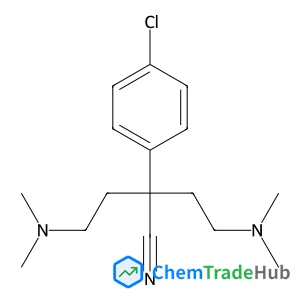
2-(4-Chlorophenyl)-4-(dimethylamino)-2-(2-(dimethylamino)ethyl)butanenitrile
CAS番号:
1246816-57-8
分子式:
C16H24ClN3
![Pyrazolo[1,5-a]pyridine-3-carbothioamide structure](https://static.chemtradehub.com/structs/885/885275-44-5-aae0.webp "Pyrazolo[1,5-a]pyridine-3-carbothioamide structure")
おすすめサプライヤー





免責事項
このページに表示される学術雑誌情報は、参考および研究目的のみを目的としています。当社は雑誌出版社とは提携しておらず、投稿の取り扱いも行っておりません。出版に関するお問い合わせは、各雑誌出版社に直接ご連絡ください。
表示されている情報に誤りがある場合は、support@chemtradehub.com までご連絡ください。迅速に確認し、対応いたします。