












Connectivity-driven bi-thermoelectricity in heteroatom-substituted molecular junctions
文献情報
出版日
2018-03-12
DOI
10.1039/C8CP00381E
インパクトファクター
3.676
著者
Sara Sangtarash, Hatef Sadeghi, Colin J. Lambert
原文を見る
要旨
To improve the thermoelectric performance of molecular junctions formed by polyaromatic hydrocarbon (PAH) cores, we present a new strategy for enhancing their Seebeck coefficient by utilizing connectivities with destructive quantum interference combined with heteroatom substitution. Starting from the parent PAH, with a vanishing mid-gap Seebeck coefficient, we demonstrate that the corresponding daughter molecule obtained after heteroatom substitution possesses a non-zero, mid-gap Seebeck coefficient. For the first time, we demonstrate a “bi-thermoelectric” property, where for a given heteroatom and parent PAH, the sign of the mid-gap Seebeck coefficient depends on connectivity and therefore the daughter can exhibit both positive and negative Seebeck coefficients. This bi-thermoelectric property is important for the design of tandem thermoelectric devices, where materials with both positive and negative Seebeck coefficients are utilized to boost the thermovoltage. Simple parameter-free rules for predicting the Seebeck coefficient of such molecules are presented, which form a powerful tool for designing efficient molecular thermoelectric devices.
関連文献
Combined NMR and molecular dynamics modeling study of transport properties in sulfonamide based deep eutectic lithium electrolytes: LiTFSI based binary systems
Allen D. Pauric, Ion C. Halalay, Gillian R. Goward
2016-01-26
Paper
DOI: 10.1039/C5CP05811B
The structure–function relationship for alumina supported platinum during the formation of ammonia from nitrogen oxide and hydrogen in the presence of oxygen
Emma Catherine Adams, Lindsay Richard Merte, Anders Hellman, Magnus Skoglundh, Johan Gustafson, Eva Charlotte Bendixen, Pär Gabrielsson, Florian Bertram, Jonas Evertsson, Chu Zhang, Stefan Carlson, Per-Anders Carlsson
2016-03-30
Communication
DOI: 10.1039/C5CP07624B
Defect structure and optical phonon confinement in ultrananocrystalline BixSn1−xO2 (x = 0, 0.03, 0.05, and 0.08) synthesized by a sonochemical method
L. Aswaghosh, Divinah Manoharan, N. Victor Jaya
2016-01-18
Paper
DOI: 10.1039/C5CP06214D
Interaction between copper and carbon nanotubes triggers their mutual role in the enhanced photodegradation of p-chloroaniline
N. F. Khusnun, S. Triwahyono, N. W. C. Jusoh
2016-03-29
Paper
DOI: 10.1039/C5CP08068A
A systematic study on Pt based, subnanometer-sized alloy cluster catalysts for alkane dehydrogenation: effects of intermetallic interaction
Andreas W. Hauser, Paul R. Horn, Martin Head-Gordon, Alexis T. Bell
2016-03-09
Paper
DOI: 10.1039/C6CP00360E
Selective adsorption of arsenate and the reversible structure transformation of the mesoporous metal–organic framework MIL-100(Fe)
Li Jiang, Chunru Wang
2016-04-01
Communication
DOI: 10.1039/C6CP00249H
A wavelength dependent investigation of the indole photophysics via ionization and fragmentation pump–probe spectroscopies
T. J. Godfrey, Hui Yu, Michael S. Biddle, Susanne Ullrich
2015-09-01
Paper
DOI: 10.1039/C5CP02975A
Slowing and cooling of heavy or light (even with a tiny electric dipole moment) polar molecules using a novel, versatile electrostatic Stark decelerator
Qin Wang, Shunyong Hou, Liang Xu, Jianping Yin
2016-01-06
Paper
DOI: 10.1039/C5CP06392B
A theoretical study on charge transport of dithiolene nickel complexes
Vu Thi Thu Huong, Truong Ba Tai, Minh Tho Nguyen
2016-01-27
Paper
DOI: 10.1039/C5CP07277H
Gas phase equilibrium structure of histamine
Anatolii N. Rykov, Olga E. Grikina, Leonid S. Khaikin
2016-01-19
Paper
DOI: 10.1039/C5CP07719B
こちらもおすすめ
化合物よくある質問
2-ヒドロキシ-5-ニトロベンジンブロモイドの代替品はありますか?
2-ヒドロキシ-5-ニトロベンジンブロモイドは特定の化学反応に適しているため、代替品は限られています。しかし、同様の構造を持つ2-ヒドロキシ-4-ニトロベンジン...
772-33-82-(Bromomethyl)-4-ni...
化合物よくある質問
N-(2-ブロモフェニル)-1-チロール-3-オキソ-3-(ピペリジニル)プロペン-2-イル)ベンゼンアミドを取り扱う際の実験室安全事項は何ですか?
N-(2-ブロモフェニル)-1-チロール-3-オキソ-3-(ピペリジニル)プロペン-2-イル)ベンゼンアミドは有毒で、皮膚や粘膜に刺激を与える可能性があります。...
1800044-77-2N-[(1Z)-1-(2-Bromoph...
化合物よくある質問
1,3プロパンジオール,2-[2-(2アミノ-6クロロ-9Hピリミジン-9-イル)エチル-1,1,2,2-D4]-2,3-ジアセタートの市場動向や研究トレンドはどうですか?
この化合物は、新規治療薬の開発に注目されています。市場では、その有効性と安全性が評価され、研究分野では、分子生物学と医薬化学の新たな発見が期待されています。
1020718-81-31,3-Propanediol, 2-[...
579-44-2Ethanone, 2-hydroxy-...
化合物よくある質問
Succinimidyl-alanyl-phenylalanyl-prolyl-phenylalanine 4-nitroanilide はどの業界で使用されていますか?
Succinimidyl-alanyl-phenylalanyl-prolyl-phenylalanine 4-nitroanilide は主に医薬品開発やポ...
128802-73-3succinimidyl-alanyl-...
化合物よくある質問
メチル6-アミノ-5-クロロピリジン-2-カーボイル酸について、適用される法規ガイドラインは何ですか?
メチル6-アミノ-5-クロロピリジン-2-カーボイル酸(CAS番号: 1256794-05-4)の使用には、GHS( Globally Harmonized S...
1256794-05-4Methyl 6-amino-5-chl...
化合物よくある質問
エチル4-(シクロ Pentagonyl)アミノ-2-メチル硫化基ピリミジン-5-カルボキシレートを取り扱う際の実験室安全事項は何ですか?
取り扱いには、耐薬品性の容器を使用し、通気性の良い場所で操作することを推奨します。漏れ時は、SDS(安全データシート)を参照して適切な措置を取ること。手洗いと洗...
211245-62-4ethyl 4-(cyclopentyl...
化合物よくある質問
(S)-3-ベンZYルピペリジン塩酸塩とは何ですか?
(S)-3-ベンZYルピペリジン塩酸塩は、CAS番号1258940-00-9で表される化合物です。これは、(S)-3-苯基哌啶的盐酸盐であり、主に医薬品の原料と...
1258940-00-9(S)-3-Phenylpiperidi...
化合物よくある質問
3,5-二甲基金剛胺の主な用途は何ですか?
3,5-二甲基金剛胺は、主に医薬品の原料として使用され、また抗うつ薬や抗アルツハイマー薬の開発に利用されます。さらに、化粧品や食品添加物の製造でも重要な役割を果...
19988-45-52-(2,3-Dihydroxyphen...
化合物よくある質問
ビス(4-メチル-2-ペンチル)フェニルカルボン酸エステルの代替品はありますか?
ビス(4-メチル-2-ペンチル)フェニルカルボン酸エステル (CAS番号: 1398066-13-1) の代替品には、ビス(2-エチルヘキシル)フェノールカルボ...
1398066-13-1Bis(4-methyl-2-penty...
掲載誌
Physical Chemistry Chemical Physics

CiteScore:
5.5
自己引用率:
10.3%
年間論文数:
3036
Physical Chemistry Chemical Physics (PCCP) is an international journal co-owned by 19 physical chemistry and physics societies from around the world. This journal publishes original, cutting-edge research in physical chemistry, chemical physics and biophysical chemistry. To be suitable for publication in PCCP, articles must include significant innovation and/or insight into physical chemistry; this is the most important criterion that reviewers and Editors will judge against when evaluating submissions. The journal has a broad scope and welcomes contributions spanning experiment, theory, computation and data science. Topical coverage includes spectroscopy, dynamics, kinetics, statistical mechanics, thermodynamics, electrochemistry, catalysis, surface science, quantum mechanics, quantum computing and machine learning. Interdisciplinary research areas such as polymers and soft matter, materials, nanoscience, energy, surfaces/interfaces, and biophysical chemistry are welcomed if they demonstrate significant innovation and/or insight into physical chemistry. Joined experimental/theoretical studies are particularly appreciated when complementary and based on up-to-date approaches.
おすすめ化合物
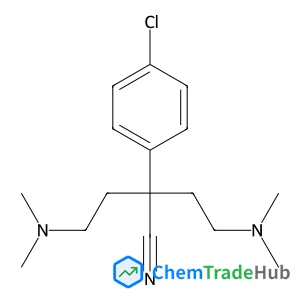
2-(4-Chlorophenyl)-4-(dimethylamino)-2-(2-(dimethylamino)ethyl)butanenitrile
CAS番号:
1246816-57-8
分子式:
C16H24ClN3
おすすめサプライヤー


免責事項
このページに表示される学術雑誌情報は、参考および研究目的のみを目的としています。当社は雑誌出版社とは提携しておらず、投稿の取り扱いも行っておりません。出版に関するお問い合わせは、各雑誌出版社に直接ご連絡ください。
表示されている情報に誤りがある場合は、support@chemtradehub.com までご連絡ください。迅速に確認し、対応いたします。