


Defect structure and optical phonon confinement in ultrananocrystalline BixSn1−xO2 (x = 0, 0.03, 0.05, and 0.08) synthesized by a sonochemical method
文献情報
出版日
2016-01-18
DOI
10.1039/C5CP06214D
インパクトファクター
3.676
著者
L. Aswaghosh, Divinah Manoharan, N. Victor Jaya
原文を見る
要旨
We report the structure of defect and the oxygen vacancy-induced optical phonon confinement in phase pure tetragonal rutile crystal structured ultrananocrystalline BixSn1−xO2 (x = 0, 0.03, 0.05, 0.08) with high surface area synthesized by sonochemical method. As the Bi ion incorporates into the SnO2 host lattice, it replaces the Sn ions marked by the lattice expansion, which leads to the formation of oxygen vacancies so as to maintain charge neutrality. The grain size reduces from 6 nm to 3 nm with increase in Bi content from 0% to 8%. The size effect and the increased oxygen vacancy concentration were found to induce phonon confinement within the grain. This has led to interesting changes in the vibrational spectra of the ultrananocrystalline BixSn1−xO2 as the size reduces below 9 nm. Absence of periodicity beyond this critical particle size relaxes the zone-centre optical phonon selection rule, causing the Raman spectrum to have contributions also from phonons away from the Brillouin-zone centre. The structure of defects, such as the in-plane, bridging and sub-bridging oxygen vacancies present, was confirmed using Raman spectroscopic analysis. The reason for enhancement in photoluminescence behaviour with increased Bi content is discussed. The energy band gap was found to be wider (∼4 eV) compared to the bulk and reveals an increasing trend as a function of Bi%. The increase in band gap with decrease in particle size marks the quantum confinement effect. The variation of band gap upon doping is due to the BM shift effect, which arises as a result of the increase in carrier concentration.
おすすめジャーナル

Physical Chemistry Chemical Physics

European Journal of Organic Chemistry

Green Chemistry

Contact Lens & Anterior Eye

Nature Reviews Drug Discovery

Photochemical & Photobiological Sciences

Journal of Enzyme inhibition and Medicinal Chemistry

Faraday Discussions

Environmental Toxicology and Pharmacology

Molecular Diversity
関連文献
Bio-inspired fabrication of silver nanoparticles on nanostructured silica: characterization and application as a highly efficient hydrogenation catalyst
Sujoy K. Das, Md. Motiar R. Khan, Arun K. Guha, Nityananda Naskar
2013-06-27
Paper
DOI: 10.1039/C3GC40310F
High activity and switchable selectivity in the synthesis of cyclic and polymeric cyclohexene carbonates with iron amino triphenolate catalysts
Masoumeh Taherimehr, Syed M. Al-Amsyar, Christopher J. Whiteoak, Paolo P. Pescarmona
2013-08-27
Paper
DOI: 10.1039/C3GC41303A
Supported protic acid-catalyzed synthesis of 2,3-disubstituted thiazolidin-4-ones: enhancement of the catalytic potential of protic acid by adsorption on solid supports
Dinesh Kumar, Mukesh Sonawane, Brahmam Pujala, Varun K. Jain, Srikant Bhagat, Asit K. Chakraborti
2013-07-23
Paper
DOI: 10.1039/C3GC41218K
Productive sugar isomerization with highly active Sn in dealuminated β zeolites
Jan Dijkmans, Dries Gabriëls, Michiel Dusselier, Filip de Clippel, Pieter Vanelderen, Kristof Houthoofd, Annelies Malfliet, Yiannis Pontikes, Bert F. Sels
2013-08-02
Paper
DOI: 10.1039/C3GC41239C
THF co-solvent enhances hydrocarbon fuel precursor yields from lignocellulosic biomass
Rajeev Kumar
2013-08-14
Communication
DOI: 10.1039/C3GC41214H
“Release and catch” catalytic systems
Michelangelo Gruttadauria, Francesco Giacalone, Renato Noto
2013-07-24
Perspective
DOI: 10.1039/C3GC41132J
Revisiting the Brønsted acid catalysed hydrolysis kinetics of polymeric carbohydrates in ionic liquids by in situ ATR-FTIR spectroscopy
Andreas J. Kunov-Kruse, Anders Riisager, Shunmugavel Saravanamurugan, Rolf W. Berg, Steffen B. Kristensen, Rasmus Fehrmann
2013-07-22
Paper
DOI: 10.1039/C3GC41174E
Structural features of ionic liquids: consequences for material preparation and organic reactivity
Anthony F. Masters, Thomas Maschmeyer
2013-08-12
Critical Review
DOI: 10.1039/C3GC41313F
Metal-free arylations via photochemical activation of the Ar–OSO2R bond in aryl nonaflates
Carlotta Raviola, Veronica Canevari, Stefano Protti, Angelo Albini, Maurizio Fagnoni
2013-07-22
Communication
DOI: 10.1039/C3GC41009A
こちらもおすすめ
化合物よくある質問
2-ヒドロキシ-5-ニトロベンジンブロモイドの代替品はありますか?
2-ヒドロキシ-5-ニトロベンジンブロモイドは特定の化学反応に適しているため、代替品は限られています。しかし、同様の構造を持つ2-ヒドロキシ-4-ニトロベンジン...
772-33-82-(Bromomethyl)-4-ni...
化合物よくある質問
N-(2-ブロモフェニル)-1-チロール-3-オキソ-3-(ピペリジニル)プロペン-2-イル)ベンゼンアミドを取り扱う際の実験室安全事項は何ですか?
N-(2-ブロモフェニル)-1-チロール-3-オキソ-3-(ピペリジニル)プロペン-2-イル)ベンゼンアミドは有毒で、皮膚や粘膜に刺激を与える可能性があります。...
1800044-77-2N-[(1Z)-1-(2-Bromoph...
化合物よくある質問
1,3プロパンジオール,2-[2-(2アミノ-6クロロ-9Hピリミジン-9-イル)エチル-1,1,2,2-D4]-2,3-ジアセタートの市場動向や研究トレンドはどうですか?
この化合物は、新規治療薬の開発に注目されています。市場では、その有効性と安全性が評価され、研究分野では、分子生物学と医薬化学の新たな発見が期待されています。
1020718-81-31,3-Propanediol, 2-[...
579-44-2Ethanone, 2-hydroxy-...
化合物よくある質問
Succinimidyl-alanyl-phenylalanyl-prolyl-phenylalanine 4-nitroanilide はどの業界で使用されていますか?
Succinimidyl-alanyl-phenylalanyl-prolyl-phenylalanine 4-nitroanilide は主に医薬品開発やポ...
128802-73-3succinimidyl-alanyl-...
化合物よくある質問
メチル6-アミノ-5-クロロピリジン-2-カーボイル酸について、適用される法規ガイドラインは何ですか?
メチル6-アミノ-5-クロロピリジン-2-カーボイル酸(CAS番号: 1256794-05-4)の使用には、GHS( Globally Harmonized S...
1256794-05-4Methyl 6-amino-5-chl...
化合物よくある質問
エチル4-(シクロ Pentagonyl)アミノ-2-メチル硫化基ピリミジン-5-カルボキシレートを取り扱う際の実験室安全事項は何ですか?
取り扱いには、耐薬品性の容器を使用し、通気性の良い場所で操作することを推奨します。漏れ時は、SDS(安全データシート)を参照して適切な措置を取ること。手洗いと洗...
211245-62-4ethyl 4-(cyclopentyl...
化合物よくある質問
(S)-3-ベンZYルピペリジン塩酸塩とは何ですか?
(S)-3-ベンZYルピペリジン塩酸塩は、CAS番号1258940-00-9で表される化合物です。これは、(S)-3-苯基哌啶的盐酸盐であり、主に医薬品の原料と...
1258940-00-9(S)-3-Phenylpiperidi...
化合物よくある質問
3,5-二甲基金剛胺の主な用途は何ですか?
3,5-二甲基金剛胺は、主に医薬品の原料として使用され、また抗うつ薬や抗アルツハイマー薬の開発に利用されます。さらに、化粧品や食品添加物の製造でも重要な役割を果...
19988-45-52-(2,3-Dihydroxyphen...
化合物よくある質問
ビス(4-メチル-2-ペンチル)フェニルカルボン酸エステルの代替品はありますか?
ビス(4-メチル-2-ペンチル)フェニルカルボン酸エステル (CAS番号: 1398066-13-1) の代替品には、ビス(2-エチルヘキシル)フェノールカルボ...
1398066-13-1Bis(4-methyl-2-penty...
掲載誌
Physical Chemistry Chemical Physics
CiteScore:
5.5
自己引用率:
10.3%
年間論文数:
3036
Physical Chemistry Chemical Physics (PCCP) is an international journal co-owned by 19 physical chemistry and physics societies from around the world. This journal publishes original, cutting-edge research in physical chemistry, chemical physics and biophysical chemistry. To be suitable for publication in PCCP, articles must include significant innovation and/or insight into physical chemistry; this is the most important criterion that reviewers and Editors will judge against when evaluating submissions. The journal has a broad scope and welcomes contributions spanning experiment, theory, computation and data science. Topical coverage includes spectroscopy, dynamics, kinetics, statistical mechanics, thermodynamics, electrochemistry, catalysis, surface science, quantum mechanics, quantum computing and machine learning. Interdisciplinary research areas such as polymers and soft matter, materials, nanoscience, energy, surfaces/interfaces, and biophysical chemistry are welcomed if they demonstrate significant innovation and/or insight into physical chemistry. Joined experimental/theoretical studies are particularly appreciated when complementary and based on up-to-date approaches.
おすすめ化合物
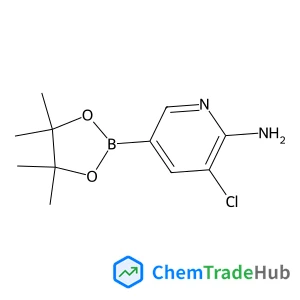
3-Chloro-5-(4,4,5,5-tetramethyl-1,3,2-dioxaborolan-2-yl)-2-pyridinamine
CAS番号:
1032758-99-8
分子式:
C11H16BClN2O2
![Methyl 4-({[(2-methyl-2-propanyl)oxy]carbonyl}amino)bicyclo[2.2.2]octane-1-carboxylate structure](https://static.chemtradehub.com/structs/943/943845-74-7-b7e5.webp "Methyl 4-({[(2-methyl-2-propanyl)oxy]carbonyl}amino)bicyclo[2.2.2]octane-1-carboxylate structure")
おすすめサプライヤー





免責事項
このページに表示される学術雑誌情報は、参考および研究目的のみを目的としています。当社は雑誌出版社とは提携しておらず、投稿の取り扱いも行っておりません。出版に関するお問い合わせは、各雑誌出版社に直接ご連絡ください。
表示されている情報に誤りがある場合は、support@chemtradehub.com までご連絡ください。迅速に確認し、対応いたします。