












Optimal control of orientation and entanglement for two dipole–dipole coupled quantum planar rotors
文献情報
出版日
2018-04-23
DOI
10.1039/C8CP00231B
インパクトファクター
3.676
著者
Tak-San Ho, Herschel Rabitz
原文を見る
要旨
Optimal control simulations are performed for orientation and entanglement of two dipole–dipole coupled identical quantum rotors. The rotors at various fixed separations lie on a model non-interacting plane with an applied control field. It is shown that optimal control of orientation or entanglement represents two contrasting control scenarios. In particular, the maximally oriented state (MOS) of the two rotors has a zero entanglement entropy and is readily attainable at all rotor separations. Whereas, the contrasting maximally entangled state (MES) has a zero orientation expectation value and is most conveniently attainable at small separations where the dipole–dipole coupling is strong. It is demonstrated that the peak orientation expectation value attained by the MOS at large separations exhibits a long time revival pattern due to the small energy splittings arising form the extremely weak dipole–dipole coupling between the degenerate product states of the two free rotors. Moreover, it is found that the peak entanglement entropy value attained by the MES remains largely unchanged as the two rotors are transported to large separations after turning off the control field. Finally, optimal control simulations of transition dynamics between the MOS and the MES reveal the intricate interplay between orientation and entanglement.
関連文献
Hydrogen bonds of the imidazolium rings of ionic liquids with DMSO studied by NMR, soft X-ray spectroscopy, and SANS
Takumi Tokuda, Takahiro Uchida, Kazuya Sonoda, Bogdan A. Marekha, Abdenacer Idrissi, Takashi Tokushima, Hiroyuki Sakurai, Masahiro Kawano, Koichiro Sadakane, Hiroki Iwase
2018-04-12
Paper
DOI: 10.1039/C8CP00963E
Halogen-like properties of the Al13 cluster mimicking astatine
B. Molina, J. R. Soto, J. J. Castro
2018-04-04
Communication
DOI: 10.1039/C8CP00494C
Strain-induced modulations of electronic structure and electron–phonon coupling in dense H3S
Chang Liu, Hang Zhai, Ying Sun, Weiguang Gong, Yan Yan, Quan Li, Weitao Zheng
2018-01-29
Paper
DOI: 10.1039/C8CP00205C
Photoinduced proton transfer inside an engineered green fluorescent protein: a stepwise–concerted-hybrid reaction
Longteng Tang, Yanli Wang, Liangdong Zhu, Karen Kallio, S. James Remington, Chong Fang
2018-04-24
Paper
DOI: 10.1039/C8CP01907J
Oxidation behaviour of U3Si2: an experimental and first principles investigation
Ericmoore Jossou, Ubong Eduok, Nelson Y. Dzade, Barbara Szpunar, Jerzy A. Szpunar
2018-01-12
Paper
DOI: 10.1039/C7CP07154J
Origin of enhancement in Raman scattering from Ag-dressed carbon-nanotube antennas: experiment and modelling
T. V. Raziman, J. A. Duenas, W. I. Milne, O. J. F. Martin, P. Dawson
2018-01-31
Paper
DOI: 10.1039/C7CP06416K
Nonequilibrium self-assembly induced Liesegang rings in a non-isothermal system
Andrés Arango-Restrepo, Daniel Barragán, J. Miguel Rubi
2018-01-25
Paper
DOI: 10.1039/C7CP08469B
Ultrasonication-induced sp3 hybridization defects in Langmuir–Schaefer layers of turbostratic graphene
K. Rytel, M. Widelicka, D. Łukawski, F. Lisiecki, K. Kędzierski, D. Wróbel
2018-04-13
Paper
DOI: 10.1039/C8CP01363B
On the regioselectivity of the Diels–Alder cycloaddition to C60 in high spin states
Ouissam El Bakouri, Rosa M. Girón, Salvatore Filippone, Miquel Solà
2018-01-24
Paper
DOI: 10.1039/C7CP07965F
こちらもおすすめ
化合物よくある質問
2-ヒドロキシ-5-ニトロベンジンブロモイドの代替品はありますか?
2-ヒドロキシ-5-ニトロベンジンブロモイドは特定の化学反応に適しているため、代替品は限られています。しかし、同様の構造を持つ2-ヒドロキシ-4-ニトロベンジン...
772-33-82-(Bromomethyl)-4-ni...
化合物よくある質問
N-(2-ブロモフェニル)-1-チロール-3-オキソ-3-(ピペリジニル)プロペン-2-イル)ベンゼンアミドを取り扱う際の実験室安全事項は何ですか?
N-(2-ブロモフェニル)-1-チロール-3-オキソ-3-(ピペリジニル)プロペン-2-イル)ベンゼンアミドは有毒で、皮膚や粘膜に刺激を与える可能性があります。...
1800044-77-2N-[(1Z)-1-(2-Bromoph...
化合物よくある質問
1,3プロパンジオール,2-[2-(2アミノ-6クロロ-9Hピリミジン-9-イル)エチル-1,1,2,2-D4]-2,3-ジアセタートの市場動向や研究トレンドはどうですか?
この化合物は、新規治療薬の開発に注目されています。市場では、その有効性と安全性が評価され、研究分野では、分子生物学と医薬化学の新たな発見が期待されています。
1020718-81-31,3-Propanediol, 2-[...
579-44-2Ethanone, 2-hydroxy-...
化合物よくある質問
Succinimidyl-alanyl-phenylalanyl-prolyl-phenylalanine 4-nitroanilide はどの業界で使用されていますか?
Succinimidyl-alanyl-phenylalanyl-prolyl-phenylalanine 4-nitroanilide は主に医薬品開発やポ...
128802-73-3succinimidyl-alanyl-...
化合物よくある質問
メチル6-アミノ-5-クロロピリジン-2-カーボイル酸について、適用される法規ガイドラインは何ですか?
メチル6-アミノ-5-クロロピリジン-2-カーボイル酸(CAS番号: 1256794-05-4)の使用には、GHS( Globally Harmonized S...
1256794-05-4Methyl 6-amino-5-chl...
化合物よくある質問
エチル4-(シクロ Pentagonyl)アミノ-2-メチル硫化基ピリミジン-5-カルボキシレートを取り扱う際の実験室安全事項は何ですか?
取り扱いには、耐薬品性の容器を使用し、通気性の良い場所で操作することを推奨します。漏れ時は、SDS(安全データシート)を参照して適切な措置を取ること。手洗いと洗...
211245-62-4ethyl 4-(cyclopentyl...
化合物よくある質問
(S)-3-ベンZYルピペリジン塩酸塩とは何ですか?
(S)-3-ベンZYルピペリジン塩酸塩は、CAS番号1258940-00-9で表される化合物です。これは、(S)-3-苯基哌啶的盐酸盐であり、主に医薬品の原料と...
1258940-00-9(S)-3-Phenylpiperidi...
化合物よくある質問
3,5-二甲基金剛胺の主な用途は何ですか?
3,5-二甲基金剛胺は、主に医薬品の原料として使用され、また抗うつ薬や抗アルツハイマー薬の開発に利用されます。さらに、化粧品や食品添加物の製造でも重要な役割を果...
19988-45-52-(2,3-Dihydroxyphen...
化合物よくある質問
ビス(4-メチル-2-ペンチル)フェニルカルボン酸エステルの代替品はありますか?
ビス(4-メチル-2-ペンチル)フェニルカルボン酸エステル (CAS番号: 1398066-13-1) の代替品には、ビス(2-エチルヘキシル)フェノールカルボ...
1398066-13-1Bis(4-methyl-2-penty...
掲載誌
Physical Chemistry Chemical Physics

CiteScore:
5.5
自己引用率:
10.3%
年間論文数:
3036
Physical Chemistry Chemical Physics (PCCP) is an international journal co-owned by 19 physical chemistry and physics societies from around the world. This journal publishes original, cutting-edge research in physical chemistry, chemical physics and biophysical chemistry. To be suitable for publication in PCCP, articles must include significant innovation and/or insight into physical chemistry; this is the most important criterion that reviewers and Editors will judge against when evaluating submissions. The journal has a broad scope and welcomes contributions spanning experiment, theory, computation and data science. Topical coverage includes spectroscopy, dynamics, kinetics, statistical mechanics, thermodynamics, electrochemistry, catalysis, surface science, quantum mechanics, quantum computing and machine learning. Interdisciplinary research areas such as polymers and soft matter, materials, nanoscience, energy, surfaces/interfaces, and biophysical chemistry are welcomed if they demonstrate significant innovation and/or insight into physical chemistry. Joined experimental/theoretical studies are particularly appreciated when complementary and based on up-to-date approaches.
おすすめ化合物
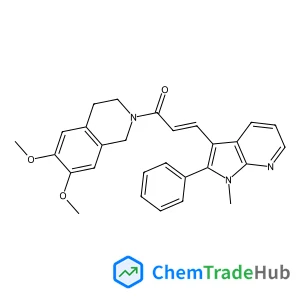
![1-[3-(4-Morpholinylsulfonyl)phenyl]methanamine structure](https://static.chemtradehub.com/structs/933/933989-32-3-51af.webp "1-[3-(4-Morpholinylsulfonyl)phenyl]methanamine structure")
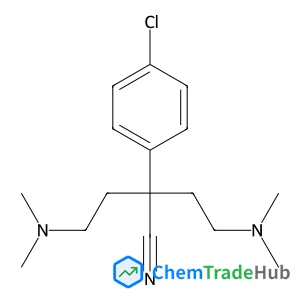
2-(4-Chlorophenyl)-4-(dimethylamino)-2-(2-(dimethylamino)ethyl)butanenitrile
CAS番号:
1246816-57-8
分子式:
C16H24ClN3
おすすめサプライヤー




免責事項
このページに表示される学術雑誌情報は、参考および研究目的のみを目的としています。当社は雑誌出版社とは提携しておらず、投稿の取り扱いも行っておりません。出版に関するお問い合わせは、各雑誌出版社に直接ご連絡ください。
表示されている情報に誤りがある場合は、support@chemtradehub.com までご連絡ください。迅速に確認し、対応いたします。