











![N-[(9H-Fluoren-9-ylmethoxy)carbonyl]-beta-phenyl-L-phenylalanine structure](https://static.chemtradehub.com/structs/201/201484-50-6-c2fc.webp "N-[(9H-Fluoren-9-ylmethoxy)carbonyl]-beta-phenyl-L-phenylalanine structure")
A platinum oxide-based microvoltammetric pH electrode suitable for physiological investigations
文献情報
出版日
2018-05-30
DOI
10.1039/C8AN00631H
インパクトファクター
4.616
著者
Niall J. Finnerty, Fiachra B. Bolger
原文を見る
要旨
Attempts to develop miniaturised pH electrodes for in vivo monitoring have received much attention in recent years. Continuous real-time pH measurements may be predictive of potentially dangerous deviations in metabolic events that could improve patient prognosis. Herein, we report the in vitro investigation of a physiologically relevant, Pt oxide-based microvoltammetric pH electrode. Cycling through the potential window range −0.65 V to +0.8 V vs. SCE, gave rise to well-established monolayer oxide (MO) and hydrogen (H2) adsorption redox peaks in aqueous solution. The H2 desorption and MO reduction peaks demonstrated pH dependent, linear responses (49 ± 11 mV pH−1 and 76 ± 4 mV pH−1 respectively), following pre-activation of the electrode surface in HCl. Since in vivo monitoring is at the core of this design, the effect of incorporating a miniaturised pseudo reference electrode (PRE) was determined. The Ag/AgCl PRE demonstrated near Nernstian behaviour for the MO reduction peak (58 ± 5 mV pH−1) and sub-Nernstian behaviour (43 ± 6 mV pH−1) for its H2 desorption counterpart. Finally, a preliminary in vivo recording performed in the striatum of a freely moving mouse confirmed that the MO reduction peak was maintained under physiological conditions. These findings support the ability of the Pt oxide-based pH electrode to perform continuous, stable recordings in vivo and warrants further characterisation.
おすすめジャーナル
関連文献
Influence of aluminates on the structure and dynamics of water and ions in the nanometer channel of calcium silicate hydrate (C–S–H) gel
Dongshuai Hou, Tao Li
2017-12-18
Paper
DOI: 10.1039/C7CP06985E
Photodissociation dynamics of acetone studied by time-resolved ion imaging and photofragment excitation spectroscopy
Benjamin W. Toulson, Dmitry A. Fishman, Craig Murray
2018-01-09
Paper
DOI: 10.1039/C7CP07320H
On the methodology of the determination of charge concentration dependent mobility from organic field-effect transistor characteristics
Miroslav Menšík, Petr Toman, Urszula Bielecka, Wojciech Bartkowiak, Jiří Pfleger, Bartosz Paruzel
2017-12-12
Paper
DOI: 10.1039/C7CP06423C
Theoretical investigation on the interaction between RhIII octaethylporphyrin and a graphite basal surface: a comparison study of DFT, DFT-D, and AFM
Kohei Tada, Yasushi Maeda, Hiroyuki Ozaki, Shingo Tanaka, Shin-ichi Yamazaki
2018-07-19
Paper
DOI: 10.1039/C8CP02923G
Ethanol synthesis from syngas over Cu(Pd)-doped Fe(100): a systematic theoretical investigation
Wei Wang, Ye Wang
2017-11-13
Paper
DOI: 10.1039/C7CP06693G
A low temperature investigation of the gas-phase N(2D) + NO reaction. Towards a viable source of N(2D) atoms for kinetic studies in astrochemistry
2018-06-12
Paper
DOI: 10.1039/C8CP02851F
Field-, strain- and light-induced superconductivity in organic strongly correlated electron systems
2017-11-02
Perspective
DOI: 10.1039/C7CP06716J
Approximate DFT-based methods for generating diabatic states and calculating electronic couplings: models of two and more states
ChiYung Yam
2017-12-20
Paper
DOI: 10.1039/C7CP06660K
Anomalies in the low frequency vibrational density of states for a polymer with intrinsic microporosity – the Boson peak of PIM-1
Reiner Zorn, Huajie Yin, Wiebke Lohstroh, Wayne Harrison, Peter M. Budd, Brian R. Pauw, Martin Böhning, Andreas Schönhals
2017-12-13
Paper
DOI: 10.1039/C7CP07141H
Efficient interfacial charge transfer through plasmon sensitized Ag@Bi2O3 hierarchical photoanodes for photoelectrocatalytic degradation of chlorinated phenols
Neerugatti KrishnaRao Eswar, Sangeeta Adhikari, Praveen C. Ramamurthy, Giridhar Madras
2018-01-02
Paper
DOI: 10.1039/C7CP04888B
こちらもおすすめ
化合物よくある質問
環戊烷-1,3-二甲酸甲酯はどのように合成されますか?
環戊烷-1,3-二甲酸甲酯は、環戊烷と塩酸によるヒンデンブルク反応を経由して合成されます。この反応では、環戊烷が塩酸と作用し、1,3-ジカルボキシ基が導入されま...
2435-36-1Dimethyl 1,3-cyclope...
化合物よくある質問
4-メトキシ-1,2,3-スチアゼ-3,5-ジオンとは何ですか?
4-メトキシ-1,2,3-スチアゼ-3,5-ジオンは、CAS番号107843-77-6の化合物で、(E)-ベンジル3-(3,4-ジヒドロキシフェニル) acry...
107843-77-6(E)-Benzyl 3-(3,4-di...
化合物よくある質問
プロスタグランジンA2について「に適用される法規ガイドラインは何ですか?'
プロスタグランジンA2 (CAS番号: 41691-92-3) は、化学物質の安全管理に関する規制として、GHS (危険物質の国際的ハザード分類・ラベル付けシス...
41691-92-316,16-DIMETHYL PROST...
化合物よくある質問
4-アミノ-1-ナフタレン sulfonic 酸についての物理化学的性質は何ですか?
4-アミノ-1-ナフタレン sulfonic 酸のCAS番号は84-86-6です。この化合物は結晶性で、分子量は212.15 g/molです。アルコールや水など...
84-86-64-Amino-1-naphthalen...
化合物よくある質問
N-GlcNAc-生物素を取り扱う際の実験室安全事項は何ですか?
N-GlcNAc-生物素は吸収性があり、皮膚や目への接触を避けることが重要です。PPE(個体保護具)は使用し、ドラフトチャンバーは必要に応じて使用します。漏洩時...
1272755-69-72-Acetamido-2-deoxy-...
化合物よくある質問
3-アミノメチルフローラノピペリジン-1-カルボニル酸テルブチルエステルとは何ですか?
CAS番号1209781-11-2の3-アミノメチルフローラノピペリジン-1-カルボニル酸テルブチルエステルは、有機化合物の一種で、化学式はC10H17FNO3...
1209781-11-22-Methyl-2-propanyl ...
化合物よくある質問
6-溴-1-甲基-1H-ベンゾ[d][1,2,3]三氮唑はどのように合成されますか?
6- bromo-1-methyl-1H-benzotriazoleは、ブロモフリオリンと1-メチル-1H-ベンゾ[d][1,2,3]三氮唑の反応により合成され...
944718-32-56-Bromo-1-methyl-1H-...
化合物よくある質問
4-硫代尿苷はどのように合成されますか?
4-硫代尿苷は、尿素とD-リボシルヒドロキシアルデヒドを用いてスルホン化反応を経て合成されます。通常は塩酸ヒドロキシチオニルスルホン酸などの触媒を使用し、選択性...
6741-73-71-(4-thio-beta-D-rib...
化合物よくある質問
ブレインナトリユリックペプチド32ラットとは何ですか?
ブレインナトリユリックペプチド32ラット(CAS番号: 133448-20-1)は、心臓で作られるホルモンの一つで、心不全の診断や予後評価に使用されます。
133448-20-1Brain Natriuretic Pe...
化合物よくある質問
1-(3-氮杂啶)-4-羟基哌啶双盐酸盐の物理化学的性質は何ですか?
CAS番号810680-60-5の1-(3-氮杂啶)-4-羟基哌啶双盐酸盐は、白色の結晶性粉末である。分子量は360.84 g/molで、水に溶けやすい。反応活...
810680-60-51-(3-Azetidinyl)-4-p...
掲載誌
Analyst

CiteScore:
7.8
自己引用率:
5.6%
年間論文数:
653
Analyst publishes analytical and bioanalytical research that reports premier fundamental discoveries and inventions, and the applications of those discoveries, unconfined by traditional discipline barriers.
おすすめ化合物
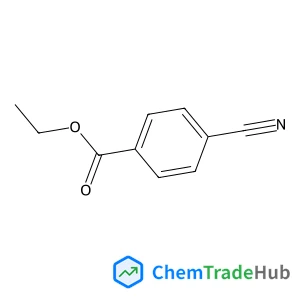
![N,N'-1,2-Ethanediylbis[2-(vinylsulfonyl)acetamide] structure](https://static.chemtradehub.com/structs/667/66710-66-5-b556.webp "N,N'-1,2-Ethanediylbis[2-(vinylsulfonyl)acetamide] structure")
おすすめサプライヤー




免責事項
このページに表示される学術雑誌情報は、参考および研究目的のみを目的としています。当社は雑誌出版社とは提携しておらず、投稿の取り扱いも行っておりません。出版に関するお問い合わせは、各雑誌出版社に直接ご連絡ください。
表示されている情報に誤りがある場合は、support@chemtradehub.com までご連絡ください。迅速に確認し、対応いたします。