












Efficient interfacial charge transfer through plasmon sensitized Ag@Bi2O3 hierarchical photoanodes for photoelectrocatalytic degradation of chlorinated phenols
文献情報
出版日
2018-01-02
DOI
10.1039/C7CP04888B
インパクトファクター
3.676
著者
Neerugatti KrishnaRao Eswar, Sangeeta Adhikari, Praveen C. Ramamurthy, Giridhar Madras
原文を見る
要旨
The present work demonstrates an extremely proficient and robust study of efficient interfacial charge transfer through plasmonic Ag decorated Bi2O3 hierarchical photoanodes for the photoelectrochemical treatment of chlorinated phenols. Unique 2D flake-like Bi2O3 hierarchical nanostructures were grown onto a fluorine-doped tin oxide (FTO) substrate by a simple chemical bath deposition method using triethanolamine as complexing agent. The formation of Bi2O3 on FTO was governed by the decomposition of a nucleated bismuth-hydroxyl complex (Bi2O1−x(OH)x) and modification to the electrode was carried out by the deposition of Ag via a chemical reduction method using hydrazine hydrate. Both the fabricated electrodes were well characterized for their photo- and electro-optical properties. Efficient charge separation was observed due to the surface plasmon resonance phenomenon of silver nanoparticles with the favorable intrinsic properties of Bi2O3 under application of a small electric bias of 1 V preventing the recombination of charge carriers and thereby increasing the rate of photoelectrocatalytic degradation of the chlorinated phenols. PEC degradation using the Ag@Bi2O3 photoelectrode followed the trend 4-CP < 2,4-DCP < 2,4,6-TCP < P-CP due to efficient attack at the chlorinated positions by reactive oxygen species with increasing chlorine substitution and also due to the absence of an expected chain reaction of the generated chlorine radicals (Cl˙) during the PEC reaction. The PEC activity of Ag@Bi2O3 was 1.5 times higher than a Bi2O3 nanoflake electrode for 4-CP over 2 h. The fabricated Ag@Bi2O3 proved to be an efficient photoelectrode with synergistic solar-induced photoactivity. A detailed mechanistic study in the presence of scavengers suggests degradation by produced hydroxyl radical species. Thus, physical insights into the degradation of chlorinated phenols were obtained.
関連文献
Functionalization of luminescent cyclometalated iridium(iii) polypyridine complexes with a fluorous moiety: photophysics, protein-binding, bioconjugation, and cellular uptake properties
Siu-Kit Leung, Hua-Wei Liu, Kenneth Kam-Wing Lo
2011-04-27
Communication
DOI: 10.1039/C1CC11423A
Mesoionic thiazol-5-ylidenes as ligands for transition metal complexes
Daniel Mendoza-Espinosa, Gaël Ung, Bruno Donnadieu, Guy Bertrand
2011-08-30
Communication
DOI: 10.1039/C1CC14165A
A novel magnetic mesoporous silica packed S-shaped microfluidic reactor for online proteolysis of low-MW proteome
Qianhao Min, Xiaoxia Zhang, Ren'an Wu, Hanfa Zou, Jun-Jie Zhu
2011-08-24
Communication
DOI: 10.1039/C1CC13969J
Precise engineering and visualization of signs and magnitudes of DNA writhe on the basis of PNA invasion
Dawei Li, Zhaoqi Yang, Yi Long, Guanjia Zhao, Bei Lv, Shuhui Hiew, Magdeline Tao Tao Ng, Juanjuan Guo, HongKee Tan, Hao Zhang, Weixing Yuan, Haibin Su, Tianhu Li
2011-09-05
Communication
DOI: 10.1039/C1CC13158C
Diastereo- and enantioselective conjugate addition of α-substituted nitroacetates to maleimides under base-free neutral phase-transfer conditions‡
Seiji Shirakawa, Shogo J. Terao, Rongjun He, Keiji Maruoka
2011-08-25
Communication
DOI: 10.1039/C1CC14043D
Activity improvement of gold yolk–shell catalysts for CO oxidation by doping with TiO2
Robert Güttel, Michael Paul, Ferdi Schüth
2011-01-31
Communication
DOI: 10.1039/C0CY00026D
Synthesis, characterization and ethylene oligomerization behaviour of 8-(1-aryliminoethylidene)quinaldinylnickel dihalides
Shengju Song, Tianpengfei Xiao, Tongling Liang, Fosong Wang, Carl Redshaw, Wen-Hua Sun
2011-02-08
Paper
DOI: 10.1039/C0CY00002G
Retracted article: A novel approach for N2O decomposition over Rh-substituted hexaaluminate catalysts
Rachid Amrousse, Akimasa Tsutsumi, Ahmed Bachar
2012-12-05
Communication
DOI: 10.1039/C2CY20439H
[60]Fullerene-based monolayers as neuroprotective biocompatible hybrid materials‡
Davide Giust, José Luis Albasanz, Mairena Martín, Riccardo Marega, Arnaud Delforge
2011-08-24
Communication
DOI: 10.1039/C1CC13971A
こちらもおすすめ
化合物よくある質問
環戊烷-1,3-二甲酸甲酯はどのように合成されますか?
環戊烷-1,3-二甲酸甲酯は、環戊烷と塩酸によるヒンデンブルク反応を経由して合成されます。この反応では、環戊烷が塩酸と作用し、1,3-ジカルボキシ基が導入されま...
2435-36-1Dimethyl 1,3-cyclope...
化合物よくある質問
4-メトキシ-1,2,3-スチアゼ-3,5-ジオンとは何ですか?
4-メトキシ-1,2,3-スチアゼ-3,5-ジオンは、CAS番号107843-77-6の化合物で、(E)-ベンジル3-(3,4-ジヒドロキシフェニル) acry...
107843-77-6(E)-Benzyl 3-(3,4-di...
化合物よくある質問
プロスタグランジンA2について「に適用される法規ガイドラインは何ですか?'
プロスタグランジンA2 (CAS番号: 41691-92-3) は、化学物質の安全管理に関する規制として、GHS (危険物質の国際的ハザード分類・ラベル付けシス...
41691-92-316,16-DIMETHYL PROST...
化合物よくある質問
4-アミノ-1-ナフタレン sulfonic 酸についての物理化学的性質は何ですか?
4-アミノ-1-ナフタレン sulfonic 酸のCAS番号は84-86-6です。この化合物は結晶性で、分子量は212.15 g/molです。アルコールや水など...
84-86-64-Amino-1-naphthalen...
化合物よくある質問
N-GlcNAc-生物素を取り扱う際の実験室安全事項は何ですか?
N-GlcNAc-生物素は吸収性があり、皮膚や目への接触を避けることが重要です。PPE(個体保護具)は使用し、ドラフトチャンバーは必要に応じて使用します。漏洩時...
1272755-69-72-Acetamido-2-deoxy-...
化合物よくある質問
3-アミノメチルフローラノピペリジン-1-カルボニル酸テルブチルエステルとは何ですか?
CAS番号1209781-11-2の3-アミノメチルフローラノピペリジン-1-カルボニル酸テルブチルエステルは、有機化合物の一種で、化学式はC10H17FNO3...
1209781-11-22-Methyl-2-propanyl ...
化合物よくある質問
6-溴-1-甲基-1H-ベンゾ[d][1,2,3]三氮唑はどのように合成されますか?
6- bromo-1-methyl-1H-benzotriazoleは、ブロモフリオリンと1-メチル-1H-ベンゾ[d][1,2,3]三氮唑の反応により合成され...
944718-32-56-Bromo-1-methyl-1H-...
化合物よくある質問
4-硫代尿苷はどのように合成されますか?
4-硫代尿苷は、尿素とD-リボシルヒドロキシアルデヒドを用いてスルホン化反応を経て合成されます。通常は塩酸ヒドロキシチオニルスルホン酸などの触媒を使用し、選択性...
6741-73-71-(4-thio-beta-D-rib...
化合物よくある質問
ブレインナトリユリックペプチド32ラットとは何ですか?
ブレインナトリユリックペプチド32ラット(CAS番号: 133448-20-1)は、心臓で作られるホルモンの一つで、心不全の診断や予後評価に使用されます。
133448-20-1Brain Natriuretic Pe...
化合物よくある質問
1-(3-氮杂啶)-4-羟基哌啶双盐酸盐の物理化学的性質は何ですか?
CAS番号810680-60-5の1-(3-氮杂啶)-4-羟基哌啶双盐酸盐は、白色の結晶性粉末である。分子量は360.84 g/molで、水に溶けやすい。反応活...
810680-60-51-(3-Azetidinyl)-4-p...
掲載誌
Physical Chemistry Chemical Physics

CiteScore:
5.5
自己引用率:
10.3%
年間論文数:
3036
Physical Chemistry Chemical Physics (PCCP) is an international journal co-owned by 19 physical chemistry and physics societies from around the world. This journal publishes original, cutting-edge research in physical chemistry, chemical physics and biophysical chemistry. To be suitable for publication in PCCP, articles must include significant innovation and/or insight into physical chemistry; this is the most important criterion that reviewers and Editors will judge against when evaluating submissions. The journal has a broad scope and welcomes contributions spanning experiment, theory, computation and data science. Topical coverage includes spectroscopy, dynamics, kinetics, statistical mechanics, thermodynamics, electrochemistry, catalysis, surface science, quantum mechanics, quantum computing and machine learning. Interdisciplinary research areas such as polymers and soft matter, materials, nanoscience, energy, surfaces/interfaces, and biophysical chemistry are welcomed if they demonstrate significant innovation and/or insight into physical chemistry. Joined experimental/theoretical studies are particularly appreciated when complementary and based on up-to-date approaches.
おすすめ化合物
![Ethyl 3-((6-(4,5-dihydro-1H-benzo[d]azepin-3(2H)-yl)-2-(pyridin-2-yl)pyrimidin-4-yl)amino)propanoate structure](https://static.chemtradehub.com/structs/137/1373423-53-0-496a.webp "Ethyl 3-((6-(4,5-dihydro-1H-benzo[d]azepin-3(2H)-yl)-2-(pyridin-2-yl)pyrimidin-4-yl)amino)propanoate structure")
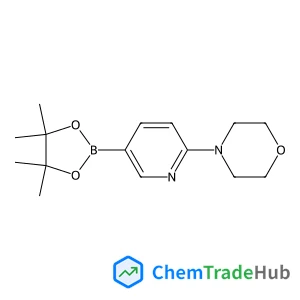
4-(5-(4,4,5,5-tetramethyl-1,3,2-dioxaborolan-2-yl)pyridin-2-yl)morpholine
CAS番号:
485799-04-0
分子式:
C15H23BN2O3
おすすめサプライヤー






免責事項
このページに表示される学術雑誌情報は、参考および研究目的のみを目的としています。当社は雑誌出版社とは提携しておらず、投稿の取り扱いも行っておりません。出版に関するお問い合わせは、各雑誌出版社に直接ご連絡ください。
表示されている情報に誤りがある場合は、support@chemtradehub.com までご連絡ください。迅速に確認し、対応いたします。