












Design of Gaussia luciferase-based bioluminescent stem-loop probe for sensitive detection of HIV-1 nucleic acids
文献情報
出版日
2018-05-15
DOI
10.1039/C8AN00047F
インパクトファクター
4.616
著者
Hamdi Joda, Geoffrey Stone, Sylvia Daunert, Sapna Deo
原文を見る
要旨
Here we describe the design of a bioluminescent stem-loop probe for the sensitive detection of HIV-1 spliced RNA. In this study, we employed Gaussia luciferase (GLuc), a bioluminescent protein that has several advantages over other bioluminescent proteins, including smaller size, higher bioluminescent intensity, and chemical and thermal stability. GLuc was chemically conjugated to the DABCYL-modified stem-loop probe (SLP) and was purified with a 2-step process to remove unconjugated GLuc and SLP. The binding of the target RNA to the loop region of the SLP results in the open conformation separating the stem part of SLP. GLuc conjugated to the stem acts as a reporter that produces light by a chemical reaction upon adding its substrate, coelenterazine in the presence of the target, while DABCYL serves as a quencher of bioluminescence in the closed conformation of SLP in the absence of the target. The optimized GLuc based-SLP assay resulted in a signal-to-background ratio of 47, which is the highest reported with bioluminescent SLPs and is significantly higher compared to traditional fluorescence-based SLPs that yield low signal to background ratio. Moreover, the assay showed an excellent selectivity against a single and double mismatched nucleic acid target, low detection limit, and ability to detect spiked HIV-1 RNA in human serum matrix.
関連文献
Tetraphenylethene-based macrocycles with dual-ring topology: synthesis, structures, and applications
Junying Zhang, Wenbing Kang, Xing-Dong Xu
2023-10-24
Review Article
DOI: 10.1039/D3QO01426F
Te-doped-WSe2/W as a stable monolith catalyst for ampere-level current density hydrogen evolution reaction
Xingchen Zhang, Dongfang Zhang, Xinya Chen, Dingyi Zhou, Jinying Zhang, Zhiyong Wang
2024-01-03
Paper
DOI: 10.1039/D3CP05790A
Oxidation of a triple carbo[5]helicene with hypervalent iodine
Florian Rigoulet, Albert Artigas, Nawal Ferdi, Michel Giorgi, Yoann Coquerel
2023-10-12
Research Article
DOI: 10.1039/D3QO01439H
Repercussions of multi-electron uptake by a twistacene: a reduction-induced double dehydrogenative annulation
Matthew Pennachio, Zheng Wei, Robert G. Clevenger, Kathleen V. Kilway, Alexandra Tsybizova, Renana Gershoni-Poranne, Marina A. Petrukhina
2023-09-22
Research Article
DOI: 10.1039/D3QO01282D
Visible-light-induced electron donor–acceptor (EDA) complex-initiated synthesis of non-anomeric S-aryl glycosides
Jin-Yu Hou, Le Zhang, Shi-Yun He, Mei-Ling Ye, Jian Chen, Tian-Le Huang, Guang-Hui Lv, Li Hai, Zhong-Zhen Yang, Yong Wu
2023-11-07
Research Article
DOI: 10.1039/D3QO01495A
Difluorocarbene as a C–F source for the construction of fluorinated benzothiazoles
Jiao Yu, Wei-Guo Cao, Ji-Chang Xiao
2023-11-13
Research Article
DOI: 10.1039/D3QO01422C
Dissimilar-at-boron N-BODIPYs: from light-harvesting multichromophoric arrays to CPL-bright chiral-at-boron BODIPYs
César Ray, Edurne Avellanal-Zaballa, Jessica Colligan, Florencio Moreno, Gilles Muller, Jorge Bañuelos, Beatriz L. Maroto, Santiago de la Moya
2023-10-19
Research Article
DOI: 10.1039/D3QO01561K
Anisotropic fluid flows in black phosphorus nanochannels
Ruda Jian, Shiwen Wu, Siyu Tian, Amirarsalan Mashhadian, Zhihao Xu, Stefano Leonardi, Tengfei Luo, Guoping Xiong
2024-01-08
Paper
DOI: 10.1039/D3CP04736A
Ideal two-dimensional quantum spin Hall insulators MgA2Te4 (A = Ga, In) with Rashba spin splitting and tunable properties
Xinlu Cheng
2024-01-03
Paper
DOI: 10.1039/D3CP04898E
Rh(iii)-catalyzed redox-neutral C–H [4 + 1] annulation of sulfoximines with α,α-difluoromethylene alkynes: diastereoselective synthesis of E-monofluoroalkenyl benzoisothiazole 1-oxides
Ting Wang, Zhi-Huan Peng, Liexin Wu, Qingwei Song, Qianying Li, Hui Gao, Zhongyi Zeng, Zhi Zhou, Wei Yi
2023-10-17
Research Article
DOI: 10.1039/D3QO01263H
こちらもおすすめ
化合物よくある質問
3-イチチルビフェニルはどのように合成されますか?
3-イチチルビフェニルは、ビフェニルとイチプロピオニトリルを回収率約90%で反応させて合成されます。触媒は通常、亜リチウムホウ素を用います。
5668-93-93-Ethylbiphenyl
化合物よくある質問
8-溴-5-三氟甲基喹啉はどのように合成されますか?
8-溴-5-三氟甲基喹啉は、5-トリフルオロメチル-2-メチル-1,3-ベンゼンジオールをブロモエタノールと反応させて生成します。この反応は塩基性条件下で行われ...
917251-92-48-Bromo-5-(trifluoro...
化合物よくある質問
ジメチル4-(4,4,5,5-テトラメチル-1,3,2-ドioxaborolan-2-基)-2,6-ピリジンジカルボイル酸フェニルアミニドの代替品はありますか?
ジメチル4-(4,4,5,5-テトラメチル-1,3,2-ドioxaborolan-2-基)-2,6-ピリジンジカルボイル酸フェニルアミニドの代替品としては、4-...
741709-66-0Dimethyl 4-(4,4,5,5-...
化合物よくある質問
N-(3,5-ヘキサクロロ-4-ピリドインイル)-8-メチオキシ-5-キノリンカーボン酸の市場動向や研究トレンドはどのようなものでしょうか?
N-(3,5-ヘキサクロロ-4-ピリドインイル)-8-メチオキシ-5-キノリンカーボン酸の市場動向は、主に産業用途での需要により影響を受けます。研究トレンドとし...
199871-63-1N-(3,5-Dichloro-4-py...
化合物よくある質問
イソステアロイルグリセリルは安全ですか?
イソステアロイルグリセリルは一般的に安全性が高いとされていますが、過度な使用や個人差により皮�owsん炎などの反応が起こる可能性があります。使用前に医師に相談す...
222723-55-92-[(5Z,8Z,11Z,14Z)-5...
化合物よくある質問
1-(二苯甲基)-3,3-二氟-氮杂环丁烷の市場動向や研究トレンドはどうですか?
1-(二苯甲基)-3,3-二氟-氮杂环丁烷の市場動向は、医薬品や合成化学の研究分野で注目を集めています。新興研究は、該当化合物の合成改良と生体内での作用メカニズ...
288315-02-61-Benzhydryl-3,3-dif...
化合物よくある質問
3-チオフェンスチオールの物理化学的性質は何ですか?
3-チオフェンスチオールのCAS番号は7774-73-4です。結晶性の白色粉末で、分子量は122.17です。この化合物は水に微溶解し、エタノールやジクロロメタン...
7774-73-43-Thiophenethiol
化合物よくある質問
2-Methyl-2-propanyl (2S)-2-(aminomethyl)-1-piperidinecarboxylateは安全ですか?
2-Methyl-2-propanyl (2S)-2-(aminomethyl)-1-piperidinecarboxylateは一定の安全性基準を満たしていま...
475105-35-22-Methyl-2-propanyl ...
化合物よくある質問
CAS番号1316822-90-8の化合物は安全ですか?
CAS番号1316822-90-8の化合物は安全性に関しては評価が不足していますが、一般的には生物学的に活性な物質であり、取り扱いには適切な安全防護措置が必要で...
1316822-90-8Gal beta(1-3)[Neu5Ac...
化合物よくある質問
Tert-butyl 2-(2-羟基乙基)哌嗪-1-羧酸はどのように保存すればよいですか?
Tert-butyl 2-(2-羟基乙基)哌嗪-1-羧酸は、冷暗所で保存し、直射日光から遠ざけてください。容器は密閉し、高湿度や高温を避けて保管してください。
517866-79-4Tert-butyl 2-(2-hydr...
掲載誌
Analyst

CiteScore:
7.8
自己引用率:
5.6%
年間論文数:
653
Analyst publishes analytical and bioanalytical research that reports premier fundamental discoveries and inventions, and the applications of those discoveries, unconfined by traditional discipline barriers.
おすすめ化合物

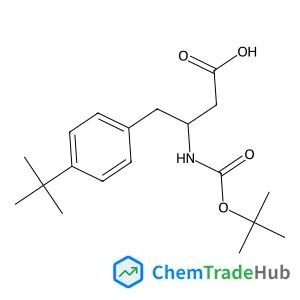
(S)-3-((tert-Butoxycarbonyl)amino)-4-(4-(tert-butyl)phenyl)butanoic acid
CAS番号:
403661-85-8
分子式:
C19H29NO4
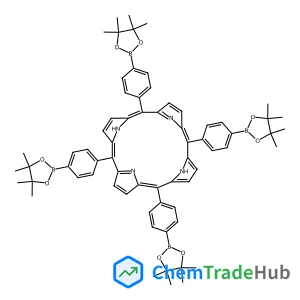
5,10,15,20-tetrakis(4-boronic acid pinacol ester phenyl) porphyrin
CAS番号:
1332748-00-1
分子式:
C68H74B4N4O8
おすすめサプライヤー




免責事項
このページに表示される学術雑誌情報は、参考および研究目的のみを目的としています。当社は雑誌出版社とは提携しておらず、投稿の取り扱いも行っておりません。出版に関するお問い合わせは、各雑誌出版社に直接ご連絡ください。
表示されている情報に誤りがある場合は、support@chemtradehub.com までご連絡ください。迅速に確認し、対応いたします。