












Generation of a carbon dots/ammonium persulfate redox initiator couple for free radical frontal polymerization
文献情報
出版日
2017-12-21
DOI
10.1039/C7PY01969F
インパクトファクター
5.582
著者
原文を見る
要旨
We report a new redox initiator couple of ammonium persulfate (APS)/carbon dots (CDs) with high initiation efficiency used in frontal polymerization (FP). The CDs also served as fluorescent reagents, and had good dispersion and a relatively high absolute quantum yield (>60%). The initiation efficiency and possible mechanism of CDs/peroxydisulfate (S2O82−) initiators were investigated. The electron transfer between the CDs and S2O82− made decomposition of the latter into free radicals easier. Besides, electron transfer occurred between the CDs and vinyl monomers, prompting the CDs to be applied to initiate monomers alone. Therefore, the combined effects of the CDs and APS made vinyl monomers more prone to be triggered in FP, thereby lowering the reaction temperature considerably. This research might provide a promising avenue to discover other polymerization initiators with high efficiency for the synthesis of versatile materials.
おすすめジャーナル
関連文献
Transition-metal free direct C–H functionalization of quinoxalin-2(1H)-ones with oxamic acids leading to 3-carbamoyl quinoxalin-2(1H)-ones
Jin-Wei Yuan, Jun-Liang Zhu, Hu-Lin Zhu, Fang Peng, Liang-Yu Yang, Pu Mao, Shou-Ren Zhang, Yan-Chun Li, Ling-Bo Qu
2019-11-27
Research Article
DOI: 10.1039/C9QO01322A
Wilsonglucinols A–C, homoadamantane-type polycyclic polyprenylated acylphloroglucinols with unusual fused epoxy ring skeletons from Hypericum wilsonii
Shuangshuang Xie, Changxing Qi, Yulin Duan, Xincai Hao, Yi Guo, Mengyi Deng, Yuben Qiao, Zhengyi Shi, Li Tao, Yunfang Cao, Lianghu Gu, Yuan Zhou, Yonghui Zhang
2019-12-17
Research Article
DOI: 10.1039/C9QO01158G
Phenanthroline-strapped calix[4]pyrroles: anion receptors displaying affinity reversal as a function of solvent polarity
Nam Jung Heo, Ju Hyun Oh, Jeong Tae Lee, Qing He, Jonathan L. Sessler, Sung Kuk Kim
2020-01-02
Research Article
DOI: 10.1039/C9QO01377F
Reaction mechanisms of iron(iii) catalyzed carbonyl–olefin metatheses in 2,5- and 3,5-hexadienals: significant substituent and aromaticity effects
Dandan Chen, Danling Zhuang, Yu Zhao, Qiong Xie, Jun Zhu
2019-10-16
Research Article
DOI: 10.1039/C9QO01008D
Computational exploration of substrate and ligand effects in nickel-catalyzed C–Si bond carboxylation with CO2
Xiangying Lv, Xiaotian Zhang, Rongjian Sa, Fang Huang, Gang Lu
2019-09-20
Research Article
DOI: 10.1039/C9QO00854C
Self-assembly of azaphthalocyanine–oligodeoxynucleotide conjugates into J-dimers: towards biomolecular logic gates
Jiri Demuth, Miroslav Miletin, Radim Kucera, Ales Ruzicka, Antonin Libra, Veronika Novakova, Petr Zimcik
2019-12-13
Research Article
DOI: 10.1039/C9QO01364D
Selective assembly of N1- and N2-alkylated 1,2,3-triazoles via copper-catalyzed decarboxylative cycloaddition of alkynyl carboxylic acids with ethers and azidotrimethylsilane
Pengli Bao, Na Meng, Yufen Lv, Huilan Yue, Jiang-Sheng Li
2019-11-04
Research Article
DOI: 10.1039/C9QO01277J
Enantioselective synthesis of chiral multicyclic γ-lactones via dynamic kinetic resolution of racemic γ-keto carboxylic acids
Zhichao Xiong, Jiangyan Tian, Peng Xue, Xumu Zhang
2019-11-25
Research Article
DOI: 10.1039/C9QO01047E
こちらもおすすめ
化合物よくある質問
3-(5-フェニル-2-ファイル)-プロパン酸の市場動向や研究トレンドはどうですか?
この化合物の市場動向は不明ですが、類似化合物の需要は化学繊維、医薬品、農薬分野で安定しています。研究トレンドとしては、該当化合物の生物学的活性の評価や、その他の...
3465-61-03-(5-Phenyl-2-furyl)...
化合物よくある質問
3- Chloro-1H-indazol-5-olはどのように保存すればよいですか?
3- チロロ-1H-吲唑-5-醇は遮光し、直射日光を避けて、温度は室温を推奨し、密閉容器に保存してください。
885519-34-63-Chloro-1H-indazol-...
849924-76-11,2,3,4,5-Cyclopenta...
化合物よくある質問
L-(1-~13~C)メチオニンの市場動向や研究トレンドはどうですか?
L-(1-~13~C)メチオニンは、医薬品やバイオテクノロジー分野での研究が増加しており、その価格は安定しています。新興研究分野では、代謝解析や遺伝子機能解析で...
81202-04-2L-(1-~13~C)Methionin...
化合物よくある質問
1,3-フェニレンビスメチレンビスアクリレートは安全ですか?
1,3-フェニレンビスメチレンビスアクリレートは一般的に安全ですが、直接皮膚に触れる場合は保護用具を使用することを推奨します。高濃度の蒸気が吸入された場合は呼吸...
22757-16-01,3-Phenylenebis(met...
化合物よくある質問
丹参醇Aはどのように保存すればよいですか?
丹参醇Aは、直射日光を避けて室温で保存し、密栓容器に入れることをお勧めします。適切な保存条件は、安定性を保ち、安全性を確保する上で重要です。
189308-08-5Danshenol A
化合物よくある質問
4-メチル-2-(1,1,1-三フロロ-2-メチルプロパニル)ピリドインとは何ですか?
CAS番号1378865-93-0の4-メチル-2-(1,1,1-三フロロ-2-メチルプロパニル)ピリドインは、合成化学分野で用いられる有機化合物の一種です。こ...
1378865-93-04-Methyl-2-(1,1,1-tr...
化合物よくある質問
N-フェニルベンジル-2-クロロ酢氨を取り扱う際の実験室安全事項は何ですか?
N-フェニルベンジル-2-クロロ酢氨は毒性があり、皮膚や粘膜に刺激を与えます。取り扱う際には、保護眼鏡、手袋、ゴーグルを着用することを強く推奨します。ドラフトチ...
2653-14-7N-benzyl-2-chloro-N-...
化合物よくある質問
UCN-02を取り扱う際の実験室安全事項は何ですか?
UCN-02は毒性は低いですが、人体への直接的な接触は避けるべきです。PPE要件はグローブと顔面保護具を着用することです。ドラフトチャンバーを使用して漏洩を処理...
121569-61-7UCN-02
化合物よくある質問
N-[3-[2-(二甲基氨基)乙氧基]-4-甲氧基苯基]-2'-甲基-4'-(5-甲基-1,2,4-恶二唑-3-基)-[1,1'-联苯]-4-甲酰胺を取り扱う際の実験室安全事項は何ですか?
手袋と保護眼鏡を着用し、漏洩時には吸気防止装置を使用してください。室温、乾燥した場所に保管し、直日光から隔離してください。SDS(安全データシート)を参照してく...
170230-39-4N-{3-[2-(Dimethylami...
掲載誌
Polymer Chemistry

CiteScore:
8.6
自己引用率:
7.3%
年間論文数:
457
Polymer Chemistry welcomes submissions in all areas of polymer science that have a strong focus on macromolecular chemistry. Manuscripts may cover a broad range of fields, yet no direct application focus is required.
おすすめ化合物
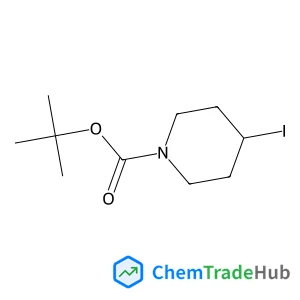
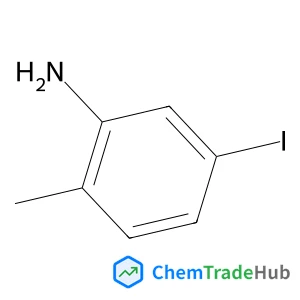
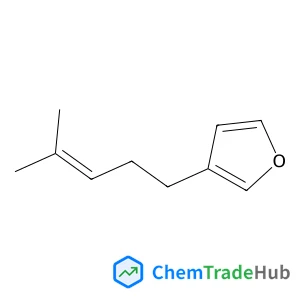
おすすめサプライヤー




免責事項
このページに表示される学術雑誌情報は、参考および研究目的のみを目的としています。当社は雑誌出版社とは提携しておらず、投稿の取り扱いも行っておりません。出版に関するお問い合わせは、各雑誌出版社に直接ご連絡ください。
表示されている情報に誤りがある場合は、support@chemtradehub.com までご連絡ください。迅速に確認し、対応いたします。