












Design and preparation of a new polyurea–polysiloxane–polyether copolymer with a block soft segment prepared by utilizing aza-Michael addition reaction
文献情報
出版日
2018-01-16
DOI
10.1039/C7PY01525A
インパクトファクター
5.582
著者
Bo Pang, Jingzhe Zhang, Minglei Pang, Peijian Zhao, Zhen Yang, Shengyu Feng, Jie Zhang
原文を見る
要旨
A new synthesis strategy was presented to prepare a polyurea–polysiloxane–polyether copolymer (PUA). A new block soft segment (b-SS) was synthesised via an aza-Michael addition reaction of acryloxymethyl-terminated polydimethylsiloxane (AT-PDMS) and amine-terminated polyoxypropylene (PPO). The hard segment (HS) was formed from bis(4-isocyanato cyclohexyl)methane (HMDI) and a 2-methyl-1,5-diaminopentane chain extender. The copolymers are tough and easily processed thermoplastic elastomers. The properties and structures of the polyurea–polysiloxane–polyether copolymers were investigated by dynamic mechanic analysis (DMA), small angle X-ray scattering (SAXS), atomic force microscopy (AFM) and macroscopy mechanical testing. The DMA results of the polyurea–polysiloxane–polyether copolymers show that temperature insensitive rubbery plateaus exist between −50 °C and 80 °C, which are independent of the HS wt% and the molecular weight of PDMS. The viscoelastic behavior of the polyurea–polysiloxane–polyether copolymers was correlated with the molecular weight of PDMS used for the b-SS. The polyurea–polysiloxane–polyether copolymers display improved mechanical strength (16 MPa) compared with the published results of PDMS-based siloxane-urea segmented copolymers (11–13 MPa). The studies reveal that the mild microphase separation between the hard and soft segments leads to improved mechanical strength of the polyurea–polysiloxane–polyether copolymers. In addition, for these copolymers, the introduction of b-SS is effective in avoiding a sharp phase separation assuming that the molecular weight of PDMS in the b-SS is appropriate.
関連文献
Reaction mechanism in the photoreduction of CO2 with CH4 over ZrO2
2000-10-26
Paper
DOI: 10.1039/B005315P
Already two water molecules change planar H-bonded structures of the adenine···thymine base pair to the stacked ones: a molecular dynamics simulations study
2000-10-13
Communication
DOI: 10.1039/B007167F
Kinetics of excited-state Cr(a5S2, a5DJ, a5GJ) depletion by simple hydrocarbons
Paper
DOI: 10.1039/A902886B
Photophysical and photochemical properties of bis-silylated C60 derivatives
Paper
DOI: 10.1039/A902939G
Evolution from gravimetric to viscoelastic response of poly(3-methylthiophene)-loaded acoustic wave resonators
Magdalena Skompska, Angela Jackson, A. Robert Hillman
2000-10-03
Paper
DOI: 10.1039/B004807K
ENDOR study of a thiocytosine oxidation product in cytosine monohydrate crystals doped with 2-thiocytosine, X-irradiated at 15 K
Janko N. Herak, Krešimir Sanković, Eli O. Hole, Einar Sagstuen
2000-10-04
Paper
DOI: 10.1039/B004639F
pH and Ca2+ dependent interaction of Annexin V with phospholipid membranes: a combined study using fluorescence techniques, microelectrophoresis and infrared spectroscopy
H. Binder, G. Köhler, K. Arnold, O. Zschörnig
2000-09-27
Paper
DOI: 10.1039/B003033N
Laser induced ionisation/dissociation of cyclopentanone in the 320–370 nm region
Paper
DOI: 10.1039/A902027F
The thermal unimolecular decomposition rate constants of ethoxy radicals
Paper
DOI: 10.1039/A901768B
こちらもおすすめ
化合物よくある質問
2-ブロモ-9,9-ジフェニル-9H-フルオレンの主な用途は何ですか?
2-溴-9,9-二苯基芴は、医薬品、工業材料、有機合成の研究分野で応用されます。特に、レーザー材料や機能性ポリマーの合成に使用されることがあります。また、蛍光色...
474918-32-62-Bromo-9,9-diphenyl...
化合物よくある質問
四氯化铱の市場動向や研究トレンドはどうですか?
四氯化铱の市場は研究開発分野で注目されており、特にナノ技術や金属有機框架(MOFs)の分野での需要が増加傾向にあります。価格は安定しており、中国や韓国での生産が...
207399-11-9Tetrachloroiridium h...
882-06-44-Nitrocinnamic acid
化合物よくある質問
1-(4-溴-3-氟苯基)-2-氯乙酮を含む廃棄物はどのように処理すべきですか?
1-(4-溴-3-氟苯基)-2-氯乙酮 (CAS番号: 1260857-14-4) の廃棄物は専門的な廃棄処理が必要です。まず、廃棄物は密閉された容器に収集し、...
1260857-14-41-(4-Bromo-3-fluorop...
化合物よくある質問
苦参酚Kとは何ですか?
苦参酚Kは、CAS番号101236-49-1を持つ化合物で、主に天然由来の生薬から抽出されます。この化合物は、抗炎症作用や抗癌作用を持つことが報告されています。
101236-49-1Kushenol K
化合物よくある質問
POTASSIUM (1-(TERTBUTOXYCARBONYL)AZETIDIN-3-YL)TRIFLUOROBORATE を含む廃棄物はどのように処理すべきですか?
POTASSIUM (1-(TERTBUTOXYCARBONYL)AZETIDIN-3-YL)TRIFLUOROBORATE を含む廃棄物は、まず安全なエント...
1430219-73-0Potassium (1-(tert-b...
化合物よくある質問
4-庚基-4’-联苯羧酸の市場動向や研究トレンドはどうですか?
4-庚基-4’-聯苯羧酸は、特殊化学品や合成化学の分野で用いられる化学物質ですが、市場動向としては、研究開発の進展とともに需要が増加しています。また、環境配慮型...
58573-94-74'-Heptyl-4-biphenyl...
化合物よくある質問
6-ブロモ-3-メトキシ-1-フェニル-1H-インドゾールを含む廃棄物はどのように処理すべきですか?
6-ブロモ-3-メトキシ-1-フェニル-1H-インドゾールを含む廃棄物は、適切な化学廃棄処理が必要です。通常、廃棄物は密閉容器に収集され、専門の廃棄処理業者に引...
1332527-03-36-Bromo-3-methoxy-1-...
化合物よくある質問
4,4-二甲基-2-吡咯烷酮はどの業界で使用されていますか?
4,4-二甲基-2-吡咯烷酮は医薬、ポリマー、センサー、半導体などの業界で広く使用されています。特に溶媒としての性能が高く評価されています。
66899-02-34,4-dimethylpyrrolid...
51312-42-6Sodium Phosphotungst...
掲載誌
Polymer Chemistry

CiteScore:
8.6
自己引用率:
7.3%
年間論文数:
457
Polymer Chemistry welcomes submissions in all areas of polymer science that have a strong focus on macromolecular chemistry. Manuscripts may cover a broad range of fields, yet no direct application focus is required.
おすすめ化合物
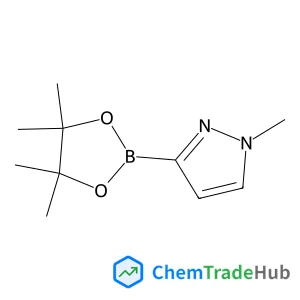
1-Methyl-3-(4,4,5,5-tetramethyl-1,3,2-dioxaborolan-2-yl)-1H-pyrazole
CAS番号:
1020174-04-2
分子式:
C10H17BN2O2

おすすめサプライヤー





免責事項
このページに表示される学術雑誌情報は、参考および研究目的のみを目的としています。当社は雑誌出版社とは提携しておらず、投稿の取り扱いも行っておりません。出版に関するお問い合わせは、各雑誌出版社に直接ご連絡ください。
表示されている情報に誤りがある場合は、support@chemtradehub.com までご連絡ください。迅速に確認し、対応いたします。