












Thiophene-benzothiadiazole based D–A1–D–A2 type alternating copolymers for polymer solar cells
文献情報
出版日
2017-05-23
DOI
10.1039/C7PY00696A
インパクトファクター
5.582
著者
Quoc Viet Hoang, Mohammad Afsar Uddin, Han Young Woo
原文を見る
要旨
A series of D–A1–D–A2 type regioregular copolymers based on difluorobenzothiadiazole (DFBT) and dialkoxybenzothiadiazole (ROBT) structures was synthesized. The copolymers were prepared with different alkyl chain lengths and branching point positions. The weaker acceptor, ROBT, was incorporated as a solubilizing moiety, while the stronger acceptor, DFBT, was used to enhance intramolecular charge transfer interactions with low-lying frontier orbital levels. The design of DFBT–ROBT copolymers ensures good planarity via intrachain noncovalent F⋯S, S⋯O, and F⋯H coulombic interactions. Changing the alkyl chain branching point and length had pronounced effects on the interchain packing and charge carrier transport/recombination characteristics of the resultant polymers, which in turn influenced their photovoltaic performances. P2 (with 3-hexylundecyloxy) showed tight π–π stacking, high charge mobility, reduced bimolecular charge recombination, and an optimal nanoscale morphology compared to P1 (with 2-hexyldecyloxy). We prepared photovoltaic devices containing a blend of the copolymers with [6,6]-phenyl-C71-butyric acid methyl ester, and the resultant devices showed high power conversion efficiencies, 8.27% for P2, which is higher than that of P1 (6.87%). Furthermore, the alkyl side-chain length in P2 was varied systematically to study the correlation between the alkyl chain length in the interchain packing and photovoltaic performances. The variation in the alkyl chain branching was effective to modulate intermolecular packing to improve the photovoltaic performances. The optimum side chain length should be determined by carefully considering the solubility and interchain packing interactions.
関連文献
A new highly conjugated crossed benzodithiophene and its donor–acceptor copolymers for high open circuit voltages polymer solar cells
Chunyang Gu, Manjun Xiao, Meng Qiu, Mingliang Sun, Renqiang Yang
2015-03-17
Paper
DOI: 10.1039/C5PY00117J
Multi-stimuli responsive supramolecular polymers and their electrospun nanofibers
Jianzhuang Chen, Shuangshuang Zhang, Fugen Sun, Nan Li, Kun Cui, Jianping He, Dechao Niu, Yongsheng Li
2016-03-30
Paper
DOI: 10.1039/C6PY00445H
A poloxamer-polypeptide thermosensitive hydrogel as a cell scaffold and sustained release depot
Ji-Yu Lin, Yuan-Kai Lin, Sydney Peng, Li-Yu Lee, Chieh-Nan Chen, I-Ming Chu
2016-03-31
Paper
DOI: 10.1039/C5PY02067K
Self-assembly of cyclic polymers
Rebecca J. Williams, Andrew P. Dove, Rachel K. O'Reilly
2015-03-11
Review Article
DOI: 10.1039/C5PY00081E
Far-red/near-infrared fluorescent conjugated polymer nanoparticles with size-dependent chirality and cell imaging applications
Chunhui Dai, Dongliang Yang, Wenjie Zhang, Biqing Bao, Yixiang Cheng, Lianhui Wang
2015-04-13
Paper
DOI: 10.1039/C5PY00344J
Cross-linked ROMP polymers based on odourless dicyclopentadiene derivatives
Sukdeb Saha, Yakov Ginzburg, Illya Rozenberg, Olga Iliashevsky, Amos Ben-Asuly, N. Gabriel Lemcoff
2016-04-14
Communication
DOI: 10.1039/C6PY00378H
こちらもおすすめ
28770-01-62-(2-Isopropyl-1,3-o...
化合物よくある質問
「邻羟基阿托伐他汀内酯标准品」に適用される法規ガイドelinesは何ですか?
CAS番号163217-74-1の「邻羟基阿托伐他汀内酯标准品」は、GHS分類では危険物に分類されず、主にREACH規則とFDA/EPAの管理対象となります。R...
163217-74-1ortho-Hydroxy Atorva...
化合物よくある質問
メチル(3R)-3-アミノ-2,3-ジヒドロ-1-ベンゾファンラニン-5-カルボイル酸塩塩酸塩の主な用途は何ですか?
メチル(3R)-3-アミノ-2,3-ジヒドロ-1-ベンゾファンラニン-5-カルボイル酸塩塩酸塩は、医薬品や合成化学の研究に広く用いられます。また、特定の薬物の前...
2241594-15-8Methyl (3R)-3-amino-...
化合物よくある質問
トランス-4-メチルピロリジン-3-オール塩酸塩はどのように合成されますか?
トランス-4-メチルピロリジン-3-オール塩酸塩は、4-メチルピロリジンの塩酸塩化によって合成されます。一般的な合成方法では、4-メチルピロリジンを塩酸に加えて...
265108-42-7trans-4-Methylpyrrol...
化合物よくある質問
硫雜環丁烷-1,1-二氧化物は安全ですか?
硫雜環丁烷-1,1-二氧化物は安全ではありません。毒性は報告されていませんが、高温下で分解し、可燃性があるため、高圧ガスは注意が必要です。密閉した容器で保管し、...
5687-92-3Thietane 1,1-dioxide
6054-10-02H, 8H-Benzo[1,2-b
化合物よくある質問
9-ヒドロキシエリプチシネ塩酸塩はどのように合成されますか?
9-ヒドロキシエリプチシネ塩酸塩は、エリプチシネから塩酸を添加することで合成されます。選択性は高いですが、収率は約70%です。
52238-35-49-Hydroxyellipticine...
化合物よくある質問
5-塩素-2-(メチルアミノ)フェニル-(2-塩素フェニル)メタン酮の物理化学的性質は何ですか?
5-塩素-2-(メチルアミノ)フェニル-(2-塩素フェニル)メタン酮のCAS番号は5621-86-3です。この化合物は白色の結晶性粉末で、分子量は415.03で...
5621-86-3[5-Chloro-2-(methyla...
化合物よくある質問
1-[2-(4-甲氧基-苯氧基)-乙基]-哌嗪はどのように保存すればよいですか?
1-[2-(4-甲氧基-苯氧基)-乙基]-哌嗪は、直射日光を避けて暗所に、室温(15-25℃)で保管し、密閉容器に入れることで安定性を保つことができます。
117132-44-21-[2-(4-Methoxy-phen...
化合物よくある質問
2-[3-(4-甲氧基フェニル)プロピル]-4,4,5,5-四メチル-1,3,2-ドイボロロールアンの主な用途は何ですか?
2-[3-(4-甲氧基フェニル)プロピル]-4,4,5,5-四メチル-1,3,2-ドイボロロールアンは、医薬品の合成、有機合成化学、および新材料の研究で使用され...
1073371-72-82-[3-(4-Methoxypheny...
掲載誌
Polymer Chemistry

CiteScore:
8.6
自己引用率:
7.3%
年間論文数:
457
Polymer Chemistry welcomes submissions in all areas of polymer science that have a strong focus on macromolecular chemistry. Manuscripts may cover a broad range of fields, yet no direct application focus is required.
おすすめ化合物
phosphoryl}methyl 4-methylbenzenesulfonate structure](https://static.chemtradehub.com/structs/864/864068-45-1-ba7c.webp "{[3-(Hexadecyloxy)propoxy](hydroxy)phosphoryl}methyl 4-methylbenzenesulfonate structure")
{[3-(Hexadecyloxy)propoxy](hydroxy)phosphoryl}methyl 4-methylbenzenesulfonate
CAS番号:
864068-45-1
分子式:
C27H49O7PS
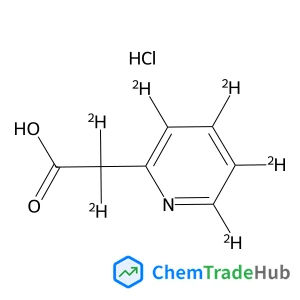
2,2-dideuterio-2-(3,4,5,6-tetradeuterio-2-pyridyl)acetic acid;hydrochloride
CAS番号:
1329799-67-8
分子式:
C7H2ClD6NO2
![(2E)-3-(3-Chlorophenyl)-N-{2-[4-(methylsulfonyl)-1-piperazinyl]-2-oxoethyl}acrylamide structure](https://static.chemtradehub.com/structs/250/2505001-54-5-c1e9.webp "(2E)-3-(3-Chlorophenyl)-N-{2-[4-(methylsulfonyl)-1-piperazinyl]-2-oxoethyl}acrylamide structure")
(2E)-3-(3-Chlorophenyl)-N-{2-[4-(methylsulfonyl)-1-piperazinyl]-2-oxoethyl}acrylamide
CAS番号:
2505001-54-5
分子式:
C16H20ClN3O4S
おすすめサプライヤー





免責事項
このページに表示される学術雑誌情報は、参考および研究目的のみを目的としています。当社は雑誌出版社とは提携しておらず、投稿の取り扱いも行っておりません。出版に関するお問い合わせは、各雑誌出版社に直接ご連絡ください。
表示されている情報に誤りがある場合は、support@chemtradehub.com までご連絡ください。迅速に確認し、対応いたします。