












phosphoryl}methyl 4-methylbenzenesulfonate structure](https://static.chemtradehub.com/structs/864/864068-45-1-ba7c.webp "{[3-(Hexadecyloxy)propoxy](hydroxy)phosphoryl}methyl 4-methylbenzenesulfonate structure")
{[3-(Hexadecyloxy)propoxy](hydroxy)phosphoryl}methyl 4-methylbenzenesulfonate
CAS番号:
864068-45-1
分子式:
C27H49O7PS
Ji-Yu Lin, Yuan-Kai Lin, Sydney Peng, Li-Yu Lee, Chieh-Nan Chen, I-Ming Chu
Herein, we report the synthesis and characterization of a novel positively charged thermosensitive hydrogel prepared from poloxamer (PLX)-poly(L-alanine-lysine) (Lys-Ala-PLX-Ala-Lys) that demonstrates potential in biomedical applications including tissue engineering and drug delivery. At a dilute concentration, the copolymer self-assembled into micelles that were sensitive to temperature elevation. In the concentration range of 3–7 wt%, the aqueous copolymer solution underwent sol–gel transition near the physiological temperature and exhibited changes in its secondary structure content, as evidenced by FT-IR. Excellent viability of cells cultured within the scaffold was observed after 72 h of incubation. On the other hand, negatively charged bovine serum albumin was incorporated into the hydrogel without diminishing material integrity. Over the course of seven days, the protein underwent extended zero-order release. These findings highlight the potential of this system as a cell scaffold as well as a depot for the extended delivery of drugs and proteins, specifically those which bear a charge opposite to that of the hydrogel.
Liting Lv
DOI: 10.1039/D2AN02004A
Zehang Gao
DOI: 10.1039/D3AN00271C
S. Arun
DOI: 10.1039/D2AN01663J
Nicole L. Walker
DOI: 10.1039/D3AN00107E
Kristýna Dobšíková, Pavel Michal, Dita Spálovská, Josef Kapitán, Vladimír Setnička
DOI: 10.1039/D2AN02014A
Yuhan He, Sijia Chen, Guoyang Xie, Xinyao Yi, Jianxiu Wang
DOI: 10.1039/D2AN01847K
Riley Wong, H. Georg Schulze, Martha Z. Vardaki, Michael W. Blades
DOI: 10.1039/D2AN01916G
Yingshuang Chen, Chuanfeng Zhao, Xinyi Liu, Qian Zhang, Yuliang Jiang, Jian Shen
DOI: 10.1039/D2AN02045A
CAS番号163217-74-1の「邻羟基阿托伐他汀内酯标准品」は、GHS分類では危険物に分類されず、主にREACH規則とFDA/EPAの管理対象となります。R...
メチル(3R)-3-アミノ-2,3-ジヒドロ-1-ベンゾファンラニン-5-カルボイル酸塩塩酸塩は、医薬品や合成化学の研究に広く用いられます。また、特定の薬物の前...
トランス-4-メチルピロリジン-3-オール塩酸塩は、4-メチルピロリジンの塩酸塩化によって合成されます。一般的な合成方法では、4-メチルピロリジンを塩酸に加えて...
硫雜環丁烷-1,1-二氧化物は安全ではありません。毒性は報告されていませんが、高温下で分解し、可燃性があるため、高圧ガスは注意が必要です。密閉した容器で保管し、...
9-ヒドロキシエリプチシネ塩酸塩は、エリプチシネから塩酸を添加することで合成されます。選択性は高いですが、収率は約70%です。
5-塩素-2-(メチルアミノ)フェニル-(2-塩素フェニル)メタン酮のCAS番号は5621-86-3です。この化合物は白色の結晶性粉末で、分子量は415.03で...
1-[2-(4-甲氧基-苯氧基)-乙基]-哌嗪は、直射日光を避けて暗所に、室温(15-25℃)で保管し、密閉容器に入れることで安定性を保つことができます。
2-[3-(4-甲氧基フェニル)プロピル]-4,4,5,5-四メチル-1,3,2-ドイボロロールアンは、医薬品の合成、有機合成化学、および新材料の研究で使用され...

Polymer Chemistry welcomes submissions in all areas of polymer science that have a strong focus on macromolecular chemistry. Manuscripts may cover a broad range of fields, yet no direct application focus is required.
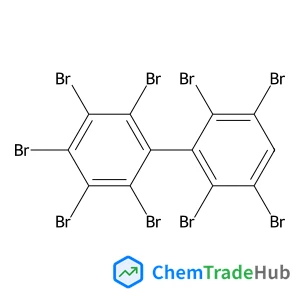


![(2E)-3-(3-Chlorophenyl)-N-{2-[4-(methylsulfonyl)-1-piperazinyl]-2-oxoethyl}acrylamide structure](https://static.chemtradehub.com/structs/250/2505001-54-5-c1e9.webp "(2E)-3-(3-Chlorophenyl)-N-{2-[4-(methylsulfonyl)-1-piperazinyl]-2-oxoethyl}acrylamide structure")



