


Dual-sensitive and biodegradable core-crosslinked HPMA copolymer–doxorubicin conjugate-based nanoparticles for cancer therapy
文献情報
出版日
2017-03-14
DOI
10.1039/C7PY00348J
インパクトファクター
5.582
著者
Manling Tang, Minglu Zhou, Yuan Huang, Jiaju Zhong, Zhou Zhou, Kui Luo
原文を見る
要旨
In this study, to increase the blood stability and circulation time of polymeric nanoparticles as well as to investigate the effects of the structure on therapeutic indexes, 2 types of N-(2-hydroxypropyl)methacrylamide (HPMA) block copolymer–doxorubicin (copolymer–DOX) conjugates, including an amphiphilic linear one and a core cross-linked one, were designed. Comparative studies on their self-assembled nanoparticles, as advanced drug delivery systems, were investigated. Both conjugates could self-assemble into polymeric nanoparticles (block copolymer-NPs and cross-linked copolymer-NPs) with sizes of ∼20 nm. Those cross-linked nanoparticles demonstrated pH-sensitive drug release features as a much higher accumulative drug release (∼80.2%) in the presence of glutathione (GSH) and pH 5.0 was observed than that in PBS (pH 7.4) without GSH (about 27.0%, 24 h). The degraded segments with low MW (MW ∼28 kDa) can be observed in the presence of a reduction agent. In addition, in vivo pharmacokinetic behaviour studies showed that the cross-linked copolymer-NPs resulted in good blood stability and long-lasting circulation time compared with the linear block copolymer-NPs and the free drug. The cell viability test and migration and invasion assay showed that both nanoparticles can inhibit cancer cell proliferation. Finally, the cross-linked copolymer-NPs exhibited the best in vivo anticancer efficacy due to the highest tumor inhibition rate of 77.75% on the A549 lung tumor model. These results suggested that cross-linked copolymer-NPs could be a potential delivery system in cancer therapy.
おすすめジャーナル

Chinese Journal of Chemistry

Journal of the Indian Institute of Science

Atomization and Sprays

Heteroatom Chemistry

Bioorganic & Medicinal Chemistry Letters

Biocatalysis and Biotransformation

Colloid Journal

NDT & E International

Acta Metallurgica Sinica-English Letters

Critical Reviews in Solid State and Materials Sciences
関連文献
From in silica to in silico: retention thermodynamics at solid–liquid interfaces
Krystel El Hage, Raymond J. Bemish, Markus Meuwly
2018-06-15
Paper
DOI: 10.1039/C8CP02899K
Molecular dynamics modeling of Pseudomonas aeruginosa outer membranes
Ao Li
2018-08-31
Paper
DOI: 10.1039/C8CP04278K
Enhanced sulfurization reaction of molybdenum using a thermal cracker for forming two-dimensional MoS2 layers
Woo-Jung Lee, Jae-Hyung Wi, Won Seok Han, Byungha Shin
2018-05-23
Paper
DOI: 10.1039/C8CP02390E
Tailoring the hexagonal boron nitride nanomesh on Rh(111) with gold
G. Vári, J. Kiss, A. Berkó
2018-05-08
Paper
DOI: 10.1039/C8CP00790J
Open-cell voltage and electrical conductivity of a protonic ceramic electrolyte under two chemical potential gradients
Ho-Il Ji, Hyoungchul Kim, Hae-Weon Lee, Byung-Kook Kim, Kyung Joong Yoon
2018-05-04
Communication
DOI: 10.1039/C8CP01880D
Reversible DNA compaction induced by partial intercalation of 16-Ph-16 gemini surfactants: evidence of triple helix formation
Elia Grueso, Emilio Roldan, Pilar Perez-Tejeda, Edyta Kuliszewska, Blanca Molero, Lothar Brecker, R. M. Giráldez-Pérez
2018-09-14
Paper
DOI: 10.1039/C8CP02791A
TEMPO-oxidised cellulose nanofibrils; probing the mechanisms of gelation via small angle X-ray scattering
Julien Schmitt, Vincenzo Calabrese, Marcelo A. da Silva, Saskia Lindhoud, Viveka Alfredsson, Karen J. Edler
2018-05-24
Paper
DOI: 10.1039/C8CP00355F
Ferroelectric-mediated filamentary resistive switching in P(VDF-TrFE)/ZnO nanocomposite films
Tae Yeon Kim, Gopinathan Anoop, Yeong Jun Son, Soo Hyeon Kim, Eunji Lee, Ji Young Jo
2018-04-30
Paper
DOI: 10.1039/C8CP02024H
A vacuum ultraviolet photoionization study on the formation of methanimine (CH2NH) and ethylenediamine (NH2CH2CH2NH2) in low temperature interstellar model ices exposed to ionizing radiation
Bing-Jian Sun, Yue-Lin Chen, Agnes H. H. Chang
2018-12-20
Paper
DOI: 10.1039/C8CP06002A
こちらもおすすめ
化合物よくある質問
2-ブロモ-9,9-ジフェニル-9H-フルオレンの主な用途は何ですか?
2-溴-9,9-二苯基芴は、医薬品、工業材料、有機合成の研究分野で応用されます。特に、レーザー材料や機能性ポリマーの合成に使用されることがあります。また、蛍光色...
474918-32-62-Bromo-9,9-diphenyl...
化合物よくある質問
四氯化铱の市場動向や研究トレンドはどうですか?
四氯化铱の市場は研究開発分野で注目されており、特にナノ技術や金属有機框架(MOFs)の分野での需要が増加傾向にあります。価格は安定しており、中国や韓国での生産が...
207399-11-9Tetrachloroiridium h...
882-06-44-Nitrocinnamic acid
化合物よくある質問
1-(4-溴-3-氟苯基)-2-氯乙酮を含む廃棄物はどのように処理すべきですか?
1-(4-溴-3-氟苯基)-2-氯乙酮 (CAS番号: 1260857-14-4) の廃棄物は専門的な廃棄処理が必要です。まず、廃棄物は密閉された容器に収集し、...
1260857-14-41-(4-Bromo-3-fluorop...
化合物よくある質問
苦参酚Kとは何ですか?
苦参酚Kは、CAS番号101236-49-1を持つ化合物で、主に天然由来の生薬から抽出されます。この化合物は、抗炎症作用や抗癌作用を持つことが報告されています。
101236-49-1Kushenol K
化合物よくある質問
POTASSIUM (1-(TERTBUTOXYCARBONYL)AZETIDIN-3-YL)TRIFLUOROBORATE を含む廃棄物はどのように処理すべきですか?
POTASSIUM (1-(TERTBUTOXYCARBONYL)AZETIDIN-3-YL)TRIFLUOROBORATE を含む廃棄物は、まず安全なエント...
1430219-73-0Potassium (1-(tert-b...
化合物よくある質問
4-庚基-4’-联苯羧酸の市場動向や研究トレンドはどうですか?
4-庚基-4’-聯苯羧酸は、特殊化学品や合成化学の分野で用いられる化学物質ですが、市場動向としては、研究開発の進展とともに需要が増加しています。また、環境配慮型...
58573-94-74'-Heptyl-4-biphenyl...
化合物よくある質問
6-ブロモ-3-メトキシ-1-フェニル-1H-インドゾールを含む廃棄物はどのように処理すべきですか?
6-ブロモ-3-メトキシ-1-フェニル-1H-インドゾールを含む廃棄物は、適切な化学廃棄処理が必要です。通常、廃棄物は密閉容器に収集され、専門の廃棄処理業者に引...
1332527-03-36-Bromo-3-methoxy-1-...
化合物よくある質問
4,4-二甲基-2-吡咯烷酮はどの業界で使用されていますか?
4,4-二甲基-2-吡咯烷酮は医薬、ポリマー、センサー、半導体などの業界で広く使用されています。特に溶媒としての性能が高く評価されています。
66899-02-34,4-dimethylpyrrolid...
51312-42-6Sodium Phosphotungst...
掲載誌
Polymer Chemistry

CiteScore:
8.6
自己引用率:
7.3%
年間論文数:
457
Polymer Chemistry welcomes submissions in all areas of polymer science that have a strong focus on macromolecular chemistry. Manuscripts may cover a broad range of fields, yet no direct application focus is required.
おすすめ化合物
![1-Naphthalenesulfonic acid, 2-[(2-hydroxy-1-naphthalenyl)azo]-, bariumsalt (2:1) structure](https://static.chemtradehub.com/structs/110/1103-38-4-0b33.webp "1-Naphthalenesulfonic acid, 2-[(2-hydroxy-1-naphthalenyl)azo]-, bariumsalt (2:1) structure")
1-Naphthalenesulfonic acid, 2-[(2-hydroxy-1-naphthalenyl)azo]-, bariumsalt (2:1)
CAS番号:
1103-38-4
分子式:
C20H14BaN2O4S
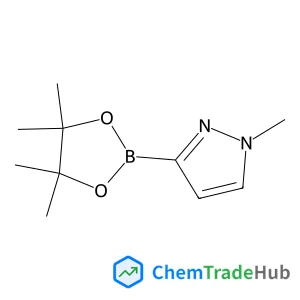
1-Methyl-3-(4,4,5,5-tetramethyl-1,3,2-dioxaborolan-2-yl)-1H-pyrazole
CAS番号:
1020174-04-2
分子式:
C10H17BN2O2
おすすめサプライヤー





免責事項
このページに表示される学術雑誌情報は、参考および研究目的のみを目的としています。当社は雑誌出版社とは提携しておらず、投稿の取り扱いも行っておりません。出版に関するお問い合わせは、各雑誌出版社に直接ご連絡ください。
表示されている情報に誤りがある場合は、support@chemtradehub.com までご連絡ください。迅速に確認し、対応いたします。