












Magnesium bis(trifluoromethanesulfonyl)amide complexes with triglyme and asymmetric homologues: phase behavior, coordination structures and melting point reduction
文献情報
出版日
2018-02-13
DOI
10.1039/C7CP08367J
インパクトファクター
3.676
著者
Kei Hashimoto, Soma Suzuki, Morgan L. Thomas, Toshihiko Mandai, Seiji Tsuzuki, Masayoshi Watanabe
原文を見る
要旨
The phase behavior of binary mixtures of triglyme (G3) and Mg[TFSA]2 (TFSA: bis(trifluoromethanesulfonyl)amide) was investigated, towards the development of a Mg2+-based room-temperature solvate ionic liquid (SIL) electrolyte. In a 1 : 1 molar ratio, G3 and Mg[TFSA]2 form a thermally stable complex (decomposition temperature, Td: 240 °C) with a melting point (Tm) of 70 °C, which is considerably lower than that of the analogous tetraglyme (G4) system (137 °C). X-ray crystallography of a single crystal of [Mg(G3)][TFSA]2 revealed that a single Mg2+ cation is coordinated by a single, distorted, tetradentate G3 molecule from one side, and two monodentate [TFSA]− anions, with transoid conformation, from the reverse side to form an ion pair. Raman spectra of [Mg(G3)][TFSA]2 in the molten state revealed the presence of different coordination structures, as the liquid exhibits changes in the vibrational modes corresponding to G3 and the [TFSA]− anion compared to those observed for the solid. Investigation of the ion pair stabilization energies by DFT calculations suggests that higher stability cation complexes and ion pairs co-exist in the molten state than those observed in the crystalline state. These results imply that the coordination structures of the ion pairs play a key role in providing SILs with low Tm. To decrease the Tm further, several asymmetric homologues of G3, which have higher conformational flexibility than G3, were investigated. Notably, a 1 : 1 mixture of Mg[TFSA]2 with G3Bu (where one of the terminal methyl groups of G3 is substituted for a butyl group) formed a thermally stable complex (Td: 251 °C) without any distinct Tm and showed reasonable ionic conductivity at room-temperature, indicating partial dissociation of ions. In this electrolyte, which showed high oxidative stability, quasi-reversible Mg deposition/dissolution was achieved, indicating that Mg2+-based room-temperature SILs can be utilized as a new class of Mg electrolyte.
関連文献
Nickel catalyzed synthesis of 4,4′-bichromenes/4,4′-bithiochromenes and their Atropisomerism
Somasundaram Muthuramalingam, Jai Anand Garg, R. Karthick, Thomas Fox, Olivier Blacque, Saiganesh Ramanathan, Senthamaraikannan Kabilan, K. K. Balasubramanian
2018-11-22
Research Article
DOI: 10.1039/C8QO00820E
Pyridine-terminated low gap π-conjugated oligomers: design, synthesis, and photophysical response to protonation and metalation‡
Asmerom O. Weldeab, Lei Li, Seda Cekli, Khalil A. Abboud, Ronald K. Castellano
2018-10-01
Research Article
DOI: 10.1039/C8QO00963E
Concise asymmetric total synthesis of bruceolline J
Dattatraya H. Dethe, Vijay Kumar B
2015-03-03
Research Article
DOI: 10.1039/C5QO00030K
Dual photoredox and nickel-catalyzed desymmetric C–O coupling reactions: visible light-mediated enantioselective synthesis of 1,4-benzodioxanes
Quan-Quan Zhou, Fu-Dong Lu, Dan Liu, Liang-Qiu Lu
2018-09-17
Research Article
DOI: 10.1039/C8QO00805A
New building blocks for iminosugars: a concise synthesis of polyhydroxylated N-alkoxypiperidines through an intramolecular azepine ring contraction
Korry L. Barnes, Kelly Chen, Vincent J. Catalano, Christopher S. Jeffrey
2015-03-13
Research Article
DOI: 10.1039/C4QO00330F
Gold-catalyzed ring enlargement and cycloisomerization of alkynylamide tethered alkylidenecyclopropanes
Jia-hao Zhang, Yin Wei
2018-09-17
Research Article
DOI: 10.1039/C8QO00907D
Syntheses of 2-(2,2,2-trifluoroethylidene)/(2,2-difluoroethyl)-1,3-dicarbonyl compounds and their fungicidal activities
Yueji Chen, Yi You, Zhiqiang Weng
2018-12-07
Research Article
DOI: 10.1039/C8QO01118D
Thermal-mediated catalyst-free heterolytic cleavage of 3-halooxindoles: rapid access to 3-functionalized-2-oxindoles
Jing Yue, Shuang Chen, Huan-Huan Liu, Kai-Mo Yang, Ting-Ting Feng, Ying Zhou
2018-12-05
Research Article
DOI: 10.1039/C8QO01222A
Selective modification of natural nucleophilic residues in peptides and proteins using arylpalladium complexes
Wan-Min Cheng, Xi Lu, Jing Shi, Lei Liu
2018-09-21
Review Article
DOI: 10.1039/C8QO00765A
Pd/Gorlos-Phos-catalyzed cross-coupling between two different aryl chlorides in the presence of B2Pin2 and cytotoxicity studies of the products
Xinyu Duan, Pengbin Li, Guirong Zhu, Chunling Fu, Qin Chen, Xin Huang
2018-10-11
Research Article
DOI: 10.1039/C8QO00781K
こちらもおすすめ
化合物よくある質問
4'-ブロモビフェニル-3-メトークシーディ.ActionBarはどのように保存すればよいですか?
4'-ブロモビフェニル-3-メトークシーディ.ActionBarは、冷暗所で、直射日光を避け、密栓の容器に保存し、遠隔場所に保管してください。温度は常温(0〜2...
149506-25-24'-Bromo-biphenyl-3-...
2947-60-6(3-Methylphenyl)acet...
化合物よくある質問
2-異丙基フェニルヒドラジン塩酸塩とは何ですか?
2-異丙基フェニルヒドラジン塩酸塩は、CAS番号58928-82-8を有する化合物で、構造式はC11H14N2HClです。これは塩基性化合物であり、水に溶けやす...
58928-82-8(2-Isopropylphenyl)h...
化合物よくある質問
5-(4-クロロフェニル)-4H-1,2,4-三氮唑-3-アミンを取り扱う際の実験室安全事項は何ですか?
5-(4-クロロフェニル)-4H-1,2,4-三氮唑-3-アミンは取り扱いに注意が必要です。PPEとして防塵マスク、ゴーグル、手袋を使用し、ドラフトチャンバーを...
98554-00-85-(4-Chlorophenyl)-1...
化合物よくある質問
去甲基雷贝拉唑硫醚はどのように合成されますか?
去甲基雷贝拉唑硫醚は、ベンジミダゾール硫化物と3-メチル-4-ピリジノールの反応によって合成されます。具体的には、2-チオキシドベンジミダゾールと3-メチル-4...
117976-91-73-({2-[(1H-Benzimida...
化合物よくある質問
2-ブロモ-5-フロロ-N-(2-フェノールメチル)ベンゼンウレアは安全ですか?
2-ブロモ-5-フロロ-N-(2-フェノールメチル)ベンゼンウレアは、毒性や刺激性の実験データに基づき、適切な取扱いと防護措置を講じることで安全に使用できます。...
923722-86-52-Bromo-5-fluoro-N-(...
化合物よくある質問
対甲苯磺酸酯-四聚乙二醇-四氢吡喃醚の物理化学的性質は何ですか?
対甲苯磺酸酯-四聚乙二醇-四氢吡喃醚のCAS番号は86259-89-4です。この化合物は無色の液体で、分子量は約724.8です。高濃度では溶血性が報告されており...
86259-89-42-(2-{2-[2-(Tetrahyd...
化合物よくある質問
2-(3-(二氟甲基)-4-氟苯基)-4,4,5,5-四甲基-1,3,2-二噁硼戊環はどのように保存すればよいですか?
2-(3-(二氟甲基)-4-氟苯基)-4,4,5,5-四甲基-1,3,2-二噁硼戊環は、室温で暗い場所に保管し、直射日光から遠ざけ、容器は密閉状態で保存してくだ...
445303-65-12-[3-(difluoromethyl...
化合物よくある質問
6-アミノ-5-クロロ-2-シクロプロピルピリミジンカルボン酸の代替品はありますか?
この化合物の代替品には、ピロリミジン酸やその類似物、またピロリミジンカルボン酸の他の異性体があります。これらの代替品は、特定の化学反応や目的に応じて選択すること...
858956-08-86-Amino-5-chloro-2-c...
化合物よくある質問
5-クロロベンゾ[1,3]二オキセイン-4-アミンに適用される法規ガイドラインは何ですか?
5-クロロベンゾ[1,3]二オキセイン-4-アミンはCAS番号379228-45-2に該当します。この化合物はGHS分類でH314(接触により急性毒性がある)と...
379228-45-25-Chloro-1,3-benzodi...
掲載誌
Physical Chemistry Chemical Physics

CiteScore:
5.5
自己引用率:
10.3%
年間論文数:
3036
Physical Chemistry Chemical Physics (PCCP) is an international journal co-owned by 19 physical chemistry and physics societies from around the world. This journal publishes original, cutting-edge research in physical chemistry, chemical physics and biophysical chemistry. To be suitable for publication in PCCP, articles must include significant innovation and/or insight into physical chemistry; this is the most important criterion that reviewers and Editors will judge against when evaluating submissions. The journal has a broad scope and welcomes contributions spanning experiment, theory, computation and data science. Topical coverage includes spectroscopy, dynamics, kinetics, statistical mechanics, thermodynamics, electrochemistry, catalysis, surface science, quantum mechanics, quantum computing and machine learning. Interdisciplinary research areas such as polymers and soft matter, materials, nanoscience, energy, surfaces/interfaces, and biophysical chemistry are welcomed if they demonstrate significant innovation and/or insight into physical chemistry. Joined experimental/theoretical studies are particularly appreciated when complementary and based on up-to-date approaches.
おすすめ化合物
![(3S,4aS,8aS)-2-[(2R,3S)-3-Amino-2-hydroxy-4-phenylbutyl]-N-(2-methyl-2-propanyl)decahydro-3-isoquinolinecarboxamide structure](https://static.chemtradehub.com/structs/136/136522-17-3-4d77.webp "(3S,4aS,8aS)-2-[(2R,3S)-3-Amino-2-hydroxy-4-phenylbutyl]-N-(2-methyl-2-propanyl)decahydro-3-isoquinolinecarboxamide structure")

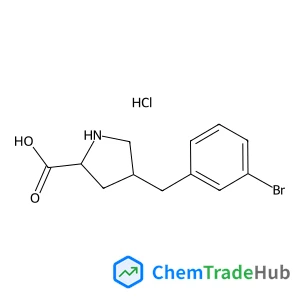
(2S,4R)-4-(3-Bromobenzyl)pyrrolidine-2-carboxylic acid hydrochloride
CAS番号:
1049734-10-2
分子式:
C12H15BrClNO2
![Heptadecanoic Acid 3-[2-[4-(6-Fluoro-1,2-benzisoxazol-3-yl)-1-piperidinyl]ethyl]-6,7,8,9-tetrahydro-2-methyl-4-oxo-4H-pyrido[1,2-a]pyrimidin-9-yl Ester structure](https://static.chemtradehub.com/structs/140/1404053-62-8-9da4.webp "Heptadecanoic Acid 3-[2-[4-(6-Fluoro-1,2-benzisoxazol-3-yl)-1-piperidinyl]ethyl]-6,7,8,9-tetrahydro-2-methyl-4-oxo-4H-pyrido[1,2-a]pyrimidin-9-yl Ester structure")
おすすめサプライヤー



免責事項
このページに表示される学術雑誌情報は、参考および研究目的のみを目的としています。当社は雑誌出版社とは提携しておらず、投稿の取り扱いも行っておりません。出版に関するお問い合わせは、各雑誌出版社に直接ご連絡ください。
表示されている情報に誤りがある場合は、support@chemtradehub.com までご連絡ください。迅速に確認し、対応いたします。