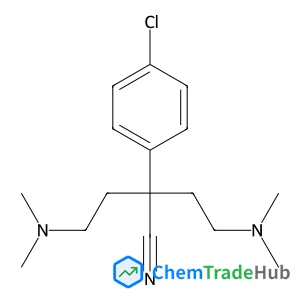
2-(4-Chlorophenyl)-4-(dimethylamino)-2-(2-(dimethylamino)ethyl)butanenitrile
CAS番号:
1246816-57-8
分子式:
C16H24ClN3
Jiahao Chen, Thomas J. Giroux, Yen Nguyen, Atte A. Kadoma, Boyce S. Chang, Brett VanVeller, Martin M. Thuo
Charge transport across large area molecular tunneling junctions is widely studied due to its potential in the development of quantum electronic devices. Large area junctions based on eutectic gallium indium (used in the form of a conical tip top electrode) have emerged as a reliable platform for delineating structure–property relationships. Discrepancies, however, arise from different tip-morphologies and fabrication techniques. It can be, therefore, challenging to make reliable conclusions based on molecular features. Of particular note is the discrepancy between the behaviors of hydrocarbons containing odd and even numbered carbons across different EGaIn electrodes. Moreover, inconsistencies in tip roughness and oxide thickness can lead to more than a 100× increase in current densities with narrow distribution in data. Besides effects on the precision vs. accuracy of data, a theoretically predicted length-dependent limit to observation of the odd–even effect has not been realized experimentally. We developed a method to chemically polish the EGaIn tip to allow formation of smooth conformal contact due to re-establishment of liquid character at the point of contact though tension-driven reconstruction of a thin oxide layer. To evaluate the polished tip, we measured charge transport behavior across n-alkanethiolate SAMs and observed good correlation in the odd–even oscillation behavior to that observed from wetting studies. Since these molecules are homologues of each other, only differing in the orientation of the terminal CH2CH3 moiety, the odd–even effects are governed by orientation induced differences in the absences of SAM (gauche) defects. Comparison of obtained data with the literature shows significant difference between odd-numbered SAMs across Ag and Au.
Juan Pablo Catalán
DOI: 10.1039/C1CP21380F
N. Renaud, M. Hliwa, C. Joachim
DOI: 10.1039/C1CP21221D
Jonas Fransson, Michael Galperin
DOI: 10.1039/C1CP20720B
Subhash S. Pingale
DOI: 10.1039/C1CP20071B
Troels Markussen, Robert Stadler, Kristian S. Thygesen
DOI: 10.1039/C1CP20924H
Peilin Liao, Emily A. Carter
DOI: 10.1039/C1CP20829B
Rajesh Kumar, Haijun Yan, Adam Johan Bergren
DOI: 10.1039/C1CP20755E
Yong-Feng Wang, Shan Xi Tian, Jinlong Yang
DOI: 10.1039/C1CP21267B
Yoshihiko Kanemitsu
DOI: 10.1039/C1CP21235D
Jakob Kryger Sørensen, Emanuel Lörtscher, Tom Vosch, Heike Riel, Kristine Kilså, Thomas Bjørnholm, Herre van der Zant
DOI: 10.1039/C1CP20861F
2-ヒドロキシ-5-ニトロベンジンブロモイドは特定の化学反応に適しているため、代替品は限られています。しかし、同様の構造を持つ2-ヒドロキシ-4-ニトロベンジン...
N-(2-ブロモフェニル)-1-チロール-3-オキソ-3-(ピペリジニル)プロペン-2-イル)ベンゼンアミドは有毒で、皮膚や粘膜に刺激を与える可能性があります。...
この化合物は、新規治療薬の開発に注目されています。市場では、その有効性と安全性が評価され、研究分野では、分子生物学と医薬化学の新たな発見が期待されています。
Succinimidyl-alanyl-phenylalanyl-prolyl-phenylalanine 4-nitroanilide は主に医薬品開発やポ...
メチル6-アミノ-5-クロロピリジン-2-カーボイル酸(CAS番号: 1256794-05-4)の使用には、GHS( Globally Harmonized S...
取り扱いには、耐薬品性の容器を使用し、通気性の良い場所で操作することを推奨します。漏れ時は、SDS(安全データシート)を参照して適切な措置を取ること。手洗いと洗...
(S)-3-ベンZYルピペリジン塩酸塩は、CAS番号1258940-00-9で表される化合物です。これは、(S)-3-苯基哌啶的盐酸盐であり、主に医薬品の原料と...
3,5-二甲基金剛胺は、主に医薬品の原料として使用され、また抗うつ薬や抗アルツハイマー薬の開発に利用されます。さらに、化粧品や食品添加物の製造でも重要な役割を果...
ビス(4-メチル-2-ペンチル)フェニルカルボン酸エステル (CAS番号: 1398066-13-1) の代替品には、ビス(2-エチルヘキシル)フェノールカルボ...

Physical Chemistry Chemical Physics (PCCP) is an international journal co-owned by 19 physical chemistry and physics societies from around the world. This journal publishes original, cutting-edge research in physical chemistry, chemical physics and biophysical chemistry. To be suitable for publication in PCCP, articles must include significant innovation and/or insight into physical chemistry; this is the most important criterion that reviewers and Editors will judge against when evaluating submissions. The journal has a broad scope and welcomes contributions spanning experiment, theory, computation and data science. Topical coverage includes spectroscopy, dynamics, kinetics, statistical mechanics, thermodynamics, electrochemistry, catalysis, surface science, quantum mechanics, quantum computing and machine learning. Interdisciplinary research areas such as polymers and soft matter, materials, nanoscience, energy, surfaces/interfaces, and biophysical chemistry are welcomed if they demonstrate significant innovation and/or insight into physical chemistry. Joined experimental/theoretical studies are particularly appreciated when complementary and based on up-to-date approaches.
![Pyrazolo[1,5-a]pyridine-3-carbothioamide structure](https://static.chemtradehub.com/structs/885/885275-44-5-aae0.webp "Pyrazolo[1,5-a]pyridine-3-carbothioamide structure")