


Freezing of supercooled n-decane nanodroplets: from surface driven to frustrated crystallization
文献情報
出版日
2017-10-31
DOI
10.1039/C7CP05431A
インパクトファクター
3.676
著者
Viraj P. Modak, Andrew J. Amaya
原文を見る
要旨
Whether crystallization starts at the liquid–vapor interface or randomly throughout the bulk has been the subject of intense debate. In our earlier work, we investigated the freezing of supercooled nanodroplets of short chain (C8, C9) n-alkanes formed by homogeneous condensation in a supersonic nozzle. The rate at which the solid appeared suggested freezing starts at the droplet surface well before the rest of the droplet freezes. Experiments were, however, limited to a single condition for each compound and it was not clear whether freezing of n-alkanes always occurs in this two step manner. Here, we expand our work to include freezing of a third n-alkane, n-decane, and, furthermore, we vary the temperatures at which droplets are formed and freeze. The phase transitions are again characterized using three experimental techniques – pressure trace measurements (PTM), Fourier Transform Infrared Spectroscopy (FTIR), and Small Angle X-ray Scattering (SAXS). We also use Wide Angle X-ray Scattering (WAXS) to confirm, for the first time, the crystalline nature of our frozen n-alkane nanodroplets. As the temperature at which the droplets form and freeze decreases, the kinetics of the phase transition changes. At higher temperatures, the phase transition occurs in two steps characterized by different rates, whereas at lower temperatures we observe only a single step. Finally, in the lowest temperature experiment, where droplets start to form and freeze ∼50 K below the bulk melting temperature, we found that the particles develop a fractal structure and appear locked in a “frustrated” crystalline state.
おすすめジャーナル

Accounts of Chemical Research

Anti-Corrosion Methods and Materials

Chemical & Pharmaceutical Bulletin

Bulletin of the Chemical Society of Japan

Chemistry of Heterocyclic Compounds

Canadian Metallurgical Quarterly

Advances in Colloid and Interface Science

Corrosion Science

Australian Journal of Chemistry

Doklady Chemistry
関連文献
Modeling gas-diffusion electrodes for CO2 reduction
Adam Z. Weber
2018-06-04
Paper
DOI: 10.1039/C8CP01319E
Hierarchical formation of Fe-9eG supramolecular networks via flexible coordination bonds
Chi Zhang, Lei Xie, Yuanqi Ding, Chunxue Yuan, Wei Xu
2018-01-05
Paper
DOI: 10.1039/C7CP08278A
Viscous field-aligned water exhibits cubic-ice-like structural motifs
J. Matthias Kahk, Beng Hau Tan, Claus-Dieter Ohl
2018-06-27
Paper
DOI: 10.1039/C8CP02697A
On the origin of high-temperature phenomena in Pt/Al2O3
Alexander S. Lisitsyn, Olga A. Yakovina
2017-12-15
Paper
DOI: 10.1039/C7CP06925A
Dynamics of water in conical solvation shells around a benzene solute under different thermodynamic conditions
Ashu Choudhary
2018-06-21
Paper
DOI: 10.1039/C7CP08109J
Analyses of trajectory on-the-fly based on the global reaction route map
Takuro Tsutsumi, Yuriko Ono, Satoshi Maeda, Tetsuya Taketsugu
2017-12-08
Paper
DOI: 10.1039/C7CP06528K
Multiscale simulations of ligand adsorption and exchange on gold nanoparticles
Hui-Min Gao, Hong Liu, Hu-Jun Qian, Gui-Sheng Jiao, Zhong-Yuan Lu
2017-12-11
Paper
DOI: 10.1039/C7CP07039J
Experimental and modelling study of the multichannel thermal dissociations of CH3F and CH2F
C. J. Cobos, G. Knight, L. Sölter, E. Tellbach
2018-01-02
Paper
DOI: 10.1039/C7CP07098E
Non-percolating small metallic clusters and sharp suppression of metallicity in RE0.55Sr0.45Mn1−xRuxO3 manganites
H. S. Alagoz, I. Živković, K. H. Chow, J. Jung
2018-01-02
Paper
DOI: 10.1039/C7CP02423A
Iodine binding with thiophene and furan based dyes for DSCs
Alexandra Baumann, Hammad Cheema, Md Abdus Sabuj, Louis E. McNamara, Yanbing Zhang, Adithya Peddapuram, Suong T. Nguyen, Davita L. Watkins, Nathan I. Hammer, Neeraj Rai, Jared H. Delcamp
2018-06-11
Paper
DOI: 10.1039/C8CP03065K
こちらもおすすめ
化合物よくある質問
環戊烷-1,3-二甲酸甲酯はどのように合成されますか?
環戊烷-1,3-二甲酸甲酯は、環戊烷と塩酸によるヒンデンブルク反応を経由して合成されます。この反応では、環戊烷が塩酸と作用し、1,3-ジカルボキシ基が導入されま...
2435-36-1Dimethyl 1,3-cyclope...
化合物よくある質問
4-メトキシ-1,2,3-スチアゼ-3,5-ジオンとは何ですか?
4-メトキシ-1,2,3-スチアゼ-3,5-ジオンは、CAS番号107843-77-6の化合物で、(E)-ベンジル3-(3,4-ジヒドロキシフェニル) acry...
107843-77-6(E)-Benzyl 3-(3,4-di...
化合物よくある質問
プロスタグランジンA2について「に適用される法規ガイドラインは何ですか?'
プロスタグランジンA2 (CAS番号: 41691-92-3) は、化学物質の安全管理に関する規制として、GHS (危険物質の国際的ハザード分類・ラベル付けシス...
41691-92-316,16-DIMETHYL PROST...
化合物よくある質問
4-アミノ-1-ナフタレン sulfonic 酸についての物理化学的性質は何ですか?
4-アミノ-1-ナフタレン sulfonic 酸のCAS番号は84-86-6です。この化合物は結晶性で、分子量は212.15 g/molです。アルコールや水など...
84-86-64-Amino-1-naphthalen...
化合物よくある質問
N-GlcNAc-生物素を取り扱う際の実験室安全事項は何ですか?
N-GlcNAc-生物素は吸収性があり、皮膚や目への接触を避けることが重要です。PPE(個体保護具)は使用し、ドラフトチャンバーは必要に応じて使用します。漏洩時...
1272755-69-72-Acetamido-2-deoxy-...
化合物よくある質問
3-アミノメチルフローラノピペリジン-1-カルボニル酸テルブチルエステルとは何ですか?
CAS番号1209781-11-2の3-アミノメチルフローラノピペリジン-1-カルボニル酸テルブチルエステルは、有機化合物の一種で、化学式はC10H17FNO3...
1209781-11-22-Methyl-2-propanyl ...
化合物よくある質問
6-溴-1-甲基-1H-ベンゾ[d][1,2,3]三氮唑はどのように合成されますか?
6- bromo-1-methyl-1H-benzotriazoleは、ブロモフリオリンと1-メチル-1H-ベンゾ[d][1,2,3]三氮唑の反応により合成され...
944718-32-56-Bromo-1-methyl-1H-...
化合物よくある質問
4-硫代尿苷はどのように合成されますか?
4-硫代尿苷は、尿素とD-リボシルヒドロキシアルデヒドを用いてスルホン化反応を経て合成されます。通常は塩酸ヒドロキシチオニルスルホン酸などの触媒を使用し、選択性...
6741-73-71-(4-thio-beta-D-rib...
化合物よくある質問
ブレインナトリユリックペプチド32ラットとは何ですか?
ブレインナトリユリックペプチド32ラット(CAS番号: 133448-20-1)は、心臓で作られるホルモンの一つで、心不全の診断や予後評価に使用されます。
133448-20-1Brain Natriuretic Pe...
化合物よくある質問
1-(3-氮杂啶)-4-羟基哌啶双盐酸盐の物理化学的性質は何ですか?
CAS番号810680-60-5の1-(3-氮杂啶)-4-羟基哌啶双盐酸盐は、白色の結晶性粉末である。分子量は360.84 g/molで、水に溶けやすい。反応活...
810680-60-51-(3-Azetidinyl)-4-p...
掲載誌
Physical Chemistry Chemical Physics

CiteScore:
5.5
自己引用率:
10.3%
年間論文数:
3036
Physical Chemistry Chemical Physics (PCCP) is an international journal co-owned by 19 physical chemistry and physics societies from around the world. This journal publishes original, cutting-edge research in physical chemistry, chemical physics and biophysical chemistry. To be suitable for publication in PCCP, articles must include significant innovation and/or insight into physical chemistry; this is the most important criterion that reviewers and Editors will judge against when evaluating submissions. The journal has a broad scope and welcomes contributions spanning experiment, theory, computation and data science. Topical coverage includes spectroscopy, dynamics, kinetics, statistical mechanics, thermodynamics, electrochemistry, catalysis, surface science, quantum mechanics, quantum computing and machine learning. Interdisciplinary research areas such as polymers and soft matter, materials, nanoscience, energy, surfaces/interfaces, and biophysical chemistry are welcomed if they demonstrate significant innovation and/or insight into physical chemistry. Joined experimental/theoretical studies are particularly appreciated when complementary and based on up-to-date approaches.
おすすめ化合物
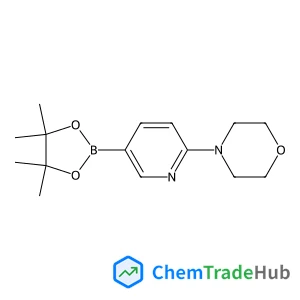
4-(5-(4,4,5,5-tetramethyl-1,3,2-dioxaborolan-2-yl)pyridin-2-yl)morpholine
CAS番号:
485799-04-0
分子式:
C15H23BN2O3
![N-[(1S,2R,4S)-2-Amino-4-(dimethylcarbamoyl)cyclohexyl]-N'-(5-chloro-2-pyridinyl)ethanediamide structure](https://static.chemtradehub.com/structs/480/480452-37-7-0898.webp "N-[(1S,2R,4S)-2-Amino-4-(dimethylcarbamoyl)cyclohexyl]-N'-(5-chloro-2-pyridinyl)ethanediamide structure")
おすすめサプライヤー




免責事項
このページに表示される学術雑誌情報は、参考および研究目的のみを目的としています。当社は雑誌出版社とは提携しておらず、投稿の取り扱いも行っておりません。出版に関するお問い合わせは、各雑誌出版社に直接ご連絡ください。
表示されている情報に誤りがある場合は、support@chemtradehub.com までご連絡ください。迅速に確認し、対応いたします。