












Analyses of trajectory on-the-fly based on the global reaction route map
文献情報
出版日
2017-12-08
DOI
10.1039/C7CP06528K
インパクトファクター
3.676
著者
Takuro Tsutsumi, Yuriko Ono, Satoshi Maeda, Tetsuya Taketsugu
原文を見る
要旨
A methodology to analyze a trajectory on-the-fly (TOF) based on a global reaction route map consisting of intrinsic reaction coordinate (IRC) pathways is proposed. By using the distance functions in the configurational space, the location of each point on the trajectories is detected, providing a dynamical picture that the molecular system goes over several minima and transition states in the reaction path network. In its application to structural transformations of an Au5 cluster, a variety of reaction routes are obtained, and the hopping from one IRC to another IRC (IRC-jump) is analyzed. The branching of trajectories over many minima on the potential energy surface via valley-ridge transition points is also discussed.
関連文献
Precise engineering and visualization of signs and magnitudes of DNA writhe on the basis of PNA invasion
Dawei Li, Zhaoqi Yang, Yi Long, Guanjia Zhao, Bei Lv, Shuhui Hiew, Magdeline Tao Tao Ng, Juanjuan Guo, HongKee Tan, Hao Zhang, Weixing Yuan, Haibin Su, Tianhu Li
2011-09-05
Communication
DOI: 10.1039/C1CC13158C
Properties of ionic liquids on Au surfaces: non-conventional anion exchange reactions with carbonate
Mathieu Ratel, Mathieu Branca, Julien Breault-Turcot, Sandy Shuo Zhao, Pierre Chaurand, Andreea R. Schmitzer, Jean-Francois Masson
2011-08-30
Communication
DOI: 10.1039/C1CC13914B
Welcome to the first issue of Catalysis Science & Technology
2011-02-08
Editorial
DOI: 10.1039/C1CY90001C
Brief, efficient and highly diastereoselective synthesis of (±)-pumiliotoxin C based on the generation of an octahydroquinoline precursor via a four-component reaction
Swarupananda Maiti, J. Carlos Menéndez
2011-05-06
Communication
DOI: 10.1039/C1CC11246E
Improvement of the prediction ability of multivariate calibration by a method based on the combination of data fusion and least squares support vector machines
Shouxin Ren, Ling Gao
2011-01-18
Paper
DOI: 10.1039/C0AN00433B
Dismantling the salen framework: design of new asymmetric silylcyanation catalysts
2012-11-30
Communication
DOI: 10.1039/C2CY20818K
A highly efficient silver niobium alumina catalyst for the selective catalytic reduction of NO by n-decane
Hubert P. Mutin, Gérard Delahay
2011-08-24
Communication
DOI: 10.1039/C1CC12792F
Flame synthesis of hierarchical nanotubular rutile titania derived from natural cellulose substance
Jie Zhao, Yuanqing Gu, Jianguo Huang
2011-08-19
Communication
DOI: 10.1039/C1CC13985A
Synthesis, characterization and ethylene oligomerization behaviour of 8-(1-aryliminoethylidene)quinaldinylnickel dihalides
Shengju Song, Tianpengfei Xiao, Tongling Liang, Fosong Wang, Carl Redshaw, Wen-Hua Sun
2011-02-08
Paper
DOI: 10.1039/C0CY00002G
Cell-like systems with riboswitch controlled gene expression
Laura Martini, Sheref S. Mansy
2011-08-25
Communication
DOI: 10.1039/C1CC13930D
こちらもおすすめ
化合物よくある質問
環戊烷-1,3-二甲酸甲酯はどのように合成されますか?
環戊烷-1,3-二甲酸甲酯は、環戊烷と塩酸によるヒンデンブルク反応を経由して合成されます。この反応では、環戊烷が塩酸と作用し、1,3-ジカルボキシ基が導入されま...
2435-36-1Dimethyl 1,3-cyclope...
化合物よくある質問
4-メトキシ-1,2,3-スチアゼ-3,5-ジオンとは何ですか?
4-メトキシ-1,2,3-スチアゼ-3,5-ジオンは、CAS番号107843-77-6の化合物で、(E)-ベンジル3-(3,4-ジヒドロキシフェニル) acry...
107843-77-6(E)-Benzyl 3-(3,4-di...
化合物よくある質問
プロスタグランジンA2について「に適用される法規ガイドラインは何ですか?'
プロスタグランジンA2 (CAS番号: 41691-92-3) は、化学物質の安全管理に関する規制として、GHS (危険物質の国際的ハザード分類・ラベル付けシス...
41691-92-316,16-DIMETHYL PROST...
化合物よくある質問
4-アミノ-1-ナフタレン sulfonic 酸についての物理化学的性質は何ですか?
4-アミノ-1-ナフタレン sulfonic 酸のCAS番号は84-86-6です。この化合物は結晶性で、分子量は212.15 g/molです。アルコールや水など...
84-86-64-Amino-1-naphthalen...
化合物よくある質問
N-GlcNAc-生物素を取り扱う際の実験室安全事項は何ですか?
N-GlcNAc-生物素は吸収性があり、皮膚や目への接触を避けることが重要です。PPE(個体保護具)は使用し、ドラフトチャンバーは必要に応じて使用します。漏洩時...
1272755-69-72-Acetamido-2-deoxy-...
化合物よくある質問
3-アミノメチルフローラノピペリジン-1-カルボニル酸テルブチルエステルとは何ですか?
CAS番号1209781-11-2の3-アミノメチルフローラノピペリジン-1-カルボニル酸テルブチルエステルは、有機化合物の一種で、化学式はC10H17FNO3...
1209781-11-22-Methyl-2-propanyl ...
化合物よくある質問
6-溴-1-甲基-1H-ベンゾ[d][1,2,3]三氮唑はどのように合成されますか?
6- bromo-1-methyl-1H-benzotriazoleは、ブロモフリオリンと1-メチル-1H-ベンゾ[d][1,2,3]三氮唑の反応により合成され...
944718-32-56-Bromo-1-methyl-1H-...
化合物よくある質問
4-硫代尿苷はどのように合成されますか?
4-硫代尿苷は、尿素とD-リボシルヒドロキシアルデヒドを用いてスルホン化反応を経て合成されます。通常は塩酸ヒドロキシチオニルスルホン酸などの触媒を使用し、選択性...
6741-73-71-(4-thio-beta-D-rib...
化合物よくある質問
ブレインナトリユリックペプチド32ラットとは何ですか?
ブレインナトリユリックペプチド32ラット(CAS番号: 133448-20-1)は、心臓で作られるホルモンの一つで、心不全の診断や予後評価に使用されます。
133448-20-1Brain Natriuretic Pe...
化合物よくある質問
1-(3-氮杂啶)-4-羟基哌啶双盐酸盐の物理化学的性質は何ですか?
CAS番号810680-60-5の1-(3-氮杂啶)-4-羟基哌啶双盐酸盐は、白色の結晶性粉末である。分子量は360.84 g/molで、水に溶けやすい。反応活...
810680-60-51-(3-Azetidinyl)-4-p...
掲載誌
Physical Chemistry Chemical Physics

CiteScore:
5.5
自己引用率:
10.3%
年間論文数:
3036
Physical Chemistry Chemical Physics (PCCP) is an international journal co-owned by 19 physical chemistry and physics societies from around the world. This journal publishes original, cutting-edge research in physical chemistry, chemical physics and biophysical chemistry. To be suitable for publication in PCCP, articles must include significant innovation and/or insight into physical chemistry; this is the most important criterion that reviewers and Editors will judge against when evaluating submissions. The journal has a broad scope and welcomes contributions spanning experiment, theory, computation and data science. Topical coverage includes spectroscopy, dynamics, kinetics, statistical mechanics, thermodynamics, electrochemistry, catalysis, surface science, quantum mechanics, quantum computing and machine learning. Interdisciplinary research areas such as polymers and soft matter, materials, nanoscience, energy, surfaces/interfaces, and biophysical chemistry are welcomed if they demonstrate significant innovation and/or insight into physical chemistry. Joined experimental/theoretical studies are particularly appreciated when complementary and based on up-to-date approaches.
おすすめ化合物
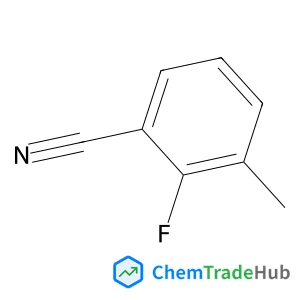
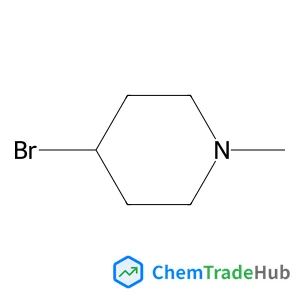
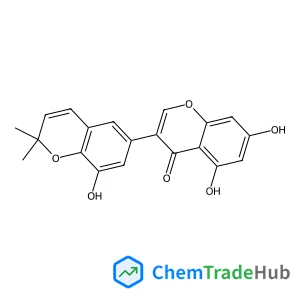
おすすめサプライヤー


免責事項
このページに表示される学術雑誌情報は、参考および研究目的のみを目的としています。当社は雑誌出版社とは提携しておらず、投稿の取り扱いも行っておりません。出版に関するお問い合わせは、各雑誌出版社に直接ご連絡ください。
表示されている情報に誤りがある場合は、support@chemtradehub.com までご連絡ください。迅速に確認し、対応いたします。