












Electronic structure and absorption spectra of fluorescent nucleoside analogues
文献情報
出版日
2017-10-16
DOI
10.1039/C7CP04885H
インパクトファクター
3.676
著者
Danillo Valverde, Adalberto Vasconcelos Sanches de Araujo, Antonio Carlos Borin, Sylvio Canuto
原文を見る
要旨
This work presents a systematic investigation of the electronic and conformational properties of five new fluorescent nucleobases belonging to the alphabet based on the isothiazole[4,3-d]pyrimidine molecule, very recently synthesized. This is of particular importance in the characterization of the main electronic aspects of these fluorescent nucleosides. The solvent effects of 1,4-dioxane and water were included combining the Sequential Monte Carlo/CASPT2 and the Free Energy Gradient (FEG) methods. For comparison, the Polarizable Continuum method was also used. The geometries of all compounds were optimized in solvent with the largest effects observed in water using the average solvent electrostatic configuration (ASEC) and the FEG approaches. Statistical analysis of the solute–solvent hydrogen bonds is performed and their effect on the absorption spectra analyzed. The dipole moments were calculated and the value obtained from the ASEC-FEG method in water follows the same trend as the natural canonical bases (adenine → uracil → guanine → cytosine). The theoretical results for the absorption spectra obtained from CASPT2(18,13) calculations using the geometries obtained with the ASEC-FEG procedure are in very good agreement with the experimental data. A detailed elucidation of the main aspects of the absorption spectra of the five new fluorescent nucleoside analogues is successfully attempted.
関連文献
Abnormal separation of the silicon–oxygen bond in the liquid layering transition of silicon dioxide in a nanoslit
Zhichao Wang, Tao Li, Yunrui Duan, Weikang Wu, Zhenyang Zhao, Yao Liu, Hui Li
2018-01-02
Paper
DOI: 10.1039/C7CP06843C
The importance of grand-canonical quantum mechanical methods to describe the effect of electrode potential on the stability of intermediates involved in both electrochemical CO2 reduction and hydrogen evolution
Haochen Zhang, William A. Goddard, III, Qi Lu, Mu-Jeng Cheng
2018-01-03
Paper
DOI: 10.1039/C7CP08153G
Non-percolating small metallic clusters and sharp suppression of metallicity in RE0.55Sr0.45Mn1−xRuxO3 manganites
H. S. Alagoz, I. Živković, K. H. Chow, J. Jung
2018-01-02
Paper
DOI: 10.1039/C7CP02423A
Dynamic tailoring of electromagnetic behaviors of graphene plasmonic oligomers by local chemical potential
Junbo Ren, Wangqing Wang, Weibin Qiu, Pingping Qiu, Zeyu Wang, Zhili Lin, Jia-Xian Wang
2018-05-22
Paper
DOI: 10.1039/C8CP01281D
Energy level diagram of HC(NH2)2PbI3 single crystal evaluated by electrical and optical analyses
Takeyuki Sekimoto, Michio Suzuka, Tomoyasu Yokoyama, Ryusuke Uchida, Shin’ichi Machida, Takashi Sekiguchi, Kenji Kawano
2017-12-22
Paper
DOI: 10.1039/C7CP07477H
Analyses of trajectory on-the-fly based on the global reaction route map
Takuro Tsutsumi, Yuriko Ono, Satoshi Maeda, Tetsuya Taketsugu
2017-12-08
Paper
DOI: 10.1039/C7CP06528K
Alkaline-earth (Be, Mg and Ca) bonds at the origin of huge acidity enhancements
M. Merced Montero-Campillo, Pablo Sanz, Otilia Mó, Manuel Yáñez, Ibon Alkorta, José Elguero
2017-12-19
Paper
DOI: 10.1039/C7CP07891A
Improvement of the photovoltaic parameters of perovskite solar cells using a reduced-graphene-oxide-modified titania layer and soluble copper phthalocyanine as a hole transporter
Esmaiel Nouri, Mohammad Reza Mohammadi, Zong-Xiang Xu, Vassilios Dracopoulos, Panagiotis Lianos
2017-12-20
Paper
DOI: 10.1039/C7CP04538G
Flue gas adsorption on periodic mesoporous phenylene-silica: a DFT approach
Mirtha A. O. Lourenço, Paula Ferreira, José R. B. Gomes
2018-05-29
Paper
DOI: 10.1039/C8CP02589D
Effect of PCL end-groups on the self-assembly process of Pluronic in aqueous media
Natalie Gjerde, Kaizheng Zhu, Bo Nyström, Kenneth D. Knudsen
2018-01-04
Paper
DOI: 10.1039/C7CP07240F
こちらもおすすめ
化合物よくある質問
環戊烷-1,3-二甲酸甲酯はどのように合成されますか?
環戊烷-1,3-二甲酸甲酯は、環戊烷と塩酸によるヒンデンブルク反応を経由して合成されます。この反応では、環戊烷が塩酸と作用し、1,3-ジカルボキシ基が導入されま...
2435-36-1Dimethyl 1,3-cyclope...
化合物よくある質問
4-メトキシ-1,2,3-スチアゼ-3,5-ジオンとは何ですか?
4-メトキシ-1,2,3-スチアゼ-3,5-ジオンは、CAS番号107843-77-6の化合物で、(E)-ベンジル3-(3,4-ジヒドロキシフェニル) acry...
107843-77-6(E)-Benzyl 3-(3,4-di...
化合物よくある質問
プロスタグランジンA2について「に適用される法規ガイドラインは何ですか?'
プロスタグランジンA2 (CAS番号: 41691-92-3) は、化学物質の安全管理に関する規制として、GHS (危険物質の国際的ハザード分類・ラベル付けシス...
41691-92-316,16-DIMETHYL PROST...
化合物よくある質問
4-アミノ-1-ナフタレン sulfonic 酸についての物理化学的性質は何ですか?
4-アミノ-1-ナフタレン sulfonic 酸のCAS番号は84-86-6です。この化合物は結晶性で、分子量は212.15 g/molです。アルコールや水など...
84-86-64-Amino-1-naphthalen...
化合物よくある質問
N-GlcNAc-生物素を取り扱う際の実験室安全事項は何ですか?
N-GlcNAc-生物素は吸収性があり、皮膚や目への接触を避けることが重要です。PPE(個体保護具)は使用し、ドラフトチャンバーは必要に応じて使用します。漏洩時...
1272755-69-72-Acetamido-2-deoxy-...
化合物よくある質問
3-アミノメチルフローラノピペリジン-1-カルボニル酸テルブチルエステルとは何ですか?
CAS番号1209781-11-2の3-アミノメチルフローラノピペリジン-1-カルボニル酸テルブチルエステルは、有機化合物の一種で、化学式はC10H17FNO3...
1209781-11-22-Methyl-2-propanyl ...
化合物よくある質問
6-溴-1-甲基-1H-ベンゾ[d][1,2,3]三氮唑はどのように合成されますか?
6- bromo-1-methyl-1H-benzotriazoleは、ブロモフリオリンと1-メチル-1H-ベンゾ[d][1,2,3]三氮唑の反応により合成され...
944718-32-56-Bromo-1-methyl-1H-...
化合物よくある質問
4-硫代尿苷はどのように合成されますか?
4-硫代尿苷は、尿素とD-リボシルヒドロキシアルデヒドを用いてスルホン化反応を経て合成されます。通常は塩酸ヒドロキシチオニルスルホン酸などの触媒を使用し、選択性...
6741-73-71-(4-thio-beta-D-rib...
化合物よくある質問
ブレインナトリユリックペプチド32ラットとは何ですか?
ブレインナトリユリックペプチド32ラット(CAS番号: 133448-20-1)は、心臓で作られるホルモンの一つで、心不全の診断や予後評価に使用されます。
133448-20-1Brain Natriuretic Pe...
化合物よくある質問
1-(3-氮杂啶)-4-羟基哌啶双盐酸盐の物理化学的性質は何ですか?
CAS番号810680-60-5の1-(3-氮杂啶)-4-羟基哌啶双盐酸盐は、白色の結晶性粉末である。分子量は360.84 g/molで、水に溶けやすい。反応活...
810680-60-51-(3-Azetidinyl)-4-p...
掲載誌
Physical Chemistry Chemical Physics

CiteScore:
5.5
自己引用率:
10.3%
年間論文数:
3036
Physical Chemistry Chemical Physics (PCCP) is an international journal co-owned by 19 physical chemistry and physics societies from around the world. This journal publishes original, cutting-edge research in physical chemistry, chemical physics and biophysical chemistry. To be suitable for publication in PCCP, articles must include significant innovation and/or insight into physical chemistry; this is the most important criterion that reviewers and Editors will judge against when evaluating submissions. The journal has a broad scope and welcomes contributions spanning experiment, theory, computation and data science. Topical coverage includes spectroscopy, dynamics, kinetics, statistical mechanics, thermodynamics, electrochemistry, catalysis, surface science, quantum mechanics, quantum computing and machine learning. Interdisciplinary research areas such as polymers and soft matter, materials, nanoscience, energy, surfaces/interfaces, and biophysical chemistry are welcomed if they demonstrate significant innovation and/or insight into physical chemistry. Joined experimental/theoretical studies are particularly appreciated when complementary and based on up-to-date approaches.
おすすめ化合物
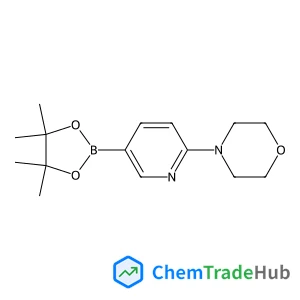
4-(5-(4,4,5,5-tetramethyl-1,3,2-dioxaborolan-2-yl)pyridin-2-yl)morpholine
CAS番号:
485799-04-0
分子式:
C15H23BN2O3
![N-[(1S,2R,4S)-2-Amino-4-(dimethylcarbamoyl)cyclohexyl]-N'-(5-chloro-2-pyridinyl)ethanediamide structure](https://static.chemtradehub.com/structs/480/480452-37-7-0898.webp "N-[(1S,2R,4S)-2-Amino-4-(dimethylcarbamoyl)cyclohexyl]-N'-(5-chloro-2-pyridinyl)ethanediamide structure")
おすすめサプライヤー




免責事項
このページに表示される学術雑誌情報は、参考および研究目的のみを目的としています。当社は雑誌出版社とは提携しておらず、投稿の取り扱いも行っておりません。出版に関するお問い合わせは、各雑誌出版社に直接ご連絡ください。
表示されている情報に誤りがある場合は、support@chemtradehub.com までご連絡ください。迅速に確認し、対応いたします。