












Spin–orbit interaction and Renner–Teller effect in HCCCCH+ studied by high-resolution photoelectron spectroscopy
文献情報
出版日
2017-08-22
DOI
10.1039/C7CP04759B
インパクトファクター
3.676
著者
原文を見る
要旨
The photoelectron spectra of the X+ 2Πg ← X 1Σ+g photoionizing transition of diacetylene (HCCCCH) and d2-diacetylene (DCCCCD) have been recorded at high resolution using the technique of pulsed-field-ionization zero-kinetic-energy (PFI-ZEKE) photoelectron spectroscopy. The partially resolved rotational structure of the origin band of the spectra of HCCCCH and DCCCCD has enabled the determination of the adiabatic ionization energies of HCCCCH [Ead = 82072.2(5) cm−1] and DCCCCD [Ead = 82090.0(10) cm−1] and of the spin–orbit coupling constant [A+0 = −31.1(4) cm−1] of the ground vibronic state of HCCCCH+, which is smaller than the value of −33.3 cm−1 commonly used since the work of Callomon (J. H. Callomon, Can. J. Phys., 1956, 34, 1046). Several excited vibrational levels of HCCCCH+ and DCCCCD+, including some affected by the Renner–Teller effect and Fermi interactions, have been observed and the fundamental wavenumber of the mode ν9 has been determined in both HCCCCH+ (200.0(10) cm−1) and DCCCCD+ (192.6(20) cm−1). Possible assignments for several of these levels are discussed and deficiencies in the current understanding of the energy-level structure of the radical cation of diacetylene are pointed at.
関連文献
Phase separation and physico-chemical processes at microscopic and macroscopic levels in MWCNT laden polymer blends using a unique droplet based architecture
Binita Pathak, Goutam Prasanna Kar, Suryasarathi Bose, Saptarshi Basu
2017-08-29
Paper
DOI: 10.1039/C7CP03621C
Using molecular vibrations to probe exciton delocalization in films of perylene diimides with ultrafast mid-IR spectroscopy
Eric R. Kennehan, Christopher Grieco, Alyssa N. Brigeman, Adam Rimshaw, Kayla Bisgaier, Noel C. Giebink
2017-08-29
Paper
DOI: 10.1039/C7CP04819J
Temperature dependence of ion diffusion coefficients in NaCl electrolyte confined within graphene nanochannels
Jing Kong, Zheng Bo, Huachao Yang, Jinyuan Yang, Xiaorui Shuai, Jianhua Yan, Kefa Cen
2017-02-20
Paper
DOI: 10.1039/C6CP08752C
Non-covalent interactions in anisole–(CO2)n (n = 1, 2) complexes
Jan Řezáč, Dana Natchigallová, Pavel Hobza
2017-08-07
Paper
DOI: 10.1039/C7CP03763E
Correction: Elucidation of transport mechanism and enhanced alkali ion transference numbers in mixed alkali metal–organic ionic molten salts
Fangfang Chen
2017-09-11
Correction
DOI: 10.1039/C7CP90203D
The role of amino acid side chains in stabilizing dipeptides: the laser ablation Fourier transform microwave spectrum of Ac-Val-NH2
I. León, E. R. Alonso, S. Mata, C. Cabezas, M. A. Rodríguez, J.-U. Grabow, J. L. Alonso
2017-08-18
Paper
DOI: 10.1039/C7CP03924G
First-principles computation of electron transfer and reaction rate at a perovskite cathode for hydrogen production
C. T. Liu, J. F. Chu, C. K. Lin, C. W. Hong
2017-02-24
Paper
DOI: 10.1039/C7CP00541E
Chiral segregation driven by a dynamical response of the adsorption footprint to the local adsorption environment: bitartrate on Cu(110)
G. R. Darling, M. Forster, C. Lin, N. Liu, R. Raval, A. Hodgson
2017-02-22
Paper
DOI: 10.1039/C7CP00622E
Photophysical characterization and time-resolved spectroscopy of a anthradithiophene dimer: exploring the role of conformation in singlet fission
Jacob C. Dean, Ruomeng Zhang, Rawad K. Hallani, Ryan D. Pensack, Samuel N. Sanders, Daniel G. Oblinsky, Sean R. Parkin, Luis M. Campos, John E. Anthony, Gregory D. Scholes
2017-08-18
Paper
DOI: 10.1039/C7CP03774K
こちらもおすすめ
化合物よくある質問
3-(2-オキサプロピル)ベンzoic酸はどのように合成されますか?
3-(2-オキサプロピル)ベンzoic酸は、ベンzoic酸とプロパノ酸をヒドロキシム化合物として反応させて生成します。具体的には、ベンzoic酸とプロパノ酸を反...
205927-63-53-(2-Oxopropyl)benzo...
114873-01-73-Fluoro-N-{[(2-meth...
化合物よくある質問
4-メチル-4-ピペリジニル-1-ピロリドイン甲酸の主な用途は何ですか?
4-メチル-4-ピペリジニル-1-ピロリドイン甲酸は、主に医薬品の合成材料や研究用物質として使用されます。さらに、一部の薬理学的研究にも応用されています。
885523-47-7(4-Methyl-4-piperidi...
化合物よくある質問
Biotin-PEG3-oxyamine HCl塩について、適切な化合物名称に適用される法規ガイドラインは何ですか?
Biotin-PEG3-oxyamine HCl塩は、GHS( Globally Harmonized System of Classification and...
1786206-22-1Biotin-PEG3-oxyamine...
化合物よくある質問
N-(4-イソチオシアネートフェニル)-2-メトキシアリニンはどのように合成されますか?
N-(4-イソチオシアネートフェニル)-2-メトキシアリニンは、4-イソチオシアノフェノールと2-メトキシアリニルアミンのアミニド反応を用いて合成されます。この...
915919-57-2N-(4-Isothiocyanatop...
化合物よくある質問
金粉蕨亭2'-O-葡萄糖甙の主な用途は何ですか?
金粉蕨亭2'-O-葡萄糖甙は主に薬理研究や医薬品製造に使用され、抗炎症作用や抗がん作用などがあります。また、その構造や性質から、合成化学や化学生理学の研究にも用...
76947-60-92-(7-Hydroxy-2,2,4,6...
化合物よくある質問
2-(2-ニトロフェニル)酢酸ヒドライドの物理化学的性質は何ですか?
2-(2-ニトロフェニル)酢酸ヒドライドのCAS番号は114953-81-0です。この化合物は白色結晶性粉末で、分子量は244.12です。水溶性は限られており、...
114953-81-02-(2-Nitrophenyl)ace...
化合物よくある質問
5-(ヒドロキシメチル)-2-チオキソ-2,3-ジヒドロピリミジン-4(1H)-オンを取り扱う際の実験室安全事項は何ですか?
この化合物は高活性のため、取り扱いには注意が必要です。PPE(個人保護具)としてゴーグル、ガントリー、および防滴シールドを着用することが推奨されます。ドラフトチ...
93185-31-05-(Hydroxymethyl)-2-...
化合物よくある質問
11-脱氢血栓烷 b2の市場動向や研究トレンドはどうですか?
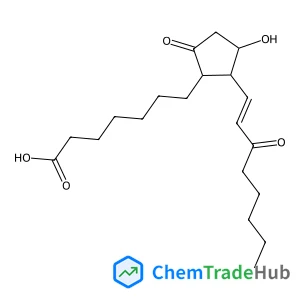
11-脱氢血栓烷 b2は、血栓溶解・抗凝固作用に関する研究で注目を集めています。特に心血管疾患の治療法開発において、市場の需要が高まっています。研究トレンドとし...
67910-12-77-{(2R,3S,4S)-4-Hydr...
化合物よくある質問
3,3-二甲基哌啶-4-酮はどのように保存すればよいですか?
3,3-二甲基哌啶-4-酮は避光、常温、乾燥した場所で保存してください。容器は密閉し、遠くから火源を離して保管することを確認してください。
150668-82-93,3-Dimethyl-4-piper...
掲載誌
Physical Chemistry Chemical Physics

CiteScore:
5.5
自己引用率:
10.3%
年間論文数:
3036
Physical Chemistry Chemical Physics (PCCP) is an international journal co-owned by 19 physical chemistry and physics societies from around the world. This journal publishes original, cutting-edge research in physical chemistry, chemical physics and biophysical chemistry. To be suitable for publication in PCCP, articles must include significant innovation and/or insight into physical chemistry; this is the most important criterion that reviewers and Editors will judge against when evaluating submissions. The journal has a broad scope and welcomes contributions spanning experiment, theory, computation and data science. Topical coverage includes spectroscopy, dynamics, kinetics, statistical mechanics, thermodynamics, electrochemistry, catalysis, surface science, quantum mechanics, quantum computing and machine learning. Interdisciplinary research areas such as polymers and soft matter, materials, nanoscience, energy, surfaces/interfaces, and biophysical chemistry are welcomed if they demonstrate significant innovation and/or insight into physical chemistry. Joined experimental/theoretical studies are particularly appreciated when complementary and based on up-to-date approaches.
おすすめ化合物
![4-[(2,4-Dihydroxyphenyl)diazenyl]-5-hydroxy-2,7-naphthalenedisulfonic acid structure](https://static.chemtradehub.com/structs/362/3627-01-8-79ac.webp "4-[(2,4-Dihydroxyphenyl)diazenyl]-5-hydroxy-2,7-naphthalenedisulfonic acid structure")
4-[(2,4-Dihydroxyphenyl)diazenyl]-5-hydroxy-2,7-naphthalenedisulfonic acid
CAS番号:
3627-01-8
分子式:
C16H12N2O9S2
おすすめサプライヤー




免責事項
このページに表示される学術雑誌情報は、参考および研究目的のみを目的としています。当社は雑誌出版社とは提携しておらず、投稿の取り扱いも行っておりません。出版に関するお問い合わせは、各雑誌出版社に直接ご連絡ください。
表示されている情報に誤りがある場合は、support@chemtradehub.com までご連絡ください。迅速に確認し、対応いたします。