


Intermolecular magnetic interactions in stacked DNA base pairs
文献情報
出版日
2017-09-28
DOI
10.1039/C7CP04484D
インパクトファクター
3.676
著者
Fernando A. Martínez, Gustavo A. Aucar
原文を見る
要旨
The influence of pi-stacking on the magnetic properties of atoms that belong to adenine–thymine and guanine–cytosine pairs in sequences of three and five layers of DNA base pairs was analysed. As probes we used NMR spectroscopic parameters, which are among the most useful tools to learn about the transmission of magnetic interactions in molecules. Four DFT functionals were employed: B3LYP, BHANDLYP, KT2 and KT3, together with the SOPPA method. Besides, given that the number of non-hydrogen atoms of the supramolecular systems studied here is larger than 50 we applied a locally dense basis set scheme. Our results show that the piling up of a few Watson–Crick base pairs above and below a given pair modifies its NMR spectroscopic parameters by an amount that may be measurable and the percentage of variation does not depend on dispersion. We found that magnetic shieldings are more sensitive than J-couplings, and also that some atoms are more sensitive than others. Stacking affects the shielding of non-hydrogen atoms like nitrogens, that are donors in hydrogen bonds, HBs, and the carbons bonded to them. The amount of variation of these shieldings was found to be from 2% to 5% when the pairs are considered first as isolated, and then, placed in the middle of a sequence of three layers of base pairs. Such a variation becomes vanishingly small when the sequence contains more than three layers, showing that the stacking effect on NMR spectroscopic parameters has a local nature. We have also found a pattern for shieldings. First, equivalent atoms of similar monomers (thymine and adenine, or guanine and cytosine) have similar values of absolute shieldings in isolated pairs, and the amount of variation from isolated pairs to aggregates of a few pairs is also similar, meaning that equivalent atoms are affected in a similar manner by pi-stacking. Second, the hydrogen atoms which belong to hydrogen bonds are more sensitive to the piling up than the non-hydrogen atoms.
おすすめジャーナル

Chinese Journal of Chemistry

Herald of the Russian Academy of Sciences

Heteroatom Chemistry

Medicinal Chemistry Research

NDT & E International

Atomization and Sprays

Acta Metallurgica Sinica-English Letters

Colloid Journal

Bioorganic & Medicinal Chemistry Letters

Critical Reviews in Solid State and Materials Sciences
関連文献
A simple highly specific fluorescent probe for simultaneous discrimination of cysteine/homocysteine and glutathione/hydrogen sulfide in living cells and zebrafish using two separated fluorescence channels under single wavelength excitation
Hanchuang Zhu, Caiyun Liu, Ruifang Yuan, Ruikang Wang, Hanming Zhang, Zilu Li, Pan Jia, Baocun Zhu, Wenlong Sheng
2019-06-11
Paper
DOI: 10.1039/C9AN00818G
Hot off the press
Robert A. Hill, Marie Claire Parker
2003-04-23
Hot off the Press Article
DOI: 10.1039/B303979J
The mechanism and regularity of quenching the effect of bases on fluorophores: the base-quenched probe method
Huihui Mao, Guanghua Luo, Yuxia Zhan, Jun Zhang, Shuang Yao, Yang Yu
2018-04-09
Paper
DOI: 10.1039/C8AN00116B
こちらもおすすめ
化合物よくある質問
環戊烷-1,3-二甲酸甲酯はどのように合成されますか?
環戊烷-1,3-二甲酸甲酯は、環戊烷と塩酸によるヒンデンブルク反応を経由して合成されます。この反応では、環戊烷が塩酸と作用し、1,3-ジカルボキシ基が導入されま...
2435-36-1Dimethyl 1,3-cyclope...
化合物よくある質問
4-メトキシ-1,2,3-スチアゼ-3,5-ジオンとは何ですか?
4-メトキシ-1,2,3-スチアゼ-3,5-ジオンは、CAS番号107843-77-6の化合物で、(E)-ベンジル3-(3,4-ジヒドロキシフェニル) acry...
107843-77-6(E)-Benzyl 3-(3,4-di...
化合物よくある質問
プロスタグランジンA2について「に適用される法規ガイドラインは何ですか?'
プロスタグランジンA2 (CAS番号: 41691-92-3) は、化学物質の安全管理に関する規制として、GHS (危険物質の国際的ハザード分類・ラベル付けシス...
41691-92-316,16-DIMETHYL PROST...
化合物よくある質問
4-アミノ-1-ナフタレン sulfonic 酸についての物理化学的性質は何ですか?
4-アミノ-1-ナフタレン sulfonic 酸のCAS番号は84-86-6です。この化合物は結晶性で、分子量は212.15 g/molです。アルコールや水など...
84-86-64-Amino-1-naphthalen...
化合物よくある質問
N-GlcNAc-生物素を取り扱う際の実験室安全事項は何ですか?
N-GlcNAc-生物素は吸収性があり、皮膚や目への接触を避けることが重要です。PPE(個体保護具)は使用し、ドラフトチャンバーは必要に応じて使用します。漏洩時...
1272755-69-72-Acetamido-2-deoxy-...
化合物よくある質問
3-アミノメチルフローラノピペリジン-1-カルボニル酸テルブチルエステルとは何ですか?
CAS番号1209781-11-2の3-アミノメチルフローラノピペリジン-1-カルボニル酸テルブチルエステルは、有機化合物の一種で、化学式はC10H17FNO3...
1209781-11-22-Methyl-2-propanyl ...
化合物よくある質問
6-溴-1-甲基-1H-ベンゾ[d][1,2,3]三氮唑はどのように合成されますか?
6- bromo-1-methyl-1H-benzotriazoleは、ブロモフリオリンと1-メチル-1H-ベンゾ[d][1,2,3]三氮唑の反応により合成され...
944718-32-56-Bromo-1-methyl-1H-...
化合物よくある質問
4-硫代尿苷はどのように合成されますか?
4-硫代尿苷は、尿素とD-リボシルヒドロキシアルデヒドを用いてスルホン化反応を経て合成されます。通常は塩酸ヒドロキシチオニルスルホン酸などの触媒を使用し、選択性...
6741-73-71-(4-thio-beta-D-rib...
化合物よくある質問
ブレインナトリユリックペプチド32ラットとは何ですか?
ブレインナトリユリックペプチド32ラット(CAS番号: 133448-20-1)は、心臓で作られるホルモンの一つで、心不全の診断や予後評価に使用されます。
133448-20-1Brain Natriuretic Pe...
化合物よくある質問
1-(3-氮杂啶)-4-羟基哌啶双盐酸盐の物理化学的性質は何ですか?
CAS番号810680-60-5の1-(3-氮杂啶)-4-羟基哌啶双盐酸盐は、白色の結晶性粉末である。分子量は360.84 g/molで、水に溶けやすい。反応活...
810680-60-51-(3-Azetidinyl)-4-p...
掲載誌
Physical Chemistry Chemical Physics

CiteScore:
5.5
自己引用率:
10.3%
年間論文数:
3036
Physical Chemistry Chemical Physics (PCCP) is an international journal co-owned by 19 physical chemistry and physics societies from around the world. This journal publishes original, cutting-edge research in physical chemistry, chemical physics and biophysical chemistry. To be suitable for publication in PCCP, articles must include significant innovation and/or insight into physical chemistry; this is the most important criterion that reviewers and Editors will judge against when evaluating submissions. The journal has a broad scope and welcomes contributions spanning experiment, theory, computation and data science. Topical coverage includes spectroscopy, dynamics, kinetics, statistical mechanics, thermodynamics, electrochemistry, catalysis, surface science, quantum mechanics, quantum computing and machine learning. Interdisciplinary research areas such as polymers and soft matter, materials, nanoscience, energy, surfaces/interfaces, and biophysical chemistry are welcomed if they demonstrate significant innovation and/or insight into physical chemistry. Joined experimental/theoretical studies are particularly appreciated when complementary and based on up-to-date approaches.
おすすめ化合物
![N-[(1S,2R,4S)-2-Amino-4-(dimethylcarbamoyl)cyclohexyl]-N'-(5-chloro-2-pyridinyl)ethanediamide structure](https://static.chemtradehub.com/structs/480/480452-37-7-0898.webp "N-[(1S,2R,4S)-2-Amino-4-(dimethylcarbamoyl)cyclohexyl]-N'-(5-chloro-2-pyridinyl)ethanediamide structure")
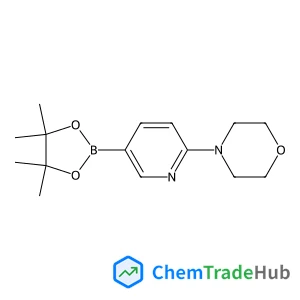
4-(5-(4,4,5,5-tetramethyl-1,3,2-dioxaborolan-2-yl)pyridin-2-yl)morpholine
CAS番号:
485799-04-0
分子式:
C15H23BN2O3
おすすめサプライヤー




免責事項
このページに表示される学術雑誌情報は、参考および研究目的のみを目的としています。当社は雑誌出版社とは提携しておらず、投稿の取り扱いも行っておりません。出版に関するお問い合わせは、各雑誌出版社に直接ご連絡ください。
表示されている情報に誤りがある場合は、support@chemtradehub.com までご連絡ください。迅速に確認し、対応いたします。