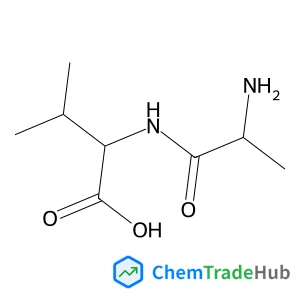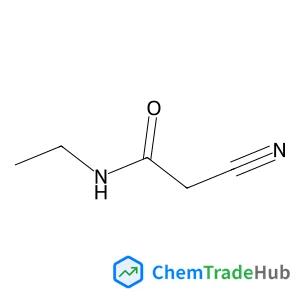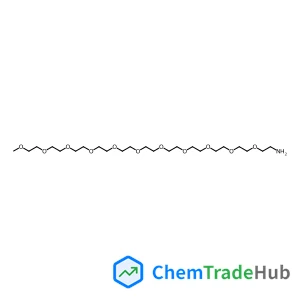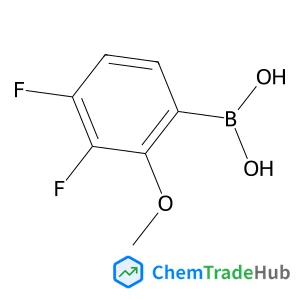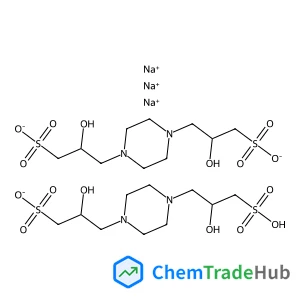
3,3'-(Piperazine-1,4-diyl)bis(2-hydroxypropane-1-sulfonic acid) Sodium Salt
CAS番号:
108321-08-0
分子式:
C20H41N4Na3O16S4
Xingce Fan, Zhengwei Luo, Xiangyu Hou, Xiaozhi Yang, Teng Qiu, Paul K. Chu
In order to enhance photocatalysis by broadening light harvesting, bundled TiO2 nanowire bundle arrays are encapsulated with indium tin oxide (ITO) by a self-assembly technique involving anodization, electrochemical etching, and ITO deposition. The plasmonic photocatalyst, which has a multiscale structure with variable nanoscale gaps as well as microscale funnels, shows broadband localized surface plasmon resonance absorption of 84% in the wavelength range between 400 and 2500 nm. The improved photocatalytic efficiency is demonstrated by methyl orange degradation under sunlight illumination. The improvement stems from enhanced light harvesting arising from the localized surface plasmon resonance of the ITO membrane which extends the light response to the visible and NIR regions and excites hot charge carriers.
Luigia Pezzi, Luciano De Sio, Alessandro Veltri, Giovanna Palermo, Roberto Comparelli, Maria Lucia Curri, Nelson Tabiryan, Cesare Umeton
DOI: 10.1039/C5CP01377A
J. M. Bermúdez-García, J. M. Vicent-Luna, S. Yáñez-Vilar, S. Hamad, M. Sánchez-Andújar, S. Castro-García, S. Calero, M. A. Señarís-Rodríguez
DOI: 10.1039/C6CP02477G
A. Aerts, S. Gavrilov, G. Manfredi, A. Marino, K. Rosseel, J. Lim
DOI: 10.1039/C6CP01561A
Chandan Sahu, Deepanwita Ghosh, Kaushik Sen, Abhijit K. Das
DOI: 10.1039/C5CP02442K
Laura Katharina Scarbath-Evers, Patricia A. Hunt, Barbara Kirchner, Douglas R. MacFarlane, Stefan Zahn
DOI: 10.1039/C5CP00340G
Rachael E. H. Miles, Jonathan P. Reid
DOI: 10.1039/C6CP03826C
Gina Smith, Jean-Sébastien Girardon, Jean-François Paul, Elise Berrier
DOI: 10.1039/C6CP02353C
Yunjun Cao, Shujun Hu, Min Yu, Shishen Yan, Mingchun Xu
DOI: 10.1039/C5CP04013B
Wenwen Cui, Alfonso San-Miguel
DOI: 10.1039/C6CP03263J
間 brom 苯甲酰腈は、合成化学や薬物化学において重要な Intermediate として使用されています。市場動向としては、その合成性と機能性により、研究開...
CAS番号117324-58-0の塩酸メチル2アミノ-5-トリフルオロメチルベンゼートは、GHS分類により腐食性物質と判定されます。REACH規則では、製造、販...
毒性があるため、適切な安全対策が必須です。皮膚や粘膜への刺激性が強く、吸入や誤飲により健康被害を引き起こす可能性があります。取扱時にはガスマスクや手袋、眼鏡を使...
三氟甲基ピリジン-2-甲アミン塩酸塩は安全性に注意が必要です。毒性は低レベルですが、直接的接触や吸入は避けるべきです。適切な手袋や防塵マスクを着用し、密閉された...
1-エチル-4-(4-硝基フェニル)ピペリジンは有毒であり、取扱には注意が必要です。保管や作業中に手袋を着用し、目や皮膚に接触しないように注意する必要があります...
1,1-ジメトキシプロパン-2-オンは一般的に低毒性ですが、皮膚や目への刺激性があるため、取扱いには注意が必要です。蒸気や液体の吸入には有害な可能性があり、適切...
この化合物はCAS番号259259-80-8に対応しています。GHS分類では、毒性、燃焼性、反応性、炎症性を考慮に入れ、適切な危険性分類が行われます。REACH...
この化合物は、冷却庫で-20℃の温度、乾燥した容器に保管し、直日光から保護する必要があります。湿度の高い環境や高温は避けてください。

Physical Chemistry Chemical Physics (PCCP) is an international journal co-owned by 19 physical chemistry and physics societies from around the world. This journal publishes original, cutting-edge research in physical chemistry, chemical physics and biophysical chemistry. To be suitable for publication in PCCP, articles must include significant innovation and/or insight into physical chemistry; this is the most important criterion that reviewers and Editors will judge against when evaluating submissions. The journal has a broad scope and welcomes contributions spanning experiment, theory, computation and data science. Topical coverage includes spectroscopy, dynamics, kinetics, statistical mechanics, thermodynamics, electrochemistry, catalysis, surface science, quantum mechanics, quantum computing and machine learning. Interdisciplinary research areas such as polymers and soft matter, materials, nanoscience, energy, surfaces/interfaces, and biophysical chemistry are welcomed if they demonstrate significant innovation and/or insight into physical chemistry. Joined experimental/theoretical studies are particularly appreciated when complementary and based on up-to-date approaches.