


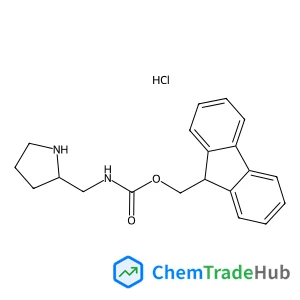
(S)-(9H-Fluoren-9-yl)methyl (pyrrolidin-2-ylmethyl)carbamate hydrochloride
CAS番号:
1217813-15-4
分子式:
C20H23ClN2O2
So-Yeon Kim, Jeongmook Lee, Sang Kyu Kim
In this work, we have investigated nonadiabatic dynamics in the vicinity of conical intersections for predissociation reactions of partially deuterated thioanisole molecules: C6H5S-CH2D and C6H5S-CHD2. Each isotopomer has two distinct rotational conformers according to the geometrical position of D or H of the methyl moiety with respect to the molecular plane for C6H5S-CH2D or C6H5S-CHD2, respectively, as spectroscopically characterized in our earlier report [J. Lee, S.-Y. Kim and S. K. Kim, J. Phys. Chem. A, 2014, 118, 1850]. Since identification and separation of two different rotational conformers of each isotopomer have been unambiguously done, we could interrogate nonadiabatic dynamics of thioanisole in terms of both H/D substitutional and conformational structural effects. Nonadiabatic transition probability, estimated by the experimentally measured branching ratio of the nonadiabatically produced ground-state channel giving C6H5S·() versus the adiabatic excited-state channel leading to the C6H5S·(Ã) radical, shows resonance-like increases at symmetric (νs) or asymmetric (7a) S-CH2D (or S-CHD2) stretching mode excitation in S1 for all conformational isomers of two isotopomers. However, absolute probabilistic value of the nonadiabatic transition is found to vary quite drastically depending on different conformers and isotopomers. The experimental finding that nonadiabatic transition dynamics are very sensitive to subtle changes in the nuclear configuration within the Franck–Condon region induced by the H/D substitution indicates that the S1/S2 conical intersection seam is quite narrowly defined in the multi-dimensional nuclear configurational space as far as the S-methyl predissociation reaction is concerned. In order to understand the relation between molecular structure and nonadiabaticity of reaction, potential energy surfaces near S1/S2 conical intersections have been theoretically calculated along νs and 7a normal mode coordinates for all conformational isomers. Slow-electron velocity map imaging (SEVI) spectroscopy is employed to unravel the extent of intramolecular vibrational redistribution (IVR) for particular mode excitations of S1, providing insights into the dynamic interplay between IVR and nonadiabatic transition probability near the conical intersection seam.

Medicinal Chemistry Research

Bioorganic & Medicinal Chemistry Letters

Biocatalysis and Biotransformation

Bioorganic & Medicinal Chemistry

Journal of Chemical Sciences

Herald of the Russian Academy of Sciences

Journal of Asian Natural Products Research

Chinese Journal of Chemistry

Journal of the Indian Institute of Science

Atomization and Sprays
Lanqing Xu, Xiaoman Zhang, Yongping Zheng
DOI: 10.1039/C4CP06014H
Qing-Yun Xiang, Yu Wang, Shi-Yu Li, Lan-Hua Wang, Li-Bin Mo, Wen-Qing Yao, Li Zhang
DOI: 10.1039/C5CP00878F
Per E. M. Siegbahn
DOI: 10.1039/C5CP00138B
Michio Ikezawa, Xiuying Wang, Pengtao Jing, Haibo Li, Yasuaki Masumoto
DOI: 10.1039/C5CP00034C
Na Li, Xiaoyu Zhang, Shulong Yuan, Xiaokai Zhang, Yuzhen Yuan, Xue Li
DOI: 10.1039/C4CP06093H
Yu-Hsiu Wang
DOI: 10.1039/C5CP00862J
Johannes Postler, Athanasios Zavras, Paul Scheier, Stephan Denifl, Richard A. J. O'Hair
DOI: 10.1039/C5CP01014D
R. Z. Martínez, D. Bermejo
DOI: 10.1039/C5CP01264C
Joshua M. Vann, Samantha L. Molnar, M. Mercedes Calbi
DOI: 10.1039/C5CP00502G
Kada Yesudas, Eluvathingal D. Jemmis, Kotamarthi Bhanuprakash
DOI: 10.1039/C5CP01410G
2-メトキシ-4-(メチルスルフィニル)アミンは、主に医薬品および農薬の製造に使用されます。また、合成化学の一部として研究用材料としても利用されます。
代替品としては、4,6-二クロロピラミジンアミンや他のピラミジン系化合物が考えられます。ただし、目的と用途によって最適な代替品は異なります。
6-氯-4-甲基-1H-吲哚の廃棄物は、適切な容器に収集し、密閉して保管します。温度は常温、湿度は低く、直射日光を避けて保管することを推奨します。廃棄処理は専門...
2-フローユロ-4-(トリフルオロメチル)ベンゾイドのCAS番号は207974-08-1です。この化合物はGHS分類で毒性物質と有害な反応物質として分類されます...
4-ニトロフェニルN-[(ベンゼルオキシルカーボンイル]グリシングリシングリシン酸は、室温で暗所に保管し、乾燥した環境で保存することを推奨します。容器は密閉性の...
イソデスロラタドリンの代替品としては、デスロラタドリンや他の抗ヒスタミン薬が挙げられます。具体的には、デスロラタドリン、ラセカミド、フェルタドリンなどが、症状や...
5-甲氧基-1,2,3,4-四氢异喹啉盐酸盐の一般的な合成方法は、メタノール中で5-メトキシ-1,2,3,4-四ヒュドロイソキシンを塩酸で塩化します。この反応で...
CAS番号6471-78-9の4-アミノ-5-メトキシ-2-トルエンサルホニック酸は、GHS分類では corrosive(腐食性)と識別されます。EUのREAC...
甲基孕酮の取り扱いは、PPE(個人保護具)の使用が必要な重要な安全事項を伴います。防塵マスク、ゴーグル、手袋を着用することが推奨されます。ドラフトチャンバーを使...

Physical Chemistry Chemical Physics (PCCP) is an international journal co-owned by 19 physical chemistry and physics societies from around the world. This journal publishes original, cutting-edge research in physical chemistry, chemical physics and biophysical chemistry. To be suitable for publication in PCCP, articles must include significant innovation and/or insight into physical chemistry; this is the most important criterion that reviewers and Editors will judge against when evaluating submissions. The journal has a broad scope and welcomes contributions spanning experiment, theory, computation and data science. Topical coverage includes spectroscopy, dynamics, kinetics, statistical mechanics, thermodynamics, electrochemistry, catalysis, surface science, quantum mechanics, quantum computing and machine learning. Interdisciplinary research areas such as polymers and soft matter, materials, nanoscience, energy, surfaces/interfaces, and biophysical chemistry are welcomed if they demonstrate significant innovation and/or insight into physical chemistry. Joined experimental/theoretical studies are particularly appreciated when complementary and based on up-to-date approaches.
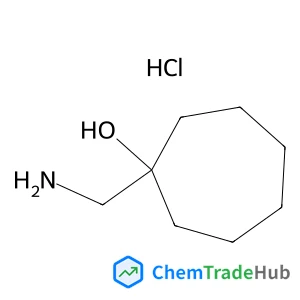
![2-(7,7-Difluorobicyclo[4.1.0]hept-1-yl)ethanamine structure](https://static.chemtradehub.com/structs/209/2098065-08-6-ff24.webp "2-(7,7-Difluorobicyclo[4.1.0]hept-1-yl)ethanamine structure")
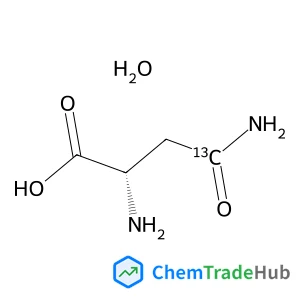
![[(5-Methyl-1,3,4-thiadiazol-2-yl)sulfanyl]acetic acid structure](https://static.chemtradehub.com/structs/509/50918-26-8-4ce8.webp "[(5-Methyl-1,3,4-thiadiazol-2-yl)sulfanyl]acetic acid structure")





