












Gas-phase structure of 1,8-bis[(trimethylsilyl)ethynyl]anthracene: cog-wheel-type vs. independent internal rotation and influence of dispersion interactions
文献情報
出版日
2017-05-02
DOI
10.1039/C7CP01781B
インパクトファクター
3.676
著者
Arseniy A. Otlyotov, Jan-Hendrik Lamm, Sebastian Blomeyer, Norbert W. Mitzel, Vladimir V. Rybkin, Yuriy A. Zhabanov, Natalya V. Tverdova, Nina I. Giricheva, Georgiy V. Girichev
原文を見る
要旨
The gas-phase structure of 1,8-bis[(trimethylsilyl)ethynyl]anthracene (1,8-BTMSA) was determined by a combined gas electron diffraction (GED)/mass spectrometry (MS) experiment as well as by quantum-chemical calculations (QC). DFT and dispersion corrected DFT calculations (DFT-D3) predicted two slightly different structures for 1,8-BTMSA concerning the mutual orientation of the two –C–CC–SiMe3 units: away from one another or both bent to the same side. An attempt was made to distinguish these structures by GED structural analysis. To probe the structural rigidity, a set of Born–Oppenheimer molecular dynamics (BOMD) calculations has been performed at the DFT-D level. Vibrational corrections Δr = ra − re were calculated by two BOMD approaches: a microcanonically (NVE) sampled ensemble of 20 trajectories (BOMD(NVE)) and a canonical (NVT) trajectory thermostated by the Noose–Hoover algorithm (BOMD(NVT)). In addition, the conventional approach with both, rectilinear and curvilinear approximations (SHRINK program), was also applied. Radial distribution curves obtained with models using both MD approaches provide a better description of the experimental data than those obtained using the rectilinear (SHRINK) approximation, while the curvilinear approach turned out to lead to physically inacceptable results. The electronic structure of 1,8-BTMSA was investigated in terms of an NBO analysis and was compared with that of the earlier studied 1,8-bis(phenylethynyl)anthracene. Theoretical and experimental results lead to the conclusion that the (trimethylsilyl)ethynyl (TMSE) groups in 1,8-BTMSA are neither restricted in rotation nor in bending at the temperature of the GED experiment.
関連文献
Surface plasmon resonance-based fiber optic hydrogen sulphide gas sensor utilizing Cu–ZnO thin films
Rana Tabassum, Satyendra K. Mishra, Banshi D. Gupta
2013-05-30
Paper
DOI: 10.1039/C3CP51525G
Extending the distance range accessed with continuous wave EPR with Gd3+spin probes at high magnetic fields
Devin T. Edwards, Zhidong Ma, Daniella Goldfarb
2013-05-15
Paper
DOI: 10.1039/C3CP43787F
Donor–acceptor–donor thienyl/bithienyl-benzothiadiazole/quinoxaline model oligomers: experimental and theoretical studies
João Pina, J. Seixas de Melo, D. Breusov, Ullrich Scherf
2013-08-08
Paper
DOI: 10.1039/C3CP52056K
Iron cation catalyzed reduction of N2O by CO: gas-phase temperature dependent kinetics
Joshua J. Melko, Shaun G. Ard, Joseph A. Fournier, Jun Li, Nicholas S. Shuman, Hua Guo, Albert A. Viggiano
2013-05-31
Paper
DOI: 10.1039/C3CP50335F
Assemblies of polyvinylpyrrolidone-capped tetrahedral and spherical Pt nanoparticles in polyelectrolytes: hydrogen underpotential deposition and electrochemical characterization
Sarah Jaber, Pamela Nasr, Yan Xin, Fatima Sleem, Lara I. Halaoui
2013-08-09
Paper
DOI: 10.1039/C3CP51061A
The exciton dynamics in tetracene thin films
Murad J. Y. Tayebjee, Raphaël G. C. R. Clady, Timothy W. Schmidt
2013-07-19
Paper
DOI: 10.1039/C3CP52609G
Strain driven enhancement of ferroelectricity and magnetoelectric effect in multiferroic tunnel junction
Dan Cao, Hai-bo Shu, Zhi-wei Jiao, Yun Zhou, Miao-gen Chen, Meng-qiu Cai, Wang-yu Hu
2013-08-02
Paper
DOI: 10.1039/C3CP51350E
こちらもおすすめ
化合物よくある質問
2-メトキシ-4-(メチルスルフィニル)アミンの主な用途は何ですか?
2-メトキシ-4-(メチルスルフィニル)アミンは、主に医薬品および農薬の製造に使用されます。また、合成化学の一部として研究用材料としても利用されます。
41608-73-52-Methoxy-4-(methyls...
118684-13-24-(Bromomethyl)-3-me...
化合物よくある質問
4,6-二氯-N-甲基ピラミジンアミンの代替品はありますか?
代替品としては、4,6-二クロロピラミジンアミンや他のピラミジン系化合物が考えられます。ただし、目的と用途によって最適な代替品は異なります。
10397-15-64,6-Dichloro-N-methy...
化合物よくある質問
6-氯-4-甲基-1H-吲哚を含む廃棄物はどのように処理すべきですか?
6-氯-4-甲基-1H-吲哚の廃棄物は、適切な容器に収集し、密閉して保管します。温度は常温、湿度は低く、直射日光を避けて保管することを推奨します。廃棄処理は専門...
885520-84-36-chloro-4-methyl-1H...
化合物よくある質問
2-フローユロ-4-(トリフルオロメチル)ベンゾイドについて「に適用される法規ガイドラインは何ですか」
2-フローユロ-4-(トリフルオロメチル)ベンゾイドのCAS番号は207974-08-1です。この化合物はGHS分類で毒性物質と有害な反応物質として分類されます...
207974-08-1[2-Fluoro-4-(trifluo...
化合物よくある質問
4-ニトロフェニルN-[(ベンゼルオキシルカーボンイル]グリシングリシングリシン酸はどのように保存すればよいですか?
4-ニトロフェニルN-[(ベンゼルオキシルカーボンイル]グリシングリシングリシン酸は、室温で暗所に保管し、乾燥した環境で保存することを推奨します。容器は密閉性の...
19811-64-44-Nitrophenyl N-[(be...
化合物よくある質問
イソデスロラタドリンの代替品はありますか?
イソデスロラタドリンの代替品としては、デスロラタドリンや他の抗ヒスタミン薬が挙げられます。具体的には、デスロラタドリン、ラセカミド、フェルタドリンなどが、症状や...
183198-49-4Iso Desloratadine
化合物よくある質問
5-甲氧基-1,2,3,4-四氢异喹啉盐酸盐はどのように合成されますか?
5-甲氧基-1,2,3,4-四氢异喹啉盐酸盐の一般的な合成方法は、メタノール中で5-メトキシ-1,2,3,4-四ヒュドロイソキシンを塩酸で塩化します。この反応で...
103030-69-95-Methoxy-1,2,3,4-te...
化合物よくある質問
4-アミノ-5-メトキシ-2-トルエンサルホニック酸についての法規ガイドラインは何ですか?
CAS番号6471-78-9の4-アミノ-5-メトキシ-2-トルエンサルホニック酸は、GHS分類では corrosive(腐食性)と識別されます。EUのREAC...
6471-78-94-Amino-5-Methoxy-2-...
化合物よくある質問
甲基孕酮を取り扱う際の実験室安全事項は何ですか?
甲基孕酮の取り扱いは、PPE(個人保護具)の使用が必要な重要な安全事項を伴います。防塵マスク、ゴーグル、手袋を着用することが推奨されます。ドラフトチャンバーを使...
204063-33-22-[(Diphenylmethyl)a...
掲載誌
Physical Chemistry Chemical Physics

CiteScore:
5.5
自己引用率:
10.3%
年間論文数:
3036
Physical Chemistry Chemical Physics (PCCP) is an international journal co-owned by 19 physical chemistry and physics societies from around the world. This journal publishes original, cutting-edge research in physical chemistry, chemical physics and biophysical chemistry. To be suitable for publication in PCCP, articles must include significant innovation and/or insight into physical chemistry; this is the most important criterion that reviewers and Editors will judge against when evaluating submissions. The journal has a broad scope and welcomes contributions spanning experiment, theory, computation and data science. Topical coverage includes spectroscopy, dynamics, kinetics, statistical mechanics, thermodynamics, electrochemistry, catalysis, surface science, quantum mechanics, quantum computing and machine learning. Interdisciplinary research areas such as polymers and soft matter, materials, nanoscience, energy, surfaces/interfaces, and biophysical chemistry are welcomed if they demonstrate significant innovation and/or insight into physical chemistry. Joined experimental/theoretical studies are particularly appreciated when complementary and based on up-to-date approaches.
おすすめ化合物
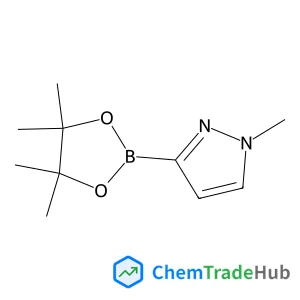
1-Methyl-3-(4,4,5,5-tetramethyl-1,3,2-dioxaborolan-2-yl)-1H-pyrazole
CAS番号:
1020174-04-2
分子式:
C10H17BN2O2
![1,2-Diphenyl-4-[2-(phenylsulfinyl)ethyl]-3,5-pyrazolidinedione structure](https://static.chemtradehub.com/structs/57-/57-96-5-efcc.webp "1,2-Diphenyl-4-[2-(phenylsulfinyl)ethyl]-3,5-pyrazolidinedione structure")

おすすめサプライヤー





免責事項
このページに表示される学術雑誌情報は、参考および研究目的のみを目的としています。当社は雑誌出版社とは提携しておらず、投稿の取り扱いも行っておりません。出版に関するお問い合わせは、各雑誌出版社に直接ご連絡ください。
表示されている情報に誤りがある場合は、support@chemtradehub.com までご連絡ください。迅速に確認し、対応いたします。