












Surface-induced assembly of sophorolipids
文献情報
出版日
2017-06-01
DOI
10.1039/C7CP01339F
インパクトファクター
3.676
著者
Jessie Peyre, Marco Faustini, Vincent Humblot, Niki Baccile
原文を見る
要旨
The surface self-assembly properties of acidic sophorolipids, a bolaform microbial glycolipids with pH-responsive properties in solution, were studied based on the chemical nature of the support and pH of the solution. Sophorolipids generally form micelles in water but formation of morphologies like platelets and twisted fibers depending on pH have also been reported. The surface self-assembly was achieved using dip-coating on three different substrates namely gold, silicon(111) and TiO2 anatase. Deposition conditions (dip-coating withdrawal speed, relative humidity, temperature) were tested, and it was found that optimum self-assembly occurs at a withdrawal speed of 1 mm s−1, T of 25 °C and relative humidity of 25%. The local structure of the sophorolipid films was characterized by atomic force microscopy, while scanning electron microscopy was used to characterize the spatial homogeneity. We also attempted to correlate dispersive, electron donor and electron attractor surface energy components, using Good–van Oss's approach, and the behavior of sophorolipids. We found that when the surface energy is dominated by dispersive components, sophorolipids spontaneously assemble into entangled needles at all pH values (4, 6 and 11). However, when the surface energy is dominated by electronic components, pH has a strong influence on the surface self-assembly. We could discriminate three major organizations: homogeneous layer, isolated aggregates and a two-dimensional fibrillar network.
おすすめジャーナル
関連文献
Gold-catalyzed C5-alkylation of indolines and sequential oxidative aromatization: access to C5-functionalized indoles
Wenzheng Zhang, Guangyang Xu, Lin Qiu, Jiangtao Sun
2018-05-02
Communication
DOI: 10.1039/C8OB00826D
A multifaceted approach towards understanding the peculiar behavior of (α)-hydroxyiminophosphonates
Thomas Toupy, Christopher Kune, Kristof Van Hecke, Loïc Quinton, Jean-Christophe M. Monbaliu
2021-11-22
Research Article
DOI: 10.1039/D1QO01564H
Rapid and reversible hydrazone bioconjugation in cells without the use of extraneous catalysts
Rahul Nisal, Gregor P. Jose, Chitra Shanbhag, Jeet Kalia
2018-05-18
Paper
DOI: 10.1039/C8OB00946E
Fissisternoids A and B, two 2′,5′-quinodihydrochalcone-based meroterpenoid enantiomers with unusual carbon skeletons from Fissistigma bracteolatum
Gui-Min Xue, Chen-Guang Zhao, Jin-Feng Xue, Hui Chen, Zhen-Zhu Zhao, Ying-Ying Si, Kun Du, Yan-Le Zhi, Wei-Sheng Feng
2021-11-19
Research Article
DOI: 10.1039/D1QO01404H
Chemical tools for the generation and detection of singlet oxygen
2018-04-24
Review Article
DOI: 10.1039/C8OB00504D
Regioselective ortho-functionalization of bromofluorenecarbaldehydes using TMPMgCl·LiCl
Dominik Göbel, Nils Clamor, Boris J. Nachtsheim
2018-05-15
Communication
DOI: 10.1039/C8OB01072B
Rh(iii)-Catalyzed C–H allylation/annulative Markovnikov addition with 5-methylene-1,3-dioxan-2-one: formation of isoquinolinones containing a C3 quaternary centre
Xinghua Li, Jintong Bai, Zhaoyu Huang, Minhai Yin, Jiarong Sheng
2021-10-05
Research Article
DOI: 10.1039/D1QO01232K
High pressure-assisted low-loading asymmetric organocatalytic conjugate addition of nitroalkanes to chalcones‡
Agnieszka Cholewiak, Kamil Adamczyk, Michał Kopyt, Adrian Kasztelan, Piotr Kwiatkowski
2018-05-22
Paper
DOI: 10.1039/C8OB00561C
Intramolecularly enhanced molecular tweezers with unusually strong binding for aromatic guests in unfavorable solvents
Xiaoyu Xing, Yan Zhao
2018-05-07
Communication
DOI: 10.1039/C8OB00786A
Donor–acceptor cyclopropanes as ortho-quinone methide equivalents in formal (4 + 2)-cycloaddition to alkenes
Konstantin L. Ivanov, Stanislav I. Bezzubov, Mikhail Ya. Melnikov, Ekaterina M. Budynina
2018-03-13
Paper
DOI: 10.1039/C8OB00377G
こちらもおすすめ
化合物よくある質問
環戊烷-1,3-二甲酸甲酯はどのように合成されますか?
環戊烷-1,3-二甲酸甲酯は、環戊烷と塩酸によるヒンデンブルク反応を経由して合成されます。この反応では、環戊烷が塩酸と作用し、1,3-ジカルボキシ基が導入されま...
2435-36-1Dimethyl 1,3-cyclope...
化合物よくある質問
4-メトキシ-1,2,3-スチアゼ-3,5-ジオンとは何ですか?
4-メトキシ-1,2,3-スチアゼ-3,5-ジオンは、CAS番号107843-77-6の化合物で、(E)-ベンジル3-(3,4-ジヒドロキシフェニル) acry...
107843-77-6(E)-Benzyl 3-(3,4-di...
化合物よくある質問
プロスタグランジンA2について「に適用される法規ガイドラインは何ですか?'
プロスタグランジンA2 (CAS番号: 41691-92-3) は、化学物質の安全管理に関する規制として、GHS (危険物質の国際的ハザード分類・ラベル付けシス...
41691-92-316,16-DIMETHYL PROST...
化合物よくある質問
4-アミノ-1-ナフタレン sulfonic 酸についての物理化学的性質は何ですか?
4-アミノ-1-ナフタレン sulfonic 酸のCAS番号は84-86-6です。この化合物は結晶性で、分子量は212.15 g/molです。アルコールや水など...
84-86-64-Amino-1-naphthalen...
化合物よくある質問
N-GlcNAc-生物素を取り扱う際の実験室安全事項は何ですか?
N-GlcNAc-生物素は吸収性があり、皮膚や目への接触を避けることが重要です。PPE(個体保護具)は使用し、ドラフトチャンバーは必要に応じて使用します。漏洩時...
1272755-69-72-Acetamido-2-deoxy-...
化合物よくある質問
3-アミノメチルフローラノピペリジン-1-カルボニル酸テルブチルエステルとは何ですか?
CAS番号1209781-11-2の3-アミノメチルフローラノピペリジン-1-カルボニル酸テルブチルエステルは、有機化合物の一種で、化学式はC10H17FNO3...
1209781-11-22-Methyl-2-propanyl ...
化合物よくある質問
6-溴-1-甲基-1H-ベンゾ[d][1,2,3]三氮唑はどのように合成されますか?
6- bromo-1-methyl-1H-benzotriazoleは、ブロモフリオリンと1-メチル-1H-ベンゾ[d][1,2,3]三氮唑の反応により合成され...
944718-32-56-Bromo-1-methyl-1H-...
化合物よくある質問
4-硫代尿苷はどのように合成されますか?
4-硫代尿苷は、尿素とD-リボシルヒドロキシアルデヒドを用いてスルホン化反応を経て合成されます。通常は塩酸ヒドロキシチオニルスルホン酸などの触媒を使用し、選択性...
6741-73-71-(4-thio-beta-D-rib...
化合物よくある質問
ブレインナトリユリックペプチド32ラットとは何ですか?
ブレインナトリユリックペプチド32ラット(CAS番号: 133448-20-1)は、心臓で作られるホルモンの一つで、心不全の診断や予後評価に使用されます。
133448-20-1Brain Natriuretic Pe...
化合物よくある質問
1-(3-氮杂啶)-4-羟基哌啶双盐酸盐の物理化学的性質は何ですか?
CAS番号810680-60-5の1-(3-氮杂啶)-4-羟基哌啶双盐酸盐は、白色の結晶性粉末である。分子量は360.84 g/molで、水に溶けやすい。反応活...
810680-60-51-(3-Azetidinyl)-4-p...
掲載誌
Physical Chemistry Chemical Physics

CiteScore:
5.5
自己引用率:
10.3%
年間論文数:
3036
Physical Chemistry Chemical Physics (PCCP) is an international journal co-owned by 19 physical chemistry and physics societies from around the world. This journal publishes original, cutting-edge research in physical chemistry, chemical physics and biophysical chemistry. To be suitable for publication in PCCP, articles must include significant innovation and/or insight into physical chemistry; this is the most important criterion that reviewers and Editors will judge against when evaluating submissions. The journal has a broad scope and welcomes contributions spanning experiment, theory, computation and data science. Topical coverage includes spectroscopy, dynamics, kinetics, statistical mechanics, thermodynamics, electrochemistry, catalysis, surface science, quantum mechanics, quantum computing and machine learning. Interdisciplinary research areas such as polymers and soft matter, materials, nanoscience, energy, surfaces/interfaces, and biophysical chemistry are welcomed if they demonstrate significant innovation and/or insight into physical chemistry. Joined experimental/theoretical studies are particularly appreciated when complementary and based on up-to-date approaches.
おすすめ化合物
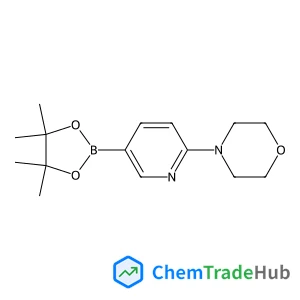
4-(5-(4,4,5,5-tetramethyl-1,3,2-dioxaborolan-2-yl)pyridin-2-yl)morpholine
CAS番号:
485799-04-0
分子式:
C15H23BN2O3
おすすめサプライヤー



免責事項
このページに表示される学術雑誌情報は、参考および研究目的のみを目的としています。当社は雑誌出版社とは提携しておらず、投稿の取り扱いも行っておりません。出版に関するお問い合わせは、各雑誌出版社に直接ご連絡ください。
表示されている情報に誤りがある場合は、support@chemtradehub.com までご連絡ください。迅速に確認し、対応いたします。