


The effect of K+ cations on the phase transitions, and structural, dielectric and luminescence properties of [cat][K0.5Cr0.5(HCOO)3], where cat is protonated dimethylamine or ethylamine
文献情報
出版日
2017-04-19
DOI
10.1039/C7CP01336A
インパクトファクター
3.676
著者
Maciej Ptak, Anna Gągor, Adam Sieradzki, Bartosz Bondzior, Przemysław Dereń, Aneta Ciupa, M. Trzebiatowska, Mirosław Mączka
原文を見る
要旨
We report the synthesis, crystal structure, and dielectric, vibrational and emission spectra of two novel heterometallic perovskite-type metal–organic frameworks (MOFs) of the following formula: [(CH3)2NH2][K0.5Cr0.5(HCOO)3] (DMAKCr) and [C2H5NH3][K0.5Cr0.5(HCOO)3] (EtAKCr). DMAKCr crystallizes in a trigonal structure (R space group) and undergoes an order–disorder phase transition to the monoclinic system (P space group) at about 190 K. The dielectric studies confirm the presence of first-order relaxor-like structural transformation. In the high-temperature phase, the dimethylammonium cations are dynamically disordered over three equal positions and upon cooling the dynamical disorder evolves into a two-fold one. This partial ordering is accompanied by a small distortion of the metal–formate framework. EtAKCr crystallizes in a monoclinic structure (P21/n space group) with ordered EtA+ cations and does not experience any phase transition. The differences in the thermal behavior caused by the substitution of Na+ ions by larger K+ ions in the [cat]MIMIII (cat = DMA+, EtA+, MI = Na+, K+ and MIII = Cr3+ and Fe3+) heterometallic MOF family are discussed taking into account the impact of the hydrogen bond (HB) pattern and other factors affecting the stability of metal–formate frameworks. The optical studies show that DMANaCr and EtAKCr exhibit Cr3+-based emission characteristics for intermediate ligand field strength.
おすすめジャーナル

Journal of Chemical Sciences

Cellulose

Topics in Catalysis

Biocatalysis and Biotransformation

Herald of the Russian Academy of Sciences

Main Group Chemistry

Acta Metallurgica Sinica-English Letters

Journal of the Indian Institute of Science

Bioorganic & Medicinal Chemistry Letters

Journal of Asian Natural Products Research
関連文献
Electrochemiluminescence detection based on Ruthenium(II) tris(bipyridine) immobilised in sulfonic-functionalised titania nanoparticles by ion exchange strategy
Fan Yang
2009-08-05
Paper
DOI: 10.1039/B903434J
Colorimetric cyanide detection using an azobenzene acid in aqueous solutions
Xiaoding Lou, Jingui Qin, Zhen Li
2009-08-03
Paper
DOI: 10.1039/B903076J
Amperometric quantification based on serial dilution microfluidic systems
Monique Sigaud, Olivier Vittori, Naim Ouaini
2008-12-02
Paper
DOI: 10.1039/B811629F
A novel approach to correct variations in Raman spectra due to photo-bleachable cellular components
Maarten Scholtes-Timmerman, Alex van Belkum
2008-11-14
Paper
DOI: 10.1039/B811596F
Differentiation of liquid analytes in gel films by permeability-modulated double-layer chemo-chips
Aniket R. Thete, G. Alexander Gross, J. Michael Koehler
2008-11-15
Paper
DOI: 10.1039/B808257J
On-chip Raman analysis of heterogeneous catalytic reaction in supercritical CO2: phase behaviour monitoring and activity profiling
Atsushi Urakawa, Franz Trachsel, Philipp Rudolf von Rohr, Alfons Baiker
2008-06-12
Communication
DOI: 10.1039/B808984C
Electrochemical behavior of lactate dehydrogenase immobilized on “silica sol–gel/nanometre-sized tridecameric aluminium polycation” modified gold electrode and its application
Jiongjia Cheng, Deqian Huang, Jing Zhang, Wenjing Yang, Na Wang, Yongbo Sun, Keyu Wang, Xiangyin Mo, Shuping Bi
2009-03-24
Paper
DOI: 10.1039/B823096J
Identification of Pseudomonas aeruginosa using functional magnetic nanoparticle-based affinity capture combined with MALDI MS analysis
Jr-Chi Liu, Wei-Jen Chen, Chen-Wei Li, Kwok-Kong Tony Mong, Pei-Jane Tsai, Te-Lung Tsai, Yuan C. Lee, Yu-Chie Chen
2009-07-24
Paper
DOI: 10.1039/B908069D
Sequence-specific electrochemical detection of Alicyclobacillus acidoterrestrisDNA using electroconductive polymer-modified fluorine tin oxide electrodes
Katlin Ivon Barrios Eguiluz, Giancarlo Richard Salazar-Banda, Maribel Elizabeth Funes-Huacca, Juliana Vieira Alberice, Emanuel Carrilho, Sergio Antonio Spinola Machado, Luis Alberto Avaca
2008-10-29
Paper
DOI: 10.1039/B809080G
こちらもおすすめ
化合物よくある質問
6- bromo-1-cyclopropyl-1H-benzimidazoleの市場動向や研究トレンドはどうですか?
6- bromo-1-cyclopropyl-1H-benzimidazoleは、抗炎症、抗ウイルス作用を持つことが報告されており、新薬開発の研究対象として注目...
1416713-53-56-Bromo-1-cyclopropy...
化合物よくある質問
環氧プロpanol-d5を取り扱う際の実験室安全事項は何ですか?
取り扱う際には、防護眼鏡と手袋を使用し、ドラフトチャンバー内で操作することを推奨します。漏洩時には適切な手順で処理し、安全データシートを常に参照してください。
1246819-20-4Glycidol-d5
化合物よくある質問
2,2’-ジメチル-3,3’-ビピリジンはどのように合成されますか?
2,2’-ジメチル-3,3’-ビピリジンは、ピリジンと2-メチルアクリルアミドを有機合成反応で合成します。この反応では、ピリジンと2-メチルアクリルアミドを含有...
86156-55-02,2’-Dimethyl-3,3’-b...
化合物よくある質問
6-甲基ピリジン-2-ボリック酸の主な用途は何ですか?
6-甲基ピリジン-2-ボリック酸は、合成化学、医薬品合成、以及研究用途などに広く使用され、特に組換えDNA技術や分子生物学の研究において重要な役割を果たします。
372963-50-3(6-Methyl-2-pyridiny...
化合物よくある質問
(R)-3-(1-甲基-2-氧環己基)プロpano酸メチルは安全ですか?
(R)-3-(1-甲基-2-氧環己基)プロpano酸メチルは一定の安全性がありますが、直接的な皮膚接触や吸入は避けるべきです。使用する際は適切な個々の安全データ...
94089-47-1methyl 3-[(1R)-1-met...
化合物よくある質問
ketorolacはどのように保存すればよいですか?
ketorolacは、密封して遮光容器に保管し、直射日光や高温を避けて保存してください。温度は常温で保存し、湿度をなるべく低く保つことが推奨されます。
74103-06-3rac Ketorolac
化合物よくある質問
L-2,3-二氨基丙酸二盐酸盐を取り扱う際の実験室安全事項は何ですか?
L-2,3-二氨基丙酸二盐酸盐は腐食性が強く、皮膚や粘膜に刺激を与える可能性があります。取り扱う際は、防塵マスク、ゴーグル、手袋を使用し、適切な排気設備を使用し...
19777-68-5(S)-2,3-Diaminopropa...
化合物よくある質問
2-(4-溴ピリジン-2-基)乙腈の物理化学的性質は何ですか?
2-(4-溴ピリジン-2-基)乙腈のCAS番号は312325-73-8です。主に結晶形態で存在し、分子量は159.01 g/molです。この化合物は水に溶けやす...
312325-73-8(4-Bromo-2-pyridinyl...
化合物よくある質問
3-フローロ-[1,1-ベンジレン]-3,4-ジカルボン酸を取り扱う際の実験室安全事項は何ですか?
この化合物は毒性は低いですが、直接的な接触や吸入に注意が必要です。PPE(個人防護具)を着用し、ドラフトチャンバーを使用して操作することを推奨します。また、漏洩...
1261915-32-53'-Fluoro-[1,1'-biph...
化合物よくある質問
3-(1-氧代-1,3-二氢-2H-2-异吲哚)丙酸の主な用途は何ですか?
3-(1-氧代-1,3-二氢-2H-2-异吲哚)丙酸は、薬理学研究や医薬品製造において広く用いられる化合物です。また、工業的な用途でも一部の化学反応の触媒や助剤...
83747-30-23-(1-Oxo-1,3-dihydro...
掲載誌
Physical Chemistry Chemical Physics

CiteScore:
5.5
自己引用率:
10.3%
年間論文数:
3036
Physical Chemistry Chemical Physics (PCCP) is an international journal co-owned by 19 physical chemistry and physics societies from around the world. This journal publishes original, cutting-edge research in physical chemistry, chemical physics and biophysical chemistry. To be suitable for publication in PCCP, articles must include significant innovation and/or insight into physical chemistry; this is the most important criterion that reviewers and Editors will judge against when evaluating submissions. The journal has a broad scope and welcomes contributions spanning experiment, theory, computation and data science. Topical coverage includes spectroscopy, dynamics, kinetics, statistical mechanics, thermodynamics, electrochemistry, catalysis, surface science, quantum mechanics, quantum computing and machine learning. Interdisciplinary research areas such as polymers and soft matter, materials, nanoscience, energy, surfaces/interfaces, and biophysical chemistry are welcomed if they demonstrate significant innovation and/or insight into physical chemistry. Joined experimental/theoretical studies are particularly appreciated when complementary and based on up-to-date approaches.
おすすめ化合物
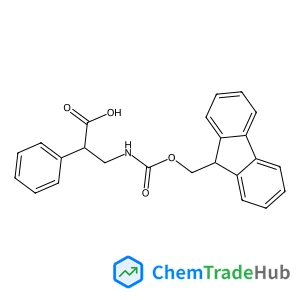
(S)-3-((((9H-Fluoren-9-yl)methoxy)carbonyl)amino)-2-phenylpropanoic acid
CAS番号:
1217663-60-9
分子式:
C24H21NO4
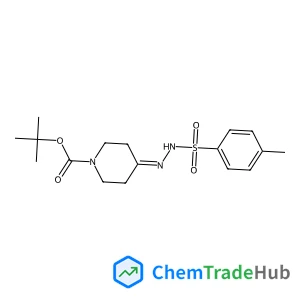
tert-Butyl 4-(2-(p-Tolylsulfonyl)hydrazono)piperidine-1-carboxylate
CAS番号:
1046478-89-0
分子式:
C17H25N3O4S
おすすめサプライヤー




免責事項
このページに表示される学術雑誌情報は、参考および研究目的のみを目的としています。当社は雑誌出版社とは提携しておらず、投稿の取り扱いも行っておりません。出版に関するお問い合わせは、各雑誌出版社に直接ご連絡ください。
表示されている情報に誤りがある場合は、support@chemtradehub.com までご連絡ください。迅速に確認し、対応いたします。