












![[4-Amino-2-(methylsulfanyl)-5-pyrimidinyl]methanol structure](https://static.chemtradehub.com/structs/588/588-36-3-fc73.webp "[4-Amino-2-(methylsulfanyl)-5-pyrimidinyl]methanol structure")
Assessment of electronic structure methods for the determination of the ground spin states of Fe(ii), Fe(iii) and Fe(iv) complexes
文献情報
出版日
2017-05-02
DOI
10.1039/C7CP01263B
インパクトファクター
3.676
著者
原文を見る
要旨
Our ability to understand and simulate the reactions catalyzed by iron depends strongly on our ability to predict the relative energetics of spin states. In this work, we studied the electronic structures of Fe2+ ion, gaseous FeO and 14 iron complexes using Kohn–Sham density functional theory with particular focus on determining the ground spin state of these species as well as the magnitudes of relevant spin-state energy splittings. The 14 iron complexes investigated in this work have hexacoordinate geometries of which seven are Fe(II), five are Fe(III) and two are Fe(IV) complexes. These are calculated using 20 exchange–correlation functionals. In particular, we use a local spin density approximation (LSDA) – GVWN5, four generalized gradient approximations (GGAs) – BLYP, PBE, OPBE and OLYP, two non-separable gradient approximations (NGAs) – GAM and N12, two meta-GGAs – M06-L and M11-L, a meta-NGA – MN15-L, five hybrid GGAs – B3LYP, B3LYP*, PBE0, B97-3 and SOGGA11-X, four hybrid meta-GGAs – M06, PW6B95, MPW1B95 and M08-SO and a hybrid meta-NGA – MN15. The density functional results are compared to reference data, which include experimental results as well as the results of diffusion Monte Carlo (DMC) calculations and ligand field theory estimates from the literature. For the Fe2+ ion, all functionals except M11-L correctly predict the ground spin state to be quintet. However, quantitatively, most of the functionals are not close to the experimentally determined spin-state splitting energies. For FeO all functionals predict quintet to be the ground spin state. For the 14 iron complexes, the hybrid functionals B3LYP, MPW1B95 and MN15 correctly predict the ground spin state of 13 out of 14 complexes and PW6B95 gets all the 14 complexes right. The local functionals, OPBE, OLYP and M06-L, predict the correct ground spin state for 12 out of 14 complexes. Two of the tested functionals are not recommended to be used for this type of study, in particular M08-SO and M11-L, because M08-SO systematically overstabilizes the high spin state, and M11-L systematically overstabilizes the low spin state.
関連文献
Multidimensional local mode calculations for the vibrational spectra of OH−(H2O)2 and OH−(H2O)2·Ar
Masato Morita, Kaito Takahashi
2013-07-01
Paper
DOI: 10.1039/C3CP51903A
Kinetic mixture effects in diffusion gradients in thin films (DGT)
Jaume Puy, Joan Cecília, Josep Galceran
2013-05-09
Paper
DOI: 10.1039/C3CP51038G
Impact of molecular solvophobicity vs. solvophilicity on device performances of dimeric perylene diimide based solution-processed non-fullerene organic solar cells
Zhenhuan Lu, Xin Zhang, Chuanlang Zhan, Bo Jiang, Xinliang Zhang, Lili Chen, Jiannian Yao
2013-06-06
Paper
DOI: 10.1039/C3CP51475G
Functionalized 129Xe as a potential biosensor for membrane fluidity
Matthias Schnurr, Christopher Witte, Leif Schröder
2013-06-07
Communication
DOI: 10.1039/C3CP51227D
Electrochemical synthesis of vertically aligned zinc nanowires using track-etched polycarbonate membranes as templates
Z. Liu, M. S. Ghazvini, F. Endres
2013-05-15
Paper
DOI: 10.1039/C3CP51325D
Selective catalytic oxidation using supported gold–platinum and palladium–platinum nanoalloys prepared by sol-immobilisation
Virginie Peneau, Qian He, Gregory Shaw, Simon A. Kondrat, Thomas E. Davies, Peter Miedziak, Michael Forde, Nikolaos Dimitratos, Christopher J. Kiely, Graham J. Hutchings
2013-04-02
Paper
DOI: 10.1039/C3CP50361E
Transport properties of binuclear metal complexes of the VIII group using a simplified NEGF-DFT approach
Vincenzo Barone, Ivo Cacelli, Alessandro Ferretti
2013-05-10
Paper
DOI: 10.1039/C3CP50974E
Practical applications of small-angle neutron scattering
Martin J. Hollamby
2013-03-25
Perspective
DOI: 10.1039/C3CP50293G
Li diffusion through doped and defected graphene
Deya Das, Seungchul Kim, Kwang-Ryeol Lee, Abhishek K. Singh
2013-07-17
Paper
DOI: 10.1039/C3CP52891J
Time-resolved photoelectron spectroscopy of adenine and adenosine in aqueous solution
Franziska Buchner, Hans-Hermann Ritze, Jan Lahl, Andrea Lübcke
2013-05-07
Paper
DOI: 10.1039/C3CP51057C
こちらもおすすめ
化合物よくある質問
2-メトキシ-4-(メチルスルフィニル)アミンの主な用途は何ですか?
2-メトキシ-4-(メチルスルフィニル)アミンは、主に医薬品および農薬の製造に使用されます。また、合成化学の一部として研究用材料としても利用されます。
41608-73-52-Methoxy-4-(methyls...
118684-13-24-(Bromomethyl)-3-me...
化合物よくある質問
4,6-二氯-N-甲基ピラミジンアミンの代替品はありますか?
代替品としては、4,6-二クロロピラミジンアミンや他のピラミジン系化合物が考えられます。ただし、目的と用途によって最適な代替品は異なります。
10397-15-64,6-Dichloro-N-methy...
化合物よくある質問
6-氯-4-甲基-1H-吲哚を含む廃棄物はどのように処理すべきですか?
6-氯-4-甲基-1H-吲哚の廃棄物は、適切な容器に収集し、密閉して保管します。温度は常温、湿度は低く、直射日光を避けて保管することを推奨します。廃棄処理は専門...
885520-84-36-chloro-4-methyl-1H...
化合物よくある質問
2-フローユロ-4-(トリフルオロメチル)ベンゾイドについて「に適用される法規ガイドラインは何ですか」
2-フローユロ-4-(トリフルオロメチル)ベンゾイドのCAS番号は207974-08-1です。この化合物はGHS分類で毒性物質と有害な反応物質として分類されます...
207974-08-1[2-Fluoro-4-(trifluo...
化合物よくある質問
4-ニトロフェニルN-[(ベンゼルオキシルカーボンイル]グリシングリシングリシン酸はどのように保存すればよいですか?
4-ニトロフェニルN-[(ベンゼルオキシルカーボンイル]グリシングリシングリシン酸は、室温で暗所に保管し、乾燥した環境で保存することを推奨します。容器は密閉性の...
19811-64-44-Nitrophenyl N-[(be...
化合物よくある質問
イソデスロラタドリンの代替品はありますか?
イソデスロラタドリンの代替品としては、デスロラタドリンや他の抗ヒスタミン薬が挙げられます。具体的には、デスロラタドリン、ラセカミド、フェルタドリンなどが、症状や...
183198-49-4Iso Desloratadine
化合物よくある質問
5-甲氧基-1,2,3,4-四氢异喹啉盐酸盐はどのように合成されますか?
5-甲氧基-1,2,3,4-四氢异喹啉盐酸盐の一般的な合成方法は、メタノール中で5-メトキシ-1,2,3,4-四ヒュドロイソキシンを塩酸で塩化します。この反応で...
103030-69-95-Methoxy-1,2,3,4-te...
化合物よくある質問
4-アミノ-5-メトキシ-2-トルエンサルホニック酸についての法規ガイドラインは何ですか?
CAS番号6471-78-9の4-アミノ-5-メトキシ-2-トルエンサルホニック酸は、GHS分類では corrosive(腐食性)と識別されます。EUのREAC...
6471-78-94-Amino-5-Methoxy-2-...
化合物よくある質問
甲基孕酮を取り扱う際の実験室安全事項は何ですか?
甲基孕酮の取り扱いは、PPE(個人保護具)の使用が必要な重要な安全事項を伴います。防塵マスク、ゴーグル、手袋を着用することが推奨されます。ドラフトチャンバーを使...
204063-33-22-[(Diphenylmethyl)a...
掲載誌
Physical Chemistry Chemical Physics

CiteScore:
5.5
自己引用率:
10.3%
年間論文数:
3036
Physical Chemistry Chemical Physics (PCCP) is an international journal co-owned by 19 physical chemistry and physics societies from around the world. This journal publishes original, cutting-edge research in physical chemistry, chemical physics and biophysical chemistry. To be suitable for publication in PCCP, articles must include significant innovation and/or insight into physical chemistry; this is the most important criterion that reviewers and Editors will judge against when evaluating submissions. The journal has a broad scope and welcomes contributions spanning experiment, theory, computation and data science. Topical coverage includes spectroscopy, dynamics, kinetics, statistical mechanics, thermodynamics, electrochemistry, catalysis, surface science, quantum mechanics, quantum computing and machine learning. Interdisciplinary research areas such as polymers and soft matter, materials, nanoscience, energy, surfaces/interfaces, and biophysical chemistry are welcomed if they demonstrate significant innovation and/or insight into physical chemistry. Joined experimental/theoretical studies are particularly appreciated when complementary and based on up-to-date approaches.
おすすめ化合物
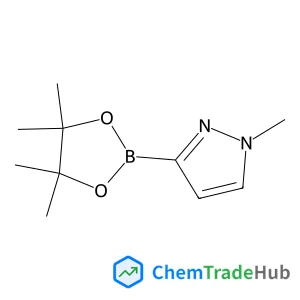
1-Methyl-3-(4,4,5,5-tetramethyl-1,3,2-dioxaborolan-2-yl)-1H-pyrazole
CAS番号:
1020174-04-2
分子式:
C10H17BN2O2

おすすめサプライヤー







免責事項
このページに表示される学術雑誌情報は、参考および研究目的のみを目的としています。当社は雑誌出版社とは提携しておらず、投稿の取り扱いも行っておりません。出版に関するお問い合わせは、各雑誌出版社に直接ご連絡ください。
表示されている情報に誤りがある場合は、support@chemtradehub.com までご連絡ください。迅速に確認し、対応いたします。