


Light-driven highly efficient glycosylation reactions
文献情報
出版日
2016-04-05
DOI
10.1039/C6QO00021E
インパクトファクター
5.281
著者
Run-Ze Mao, De-Cai Xiong, Qin Li, Jinyou Duan, Xin-Shan Ye
原文を見る
要旨
Glycosylation is unarguably the most important reaction in the field of glycochemistry. Photo-initiated reactions hold extraordinary potential in organic synthesis. Herein we report a novel light-driven strategy for the activation of thioglycosides via the merger of a CF3 radical pathway followed by the subsequent glycosylation with glycosyl acceptors. This protocol could efficiently activate thioglycosides, thereby greatly enhancing the substrate scope of reactions. In particular, the glycosylation reactions, which are completely inert under the existing photo-induced glycosylation conditions, proceeded smoothly in high yields. Many common protective groups were well tolerated under the coupling conditions. Both UV and visible light or even sunlight were used as the source of light for the reactions. The high efficiency of this light-driven glycosylation protocol was further highlighted by the rapid one-pot sequential assembly of oligosaccharides.
おすすめジャーナル

NDT & E International

Cellulose

Herald of the Russian Academy of Sciences

Biocatalysis and Biotransformation

Bioorganic & Medicinal Chemistry

Critical Reviews in Solid State and Materials Sciences

Journal of the Indian Institute of Science

Medicinal Chemistry Research

Atomization and Sprays

Polycyclic Aromatic Compounds
関連文献
Polycyclic aromatic hydrocarbons containing antiaromatic chalcogenopyrano[3,2-b]-chalcogenopyrans
Weinan Chen, Yujie Xie, Jianping Xu, Jia-Wei Cai, Gang Zhou
2023-11-23
Research Article
DOI: 10.1039/D3QO01708G
Advances in photoinduced radical–polar crossover cyclization (RPCC) of bifunctional alkenes
Meng Liu, Xinke Ouyang, Chenglong Xuan
2023-12-20
Review Article
DOI: 10.1039/D3QO01929B
Serine-mediated hydrazone ligation displaying insulin-like peptides on M13 phage pIII
Nan Zheng, Danny Hung-Chieh Chou
2023-10-24
Paper
DOI: 10.1039/D3OB01487H
Revision of the full stereochemistry of telomycin
Sandra Resa, Marta González, Fernando Reyes, Ignacio Pérez-Victoria
2023-11-23
Research Article
DOI: 10.1039/D3QO01411H
Photocatalytic formation of P–S bonds via CdSeS/CdZnS quantum dots under visible light irradiation
Zi-Jun Lei, Yue-Yue Zhang, Hui-Ling Lu, Fu-Gang Zhao, Jian-Hai Zhou, Xiaogang Peng
2023-11-23
Research Article
DOI: 10.1039/D3QO01560B
A catalyst-free cross-coupling of isocyanates and triarylboranes for secondary amide synthesis
You-Wei Wu, Mu-Xiang Chen, Yan Li, Lu-Min Hu, Lili Zhao, Zhenhua Jia, Xuefei Zhao, Xu-Hong Hu
2023-11-23
Research Article
DOI: 10.1039/D3QO01617J
A simple method for N-arylation of secondary amides/amines through a NaH-initiated aryne generation strategy
Yuanrui Jiang, Wenjing Zhu, Jiawen Huang, Fan Luo, Xiaobei Chen, Chunhui Fang, Xin Chen, Shihui Liu, Yanwei Hu, Shilei Zhang
2023-10-03
Research Article
DOI: 10.1039/D3QO01109G
Atroposelective synthesis of N–N axially chiral pyrrolyl(aza)-quinolinone by de novo ring formation
Qiwen Huang, Yanze Li, Cun Yang, Wendan Wu, Jingjie Hai, Xinyao Li
2023-12-04
Research Article
DOI: 10.1039/D3QO01877F
Facile access to thieno[2,3-b]thiophenes and poly-substituted thiophenes through divergent annulation of ketene 1,3-dithietanes
You Wu, Shuqi Wang, Bo Peng, Jie Cen
2023-11-28
Research Article
DOI: 10.1039/D3QO01941A
こちらもおすすめ
化合物よくある質問
6-苄基-6,7-二氢-5H-吡咯并3,4-b吡啶とは何ですか?
6-苄基-6,7-二氢-5H-吡咯并3,4-b吡啶は、CAS番号109966-30-5の化合物です。これは、6-ベンジル基を持つ6,7-二氢-5H-吡咯並みの化...
109966-30-56-Benzyl-6,7-dihydro...
化合物よくある質問
半硫酸奎宁单水水合物はどのように保存すればよいですか?
半硫酸奎宁单水水合物は、乾燥した涼しい場所に保管し、直射日光や湿気を避ける必要があります。保存温度は常温(15〜25℃)が適切で、湿度は40%以下を維持すること...
6119-70-6Quinine sulfate hydr...
化合物よくある質問
D-核糖-5-リン酸二ナトリウムとは何ですか?
D-核糖-5-リン酸二ナトリウムは、CAS番号18265-46-8を有する化合物で、D-核糖の5位付加部位にリン酸基が結合した化合物です。この化合物は、水溶性で...
18265-46-8Disodium (2R,3R,4R)-...
2257-52-5Isopropylhydrazine
化合物よくある質問
3-乙酰基-4-羟基喹啉-2(1H)-酮はどのように合成されますか?
3-乙酰基-4-羟基喹啉-2(1H)-酮は、ハイドロキノンと酢酸アセトイルアミドのアミド化反応により合成されます。この反応は塩基触媒を用いて行われ、選択性は良好...
26138-64-73-Acetyl-4-hydroxyqu...
2280037-51-44-Amino-1-(3-bipheny...
化合物よくある質問
5-溴-4-甲基-1H-吲唑とは何ですか?
5-溴-4-甲基-1H-吲唑は、CAS番号1082041-34-6の化学物質で、化学式はC10H9BrNです。この化合物は淡黄色の結晶性粉末で、吸湿性があります...
1082041-34-65-Bromo-4-methyl-1H-...
化合物よくある質問
3-(4メトキシフェニル)オキテナン-3カーボイル酸の代替品はありますか?
3-(4メトキシフェニル)オキテナン-3カーボイル酸の代替品は、その用途により異なりますが、例えば4-(メトキシフェニル)オキテナン-3カーボイル酸や、他のオキ...
1416323-25-53-(4-Methoxyphenyl)-...
化合物よくある質問
3-イリドオキシピロロ[2,3-b]ピリジン-5-カルボキシlic酸は安全ですか?
3-イリドオキシピロロ[2,3-b]ピリジン-5-カルボキシlic酸は危険な化合物ではありませんが、適切な手袋や保護眼鏡の使用を推奨します。誤って摂取または接触...
1060816-80-93-Iodo-1H-pyrrolo[2,...
化合物よくある質問
3-氟-4- iodobenolを取り扱う際の実験室安全事項は何ですか?
3-氟-4- iodobenolは可燃性を有し、強力な反応性を持つため、取り扱いには注意が必要です。PPE(個人保護具)の着用、ドラフトチャンバーの使用、漏洩時...
122927-84-83-Fluoro-4-iodopheno...
掲載誌
Organic Chemistry Frontiers

CiteScore:
7.8
自己引用率:
8.7%
年間論文数:
724
Organic Chemistry Frontiers publishes high-quality research from across organic chemistry. Emphases are placed on studies that make significant contributions to the field of organic chemistry by reporting either new or significantly improved protocols or methodologies. Topics include, but are not limited to the following: Organic synthesis Development of synthetic methodologies Catalysis Natural products Functional organic materials Supramolecular and macromolecular chemistry Physical and computational organic chemistry
おすすめ化合物
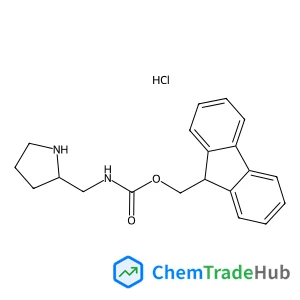
(S)-(9H-Fluoren-9-yl)methyl (pyrrolidin-2-ylmethyl)carbamate hydrochloride
CAS番号:
1217813-15-4
分子式:
C20H23ClN2O2
おすすめサプライヤー



免責事項
このページに表示される学術雑誌情報は、参考および研究目的のみを目的としています。当社は雑誌出版社とは提携しておらず、投稿の取り扱いも行っておりません。出版に関するお問い合わせは、各雑誌出版社に直接ご連絡ください。
表示されている情報に誤りがある場合は、support@chemtradehub.com までご連絡ください。迅速に確認し、対応いたします。