












![[4-Chloro-3-(diethylcarbamoyl)phenyl]boronic acid structure](https://static.chemtradehub.com/structs/871/871332-68-2-0e3b.webp "[4-Chloro-3-(diethylcarbamoyl)phenyl]boronic acid structure")
Effect of composition and coating on the interparticle interactions and magnetic hardness of MFe2O4 (M = Fe, Co, Zn) nanoparticles
文献情報
出版日
2017-02-23
DOI
10.1039/C6CP08743D
インパクトファクター
3.676
著者
M. Virumbrales-del Olmo, A. Delgado-Cabello, A. Andrada-Chacón, J. Sánchez-Benítez, E. Urones-Garrote, V. Blanco-Gutiérrez, M. J. Torralvo, R. Sáez-Puche
原文を見る
要旨
Single domain superparamagnetic ferrite nanoparticles with the composition MFe2O4 (M = Fe, Co, Zn) have been prepared by thermal decomposition of metal acetylacetonates in diphenyl ether or dibenzyl ether, using oleic acid in the presence of oleylamine as a stabilizing agent. The Fe, Co and Zn ferrite nanoparticles are monodisperse with diameters of 4.9, 4.4 and 4.7 nm, respectively. The TG and IR results indicate that four or six carboxylate groups per nm2 are bonded at the surface of the particles acting as chelating and/or bridging bidentate ligands depending on the composition. The oleate groups minimize the interparticle interactions in Fe and Zn ferrite samples, while in the Co ferrite sample dipolar interactions produce broad maxima in the ZFC and energy barriers distribution curves. The inversion degree has been estimated from the Raman spectra and the obtained x values have been used to calculate the saturation magnetization and compare them with the experimental MS values. Compared to bulk materials, the magnetization value is higher for the Zn ferrite sample due to its mixed spinel cation distribution. For the Co ferrite sample, and probably for the Fe one, the low value of saturation magnetization seems to be due to the surface disordered layer of canted spins. Compared to non-coated nanoparticles with the same composition and similar size, the oleate groups, covalently bonded to the superficial cations, increase the anisotropy field and decrease the magnetization.
関連文献
Electrosorption at functional interfaces: from molecular-level interactions to electrochemical cell design
Xiao Su, T. Alan Hatton
2017-06-29
Perspective
DOI: 10.1039/C7CP02822A
Charge carrier mobility in one-dimensional aligned π-stacks of conjugated small molecules with a benzothiadiazole central unit
2017-02-27
Paper
DOI: 10.1039/C7CP00798A
Tuning interfacial complexation in aqueous two phase systems with polyelectrolytes and nanoparticles for compound all water emulsion bodies (AWE-somes)
Sarah D. Hann, Daeyeon Lee, Kathleen J. Stebe
2017-06-20
Paper
DOI: 10.1039/C7CP02809A
First principles study of the Mn-doping effect on the physical and chemical properties of mullite-family Al2SiO5
Chaoping Liang, Yongping Zheng, Nickolas Ashburn, Young Jun Oh, Fantai Kong, Chenxi Zhang, Yifan Nie, Jian Sun, Kaihua He, Yu Ye, Rong Chen, Kyeongjae Cho
2017-08-29
Paper
DOI: 10.1039/C7CP04611A
A bio-inspired strategy for the interfacial assembly of graphene oxide with in situ generated Ag/AgCl: designing sustainable hybrid photocatalysts
Gousia Begum
2017-02-14
Paper
DOI: 10.1039/C6CP07854K
Bias induced spin transitions of spin crossover molecules: the role of charging effect
2017-02-16
Paper
DOI: 10.1039/C6CP08265C
Emergence of novel hydrogen chlorides under high pressure
Gilles Frapper
2017-03-01
Paper
DOI: 10.1039/C6CP08708F
A comparison of the solvation structure and dynamics of the lithium ion in linear organic carbonates with different alkyl chain lengths
K. D. Fulfer, D. G. Kuroda
2017-08-29
Paper
DOI: 10.1039/C7CP05096H
Unifying hydrotropy under Gibbs phase rule
Seishi Shimizu
2017-05-11
Perspective
DOI: 10.1039/C7CP02132A
Ligand size dependence of U–N and U–O bond character in a series of uranyl hexaphyrin complexes: quantum chemical simulation and density based analysis
Poppy Di Pietro, Andrew Kerridge
2017-02-22
Paper
DOI: 10.1039/C6CP08783C
こちらもおすすめ
化合物よくある質問
3-(2-オキサプロピル)ベンzoic酸はどのように合成されますか?
3-(2-オキサプロピル)ベンzoic酸は、ベンzoic酸とプロパノ酸をヒドロキシム化合物として反応させて生成します。具体的には、ベンzoic酸とプロパノ酸を反...
205927-63-53-(2-Oxopropyl)benzo...
114873-01-73-Fluoro-N-{[(2-meth...
化合物よくある質問
4-メチル-4-ピペリジニル-1-ピロリドイン甲酸の主な用途は何ですか?
4-メチル-4-ピペリジニル-1-ピロリドイン甲酸は、主に医薬品の合成材料や研究用物質として使用されます。さらに、一部の薬理学的研究にも応用されています。
885523-47-7(4-Methyl-4-piperidi...
化合物よくある質問
Biotin-PEG3-oxyamine HCl塩について、適切な化合物名称に適用される法規ガイドラインは何ですか?
Biotin-PEG3-oxyamine HCl塩は、GHS( Globally Harmonized System of Classification and...
1786206-22-1Biotin-PEG3-oxyamine...
化合物よくある質問
N-(4-イソチオシアネートフェニル)-2-メトキシアリニンはどのように合成されますか?
N-(4-イソチオシアネートフェニル)-2-メトキシアリニンは、4-イソチオシアノフェノールと2-メトキシアリニルアミンのアミニド反応を用いて合成されます。この...
915919-57-2N-(4-Isothiocyanatop...
化合物よくある質問
金粉蕨亭2'-O-葡萄糖甙の主な用途は何ですか?
金粉蕨亭2'-O-葡萄糖甙は主に薬理研究や医薬品製造に使用され、抗炎症作用や抗がん作用などがあります。また、その構造や性質から、合成化学や化学生理学の研究にも用...
76947-60-92-(7-Hydroxy-2,2,4,6...
化合物よくある質問
2-(2-ニトロフェニル)酢酸ヒドライドの物理化学的性質は何ですか?
2-(2-ニトロフェニル)酢酸ヒドライドのCAS番号は114953-81-0です。この化合物は白色結晶性粉末で、分子量は244.12です。水溶性は限られており、...
114953-81-02-(2-Nitrophenyl)ace...
化合物よくある質問
5-(ヒドロキシメチル)-2-チオキソ-2,3-ジヒドロピリミジン-4(1H)-オンを取り扱う際の実験室安全事項は何ですか?
この化合物は高活性のため、取り扱いには注意が必要です。PPE(個人保護具)としてゴーグル、ガントリー、および防滴シールドを着用することが推奨されます。ドラフトチ...
93185-31-05-(Hydroxymethyl)-2-...
化合物よくある質問
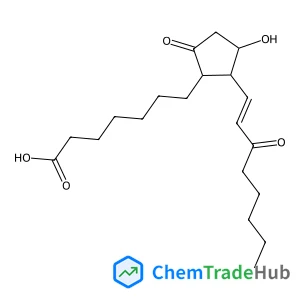
11-脱氢血栓烷 b2の市場動向や研究トレンドはどうですか?
11-脱氢血栓烷 b2は、血栓溶解・抗凝固作用に関する研究で注目を集めています。特に心血管疾患の治療法開発において、市場の需要が高まっています。研究トレンドとし...
67910-12-77-{(2R,3S,4S)-4-Hydr...
化合物よくある質問
3,3-二甲基哌啶-4-酮はどのように保存すればよいですか?
3,3-二甲基哌啶-4-酮は避光、常温、乾燥した場所で保存してください。容器は密閉し、遠くから火源を離して保管することを確認してください。
150668-82-93,3-Dimethyl-4-piper...
掲載誌
Physical Chemistry Chemical Physics

CiteScore:
5.5
自己引用率:
10.3%
年間論文数:
3036
Physical Chemistry Chemical Physics (PCCP) is an international journal co-owned by 19 physical chemistry and physics societies from around the world. This journal publishes original, cutting-edge research in physical chemistry, chemical physics and biophysical chemistry. To be suitable for publication in PCCP, articles must include significant innovation and/or insight into physical chemistry; this is the most important criterion that reviewers and Editors will judge against when evaluating submissions. The journal has a broad scope and welcomes contributions spanning experiment, theory, computation and data science. Topical coverage includes spectroscopy, dynamics, kinetics, statistical mechanics, thermodynamics, electrochemistry, catalysis, surface science, quantum mechanics, quantum computing and machine learning. Interdisciplinary research areas such as polymers and soft matter, materials, nanoscience, energy, surfaces/interfaces, and biophysical chemistry are welcomed if they demonstrate significant innovation and/or insight into physical chemistry. Joined experimental/theoretical studies are particularly appreciated when complementary and based on up-to-date approaches.
おすすめ化合物
![(2E)-4-[(1R,2S,8R,19S,21R)-14-Hydroxy-11-isopropenyl-8,23,23-trimethyl-5-(3-methyl-2-buten-1-yl)-16,20-dioxo-3,7,22-trioxaheptacyclo[17.4.1.1~8,12~.0~2,17~.0~2,21~.0~4,15~.0~6,13~]pentacosa-4(15),5,13
,17-tetraen-21-yl]-2-methyl-2-butenoic acid structure](https://static.chemtradehub.com/structs/173/173867-04-4-d2d3.webp "(2E)-4-[(1R,2S,8R,19S,21R)-14-Hydroxy-11-isopropenyl-8,23,23-trimethyl-5-(3-methyl-2-buten-1-yl)-16,20-dioxo-3,7,22-trioxaheptacyclo[17.4.1.1~8,12~.0~2,17~.0~2,21~.0~4,15~.0~6,13~]pentacosa-4(15),5,13
,17-tetraen-21-yl]-2-methyl-2-butenoic acid structure")
![2-[({[(2-Methyl-2-propanyl)oxy]carbonyl}amino)methyl]isonicotinic acid structure](https://static.chemtradehub.com/structs/473/473924-63-9-973b.webp "2-[({[(2-Methyl-2-propanyl)oxy]carbonyl}amino)methyl]isonicotinic acid structure")
2-[({[(2-Methyl-2-propanyl)oxy]carbonyl}amino)methyl]isonicotinic acid
CAS番号:
473924-63-9
分子式:
C12H16N2O4
おすすめサプライヤー




免責事項
このページに表示される学術雑誌情報は、参考および研究目的のみを目的としています。当社は雑誌出版社とは提携しておらず、投稿の取り扱いも行っておりません。出版に関するお問い合わせは、各雑誌出版社に直接ご連絡ください。
表示されている情報に誤りがある場合は、support@chemtradehub.com までご連絡ください。迅速に確認し、対応いたします。