












A comparison of the solvation structure and dynamics of the lithium ion in linear organic carbonates with different alkyl chain lengths
文献情報
出版日
2017-08-29
DOI
10.1039/C7CP05096H
インパクトファクター
3.676
著者
K. D. Fulfer, D. G. Kuroda
原文を見る
要旨
The structure and dynamics of electrolytes composed of lithium hexafluorophosphate (LiPF6) in dimethyl carbonate, ethyl methyl carbonate, and diethyl carbonate were investigated using a combination of linear and two-dimensional infrared spectroscopies. The solutions studied here have a LiPF6 concentration of X(LiPF6) = 0.09, which is typically found in commercial lithium ion batteries. This study focuses on comparing the differences in the solvation shell structure and dynamics produced by linear organic carbonates of different alkyl chain lengths. The IR experiments show that either linear carbonate forms a tetrahedral solvation shell (coordination number of 4) around the lithium ion irrespective of whether the solvation shell has anions in close proximity to the carbonates. Moreover, analysis of the absorption cross sections via FTIR and DFT computations reveals a distortion in the angle formed by Li+–OC which decreases from the expected 180° when the alkyl chains of the carbonate are lengthened. In addition, our findings also reveal that, likely due to its asymmetric structure, ethyl methyl carbonate has a significantly more distorted tetrahedral lithium ion solvation shell than either of the other two investigated carbonates. IR photon echo studies further demonstrate that the motions of the solvation shell have a time scale of a few picoseconds for all three linear carbonates. Interestingly, a slowdown of the in place-motions of the first solvation shell is observed when the carbonate has a longer alkyl chain length irrespective of the symmetry. In addition, vibrational energy transfer with a time scale of tens of picoseconds is observed between strongly coupled modes arising from the solvation shell structure of the Li+ which corroborates the modeling of these solvation shells in terms of highly coupled vibrational states. Results of this study provide new insights into the molecular structure and dynamics of the lithium ion electrolyte components as a function of solvent structure.
関連文献
Photophysical characterization and time-resolved spectroscopy of a anthradithiophene dimer: exploring the role of conformation in singlet fission
Jacob C. Dean, Ruomeng Zhang, Rawad K. Hallani, Ryan D. Pensack, Samuel N. Sanders, Daniel G. Oblinsky, Sean R. Parkin, Luis M. Campos, John E. Anthony, Gregory D. Scholes
2017-08-18
Paper
DOI: 10.1039/C7CP03774K
Modelling pH and potential in dynamic structures of the water/Pt(111) interface on the atomic scale
Martin Hangaard Hansen, Anders Nilsson, Jan Rossmeisl
2017-08-15
Paper
DOI: 10.1039/C7CP03576D
The mechanism of excimer formation: an experimental and theoretical study on the pyrene dimer
Joscha Hoche, Hans-Christian Schmitt, Alexander Humeniuk, Ingo Fischer, Roland Mitrić, Merle I. S. Röhr
2017-08-30
Paper
DOI: 10.1039/C7CP03990E
Thermal compaction of the intrinsically disordered protein tau: entropic, structural, and hydrophobic factors
Anna Battisti, Gabriele Ciasca, Alessandro Grottesi, Alexander Tenenbaum
2017-02-23
Paper
DOI: 10.1039/C6CP07683A
Constructing accurate interaction potentials to describe the microsolvation of protonated methane by helium atoms
Felix Uhl, Harald Forbert, Dominik Marx
2017-03-03
Paper
DOI: 10.1039/C7CP00652G
Two-photon absorption of the spatially confined LiH molecule
Justyna Kozłowska, Marta Chołuj, Robert Zaleśny, Wojciech Bartkowiak
2017-02-15
Paper
DOI: 10.1039/C6CP07368A
Dark excitons and tunable optical gap in graphene nanodots
Yingjie Zhang, Yang Li
2017-08-08
Paper
DOI: 10.1039/C7CP04591C
First principles study of oxygen molecule interaction with the graphitic active sites of a boron-doped pyrolyzed Fe–N–C catalyst
Febdian Rusydi
2017-08-15
Paper
DOI: 10.1039/C7CP02390A
Anisotropic carrier mobility in buckled two-dimensional GaN
Lijia Tong, Junjie He, Min Yang, Zheng Chen, Jing Zhang, Yanli Lu, Ziyuan Zhao
2017-08-10
Paper
DOI: 10.1039/C7CP04117A
こちらもおすすめ
化合物よくある質問
3-(2-オキサプロピル)ベンzoic酸はどのように合成されますか?
3-(2-オキサプロピル)ベンzoic酸は、ベンzoic酸とプロパノ酸をヒドロキシム化合物として反応させて生成します。具体的には、ベンzoic酸とプロパノ酸を反...
205927-63-53-(2-Oxopropyl)benzo...
114873-01-73-Fluoro-N-{[(2-meth...
化合物よくある質問
4-メチル-4-ピペリジニル-1-ピロリドイン甲酸の主な用途は何ですか?
4-メチル-4-ピペリジニル-1-ピロリドイン甲酸は、主に医薬品の合成材料や研究用物質として使用されます。さらに、一部の薬理学的研究にも応用されています。
885523-47-7(4-Methyl-4-piperidi...
化合物よくある質問
Biotin-PEG3-oxyamine HCl塩について、適切な化合物名称に適用される法規ガイドラインは何ですか?
Biotin-PEG3-oxyamine HCl塩は、GHS( Globally Harmonized System of Classification and...
1786206-22-1Biotin-PEG3-oxyamine...
化合物よくある質問
N-(4-イソチオシアネートフェニル)-2-メトキシアリニンはどのように合成されますか?
N-(4-イソチオシアネートフェニル)-2-メトキシアリニンは、4-イソチオシアノフェノールと2-メトキシアリニルアミンのアミニド反応を用いて合成されます。この...
915919-57-2N-(4-Isothiocyanatop...
化合物よくある質問
金粉蕨亭2'-O-葡萄糖甙の主な用途は何ですか?
金粉蕨亭2'-O-葡萄糖甙は主に薬理研究や医薬品製造に使用され、抗炎症作用や抗がん作用などがあります。また、その構造や性質から、合成化学や化学生理学の研究にも用...
76947-60-92-(7-Hydroxy-2,2,4,6...
化合物よくある質問
2-(2-ニトロフェニル)酢酸ヒドライドの物理化学的性質は何ですか?
2-(2-ニトロフェニル)酢酸ヒドライドのCAS番号は114953-81-0です。この化合物は白色結晶性粉末で、分子量は244.12です。水溶性は限られており、...
114953-81-02-(2-Nitrophenyl)ace...
化合物よくある質問
5-(ヒドロキシメチル)-2-チオキソ-2,3-ジヒドロピリミジン-4(1H)-オンを取り扱う際の実験室安全事項は何ですか?
この化合物は高活性のため、取り扱いには注意が必要です。PPE(個人保護具)としてゴーグル、ガントリー、および防滴シールドを着用することが推奨されます。ドラフトチ...
93185-31-05-(Hydroxymethyl)-2-...
化合物よくある質問
11-脱氢血栓烷 b2の市場動向や研究トレンドはどうですか?
11-脱氢血栓烷 b2は、血栓溶解・抗凝固作用に関する研究で注目を集めています。特に心血管疾患の治療法開発において、市場の需要が高まっています。研究トレンドとし...
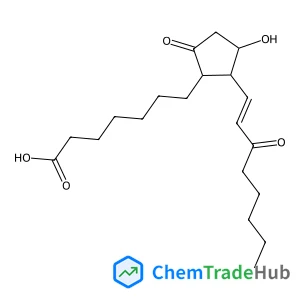
67910-12-77-{(2R,3S,4S)-4-Hydr...
化合物よくある質問
3,3-二甲基哌啶-4-酮はどのように保存すればよいですか?
3,3-二甲基哌啶-4-酮は避光、常温、乾燥した場所で保存してください。容器は密閉し、遠くから火源を離して保管することを確認してください。
150668-82-93,3-Dimethyl-4-piper...
掲載誌
Physical Chemistry Chemical Physics

CiteScore:
5.5
自己引用率:
10.3%
年間論文数:
3036
Physical Chemistry Chemical Physics (PCCP) is an international journal co-owned by 19 physical chemistry and physics societies from around the world. This journal publishes original, cutting-edge research in physical chemistry, chemical physics and biophysical chemistry. To be suitable for publication in PCCP, articles must include significant innovation and/or insight into physical chemistry; this is the most important criterion that reviewers and Editors will judge against when evaluating submissions. The journal has a broad scope and welcomes contributions spanning experiment, theory, computation and data science. Topical coverage includes spectroscopy, dynamics, kinetics, statistical mechanics, thermodynamics, electrochemistry, catalysis, surface science, quantum mechanics, quantum computing and machine learning. Interdisciplinary research areas such as polymers and soft matter, materials, nanoscience, energy, surfaces/interfaces, and biophysical chemistry are welcomed if they demonstrate significant innovation and/or insight into physical chemistry. Joined experimental/theoretical studies are particularly appreciated when complementary and based on up-to-date approaches.
おすすめ化合物
![4-[(2,4-Dihydroxyphenyl)diazenyl]-5-hydroxy-2,7-naphthalenedisulfonic acid structure](https://static.chemtradehub.com/structs/362/3627-01-8-79ac.webp "4-[(2,4-Dihydroxyphenyl)diazenyl]-5-hydroxy-2,7-naphthalenedisulfonic acid structure")
4-[(2,4-Dihydroxyphenyl)diazenyl]-5-hydroxy-2,7-naphthalenedisulfonic acid
CAS番号:
3627-01-8
分子式:
C16H12N2O9S2
おすすめサプライヤー


免責事項
このページに表示される学術雑誌情報は、参考および研究目的のみを目的としています。当社は雑誌出版社とは提携しておらず、投稿の取り扱いも行っておりません。出版に関するお問い合わせは、各雑誌出版社に直接ご連絡ください。
表示されている情報に誤りがある場合は、support@chemtradehub.com までご連絡ください。迅速に確認し、対応いたします。