












Photomanipulation of the anchoring strength using a spontaneously adsorbed layer of azo dendrimers
文献情報
出版日
2017-03-02
DOI
10.1039/C6CP08461C
インパクトファクター
3.676
著者
Hajnalka Nádasi, Ralf Stannarius, Alexey Eremin, Ken Ishikawa, Osamu Haba, Koichiro Yonetake, Hideo Takezoe, Fumito Araoka
原文を見る
要旨
We systematically studied the photoinduced anchoring transition in a nematic liquid crystal containing azo dendrimers. Because the azo dendrimers in the trans-isomer state were spontaneously adsorbed at substrate surfaces, which was confirmed by optical second-harmonic generation (SHG), a homeotropic orientation was established at the first stage. Ultraviolet (UV) light irradiation triggered a transition into a planar state which was accompanied by a suppression of the SH generation. The monotonic decrease of the effective scalar order parameter with increasing UV light intensity was determined by polarized attenuated total reflection infrared (ATR-IR) spectroscopy. The variation of anchoring strength and extrapolation length was evaluated by observing the Fréedericksz transition as a function of UV light intensity at a certain visible (VIS) light intensity. Such a photoinduced variation can be interpreted as a variation of the anchoring strength depending on the trans/cis ratio at the surfaces based on a modified Rapini-Papoular model. Thus, this system provides the opportunity for a controlled change in the anchoring strength.
関連文献
Thermal compaction of the intrinsically disordered protein tau: entropic, structural, and hydrophobic factors
Anna Battisti, Gabriele Ciasca, Alessandro Grottesi, Alexander Tenenbaum
2017-02-23
Paper
DOI: 10.1039/C6CP07683A
Understanding the influence of low-frequency vibrations on the hydrogen bonds of acetic acid and acetamide dimers
Christopher Copeland, Omkaran Menon, D. Majumdar, Szczepan Roszak, Jerzy Leszczynski
2017-08-25
Paper
DOI: 10.1039/C7CP04224H
A bio-inspired strategy for the interfacial assembly of graphene oxide with in situ generated Ag/AgCl: designing sustainable hybrid photocatalysts
Gousia Begum
2017-02-14
Paper
DOI: 10.1039/C6CP07854K
First-principles computation of electron transfer and reaction rate at a perovskite cathode for hydrogen production
C. T. Liu, J. F. Chu, C. K. Lin, C. W. Hong
2017-02-24
Paper
DOI: 10.1039/C7CP00541E
Pd-P nanoparticles supported on PxOy-incorporated carbon nanotubes for enhanced methanol oxidation in an alkaline medium
Yanan Xie, Weizhen Yu, Juan Wang, Yifei Wu, Shuo Niu, Wenyao Guo, Tsungwu Lin, Lidong Shao
2017-08-18
Paper
DOI: 10.1039/C7CP04540A
Water and CO (co-)adsorption on pseudomorphic Pt films on Ru(0001) – a low-temperature scanning tunneling microscopy study
Martin Schilling, Sylvain Brimaud, R. Jürgen Behm
2017-08-04
Paper
DOI: 10.1039/C7CP03961A
Phase separation and physico-chemical processes at microscopic and macroscopic levels in MWCNT laden polymer blends using a unique droplet based architecture
Binita Pathak, Goutam Prasanna Kar, Suryasarathi Bose, Saptarshi Basu
2017-08-29
Paper
DOI: 10.1039/C7CP03621C
Solid surface vs. liquid surface: nanoarchitectonics, molecular machines, and DNA origami
Taizo Mori, Waka Nakanishi, Jonathan P. Hill
2017-06-20
Perspective
DOI: 10.1039/C7CP02280H
Comparison of classical reaction paths and tunneling paths studied with the semiclassical instanton theory
Jan Meisner, Max N. Markmeyer, Matthias U. Bohner, Johannes Kästner
2017-08-08
Paper
DOI: 10.1039/C7CP03722H
First principles study of the Mn-doping effect on the physical and chemical properties of mullite-family Al2SiO5
Chaoping Liang, Yongping Zheng, Nickolas Ashburn, Young Jun Oh, Fantai Kong, Chenxi Zhang, Yifan Nie, Jian Sun, Kaihua He, Yu Ye, Rong Chen, Kyeongjae Cho
2017-08-29
Paper
DOI: 10.1039/C7CP04611A
こちらもおすすめ
化合物よくある質問
3-(2-オキサプロピル)ベンzoic酸はどのように合成されますか?
3-(2-オキサプロピル)ベンzoic酸は、ベンzoic酸とプロパノ酸をヒドロキシム化合物として反応させて生成します。具体的には、ベンzoic酸とプロパノ酸を反...
205927-63-53-(2-Oxopropyl)benzo...
114873-01-73-Fluoro-N-{[(2-meth...
化合物よくある質問
4-メチル-4-ピペリジニル-1-ピロリドイン甲酸の主な用途は何ですか?
4-メチル-4-ピペリジニル-1-ピロリドイン甲酸は、主に医薬品の合成材料や研究用物質として使用されます。さらに、一部の薬理学的研究にも応用されています。
885523-47-7(4-Methyl-4-piperidi...
化合物よくある質問
Biotin-PEG3-oxyamine HCl塩について、適切な化合物名称に適用される法規ガイドラインは何ですか?
Biotin-PEG3-oxyamine HCl塩は、GHS( Globally Harmonized System of Classification and...
1786206-22-1Biotin-PEG3-oxyamine...
化合物よくある質問
N-(4-イソチオシアネートフェニル)-2-メトキシアリニンはどのように合成されますか?
N-(4-イソチオシアネートフェニル)-2-メトキシアリニンは、4-イソチオシアノフェノールと2-メトキシアリニルアミンのアミニド反応を用いて合成されます。この...
915919-57-2N-(4-Isothiocyanatop...
化合物よくある質問
金粉蕨亭2'-O-葡萄糖甙の主な用途は何ですか?
金粉蕨亭2'-O-葡萄糖甙は主に薬理研究や医薬品製造に使用され、抗炎症作用や抗がん作用などがあります。また、その構造や性質から、合成化学や化学生理学の研究にも用...
76947-60-92-(7-Hydroxy-2,2,4,6...
化合物よくある質問
2-(2-ニトロフェニル)酢酸ヒドライドの物理化学的性質は何ですか?
2-(2-ニトロフェニル)酢酸ヒドライドのCAS番号は114953-81-0です。この化合物は白色結晶性粉末で、分子量は244.12です。水溶性は限られており、...
114953-81-02-(2-Nitrophenyl)ace...
化合物よくある質問
5-(ヒドロキシメチル)-2-チオキソ-2,3-ジヒドロピリミジン-4(1H)-オンを取り扱う際の実験室安全事項は何ですか?
この化合物は高活性のため、取り扱いには注意が必要です。PPE(個人保護具)としてゴーグル、ガントリー、および防滴シールドを着用することが推奨されます。ドラフトチ...
93185-31-05-(Hydroxymethyl)-2-...
化合物よくある質問
11-脱氢血栓烷 b2の市場動向や研究トレンドはどうですか?
11-脱氢血栓烷 b2は、血栓溶解・抗凝固作用に関する研究で注目を集めています。特に心血管疾患の治療法開発において、市場の需要が高まっています。研究トレンドとし...
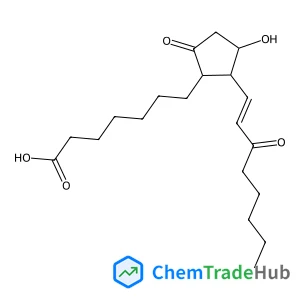
67910-12-77-{(2R,3S,4S)-4-Hydr...
化合物よくある質問
3,3-二甲基哌啶-4-酮はどのように保存すればよいですか?
3,3-二甲基哌啶-4-酮は避光、常温、乾燥した場所で保存してください。容器は密閉し、遠くから火源を離して保管することを確認してください。
150668-82-93,3-Dimethyl-4-piper...
掲載誌
Physical Chemistry Chemical Physics

CiteScore:
5.5
自己引用率:
10.3%
年間論文数:
3036
Physical Chemistry Chemical Physics (PCCP) is an international journal co-owned by 19 physical chemistry and physics societies from around the world. This journal publishes original, cutting-edge research in physical chemistry, chemical physics and biophysical chemistry. To be suitable for publication in PCCP, articles must include significant innovation and/or insight into physical chemistry; this is the most important criterion that reviewers and Editors will judge against when evaluating submissions. The journal has a broad scope and welcomes contributions spanning experiment, theory, computation and data science. Topical coverage includes spectroscopy, dynamics, kinetics, statistical mechanics, thermodynamics, electrochemistry, catalysis, surface science, quantum mechanics, quantum computing and machine learning. Interdisciplinary research areas such as polymers and soft matter, materials, nanoscience, energy, surfaces/interfaces, and biophysical chemistry are welcomed if they demonstrate significant innovation and/or insight into physical chemistry. Joined experimental/theoretical studies are particularly appreciated when complementary and based on up-to-date approaches.
おすすめ化合物
おすすめサプライヤー





免責事項
このページに表示される学術雑誌情報は、参考および研究目的のみを目的としています。当社は雑誌出版社とは提携しておらず、投稿の取り扱いも行っておりません。出版に関するお問い合わせは、各雑誌出版社に直接ご連絡ください。
表示されている情報に誤りがある場合は、support@chemtradehub.com までご連絡ください。迅速に確認し、対応いたします。