












Reactive collisions for NO(2Π) + N(4S) at temperatures relevant to the hypersonic flight regime
文献情報
出版日
2016-12-15
DOI
10.1039/C6CP07142B
インパクトファクター
3.676
著者
Otoniel Denis-Alpizar, Raymond J. Bemish
原文を見る
要旨
The NO(X2Π) + N(4S) reaction which occurs entirely in the triplet manifold of N2O is investigated using quasiclassical trajectories and quantum simulations. Fully-dimensional potential energy surfaces for the 3A′ and 3A′′ states are computed at the MRCI+Q level of theory and are represented using a reproducing kernel Hilbert space. The N-exchange and N2-formation channels are followed by using the multi-state adiabatic reactive molecular dynamics method. Up to 5000 K these reactions occur predominantly on the N2O 3A′′ surface. However, for higher temperatures the contributions of the 3A′ and 3A′′ states are comparable and the final state distributions are far from thermal equilibrium. From the trajectory simulations a new set of thermal rate coefficients of up to 20 000 K is determined. Comparison of the quasiclassical trajectory and quantum simulations shows that a classical description is a good approximation as determined from the final state analysis.
関連文献
Influence of the mixed organic cation ratio in lead iodide based perovskite on the performance of solar cells
Manuel Salado, Laura Calio, Rüdiger Berger, Samrana Kazim, Shahzada Ahmad
2016-09-02
Paper
DOI: 10.1039/C6CP03851D
Understanding the role of silica nanospheres with their light scattering and energy barrier properties in enhancing the photovoltaic performance of ZnO based solar cells
Avishek Banik, Mohammad Shaad Ansari, Tushar Kanta Sahu, Mohammad Qureshi
2016-09-14
Paper
DOI: 10.1039/C6CP05544C
Structural and electronic features of small hybrid organic–inorganic halide perovskite clusters: a theoretical analysis
Giacomo Giorgi, Tomohiro Yoshihara
2016-07-27
Paper
DOI: 10.1039/C6CP03193E
L2,3-edges absorption spectra of a 2D complex system: a theoretical modelling
S. Carlotto, M. Sambi, F. Sedona, A. Vittadini, J. Bartolomé, F. Bartolomé
2016-09-14
Paper
DOI: 10.1039/C6CP04787D
Black-box determination of temperature-dependent susceptibilities for crystalline organic radicals with complex magnetic topologies
Steffen Eusterwiemann, David R. Matuschek, Constantin G. Daniliuc, Oliver Janka, Rainer Pöttgen, Armido Studer
2016-10-03
Paper
DOI: 10.1039/C6CP05875B
Physical chemistry of hybrid perovskite solar cells
Aron Walsh, Nitin P. Padure, Sang Il Seok
2016-09-02
Editorial
DOI: 10.1039/C6CP90212J
Direct comparison of 3-centre and 4-centre HBr elimination pathways in methyl-substituted vinyl bromides
Shubhrangshu Pandit, Balázs Hornung, Andrew J. Orr-Ewing
2016-09-21
Paper
DOI: 10.1039/C6CP05393A
Cation–cation and anion–anion complexes stabilized by halogen bonds
David Quiñonero, Ibon Alkorta, José Elguero
2016-09-09
Paper
DOI: 10.1039/C6CP03662G
How to regulate energy levels and hole mobility of spiro-type hole transport materials in perovskite solar cells
Wei-Jie Chi, Ping-Ping Sun, Ze-Sheng Li
2016-07-07
Communication
DOI: 10.1039/C6CP03316D
こちらもおすすめ
化合物よくある質問
4'-ブロモビフェニル-3-メトークシーディ.ActionBarはどのように保存すればよいですか?
4'-ブロモビフェニル-3-メトークシーディ.ActionBarは、冷暗所で、直射日光を避け、密栓の容器に保存し、遠隔場所に保管してください。温度は常温(0〜2...
149506-25-24'-Bromo-biphenyl-3-...
2947-60-6(3-Methylphenyl)acet...
化合物よくある質問
2-異丙基フェニルヒドラジン塩酸塩とは何ですか?
2-異丙基フェニルヒドラジン塩酸塩は、CAS番号58928-82-8を有する化合物で、構造式はC11H14N2HClです。これは塩基性化合物であり、水に溶けやす...
58928-82-8(2-Isopropylphenyl)h...
化合物よくある質問
5-(4-クロロフェニル)-4H-1,2,4-三氮唑-3-アミンを取り扱う際の実験室安全事項は何ですか?
5-(4-クロロフェニル)-4H-1,2,4-三氮唑-3-アミンは取り扱いに注意が必要です。PPEとして防塵マスク、ゴーグル、手袋を使用し、ドラフトチャンバーを...
98554-00-85-(4-Chlorophenyl)-1...
化合物よくある質問
去甲基雷贝拉唑硫醚はどのように合成されますか?
去甲基雷贝拉唑硫醚は、ベンジミダゾール硫化物と3-メチル-4-ピリジノールの反応によって合成されます。具体的には、2-チオキシドベンジミダゾールと3-メチル-4...
117976-91-73-({2-[(1H-Benzimida...
化合物よくある質問
2-ブロモ-5-フロロ-N-(2-フェノールメチル)ベンゼンウレアは安全ですか?
2-ブロモ-5-フロロ-N-(2-フェノールメチル)ベンゼンウレアは、毒性や刺激性の実験データに基づき、適切な取扱いと防護措置を講じることで安全に使用できます。...
923722-86-52-Bromo-5-fluoro-N-(...
化合物よくある質問
対甲苯磺酸酯-四聚乙二醇-四氢吡喃醚の物理化学的性質は何ですか?
対甲苯磺酸酯-四聚乙二醇-四氢吡喃醚のCAS番号は86259-89-4です。この化合物は無色の液体で、分子量は約724.8です。高濃度では溶血性が報告されており...
86259-89-42-(2-{2-[2-(Tetrahyd...
化合物よくある質問
2-(3-(二氟甲基)-4-氟苯基)-4,4,5,5-四甲基-1,3,2-二噁硼戊環はどのように保存すればよいですか?
2-(3-(二氟甲基)-4-氟苯基)-4,4,5,5-四甲基-1,3,2-二噁硼戊環は、室温で暗い場所に保管し、直射日光から遠ざけ、容器は密閉状態で保存してくだ...
445303-65-12-[3-(difluoromethyl...
化合物よくある質問
6-アミノ-5-クロロ-2-シクロプロピルピリミジンカルボン酸の代替品はありますか?
この化合物の代替品には、ピロリミジン酸やその類似物、またピロリミジンカルボン酸の他の異性体があります。これらの代替品は、特定の化学反応や目的に応じて選択すること...
858956-08-86-Amino-5-chloro-2-c...
化合物よくある質問
5-クロロベンゾ[1,3]二オキセイン-4-アミンに適用される法規ガイドラインは何ですか?
5-クロロベンゾ[1,3]二オキセイン-4-アミンはCAS番号379228-45-2に該当します。この化合物はGHS分類でH314(接触により急性毒性がある)と...
379228-45-25-Chloro-1,3-benzodi...
掲載誌
Physical Chemistry Chemical Physics

CiteScore:
5.5
自己引用率:
10.3%
年間論文数:
3036
Physical Chemistry Chemical Physics (PCCP) is an international journal co-owned by 19 physical chemistry and physics societies from around the world. This journal publishes original, cutting-edge research in physical chemistry, chemical physics and biophysical chemistry. To be suitable for publication in PCCP, articles must include significant innovation and/or insight into physical chemistry; this is the most important criterion that reviewers and Editors will judge against when evaluating submissions. The journal has a broad scope and welcomes contributions spanning experiment, theory, computation and data science. Topical coverage includes spectroscopy, dynamics, kinetics, statistical mechanics, thermodynamics, electrochemistry, catalysis, surface science, quantum mechanics, quantum computing and machine learning. Interdisciplinary research areas such as polymers and soft matter, materials, nanoscience, energy, surfaces/interfaces, and biophysical chemistry are welcomed if they demonstrate significant innovation and/or insight into physical chemistry. Joined experimental/theoretical studies are particularly appreciated when complementary and based on up-to-date approaches.
おすすめ化合物
![2-[(E)-(2-Methoxyphenyl)diazenyl]-3-oxo-N-(2-oxo-2,3-dihydro-1H-benzimidazol-5-yl)butanamide structure](https://static.chemtradehub.com/structs/821/82199-12-0-f1d0.webp "2-[(E)-(2-Methoxyphenyl)diazenyl]-3-oxo-N-(2-oxo-2,3-dihydro-1H-benzimidazol-5-yl)butanamide structure")
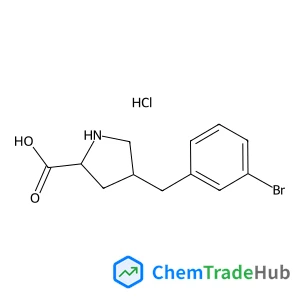
(2S,4R)-4-(3-Bromobenzyl)pyrrolidine-2-carboxylic acid hydrochloride
CAS番号:
1049734-10-2
分子式:
C12H15BrClNO2
おすすめサプライヤー



免責事項
このページに表示される学術雑誌情報は、参考および研究目的のみを目的としています。当社は雑誌出版社とは提携しておらず、投稿の取り扱いも行っておりません。出版に関するお問い合わせは、各雑誌出版社に直接ご連絡ください。
表示されている情報に誤りがある場合は、support@chemtradehub.com までご連絡ください。迅速に確認し、対応いたします。