












Energetics and transition-state dynamics of the F + HOCH3 → HF + OCH3 reaction
文献情報
出版日
2016-10-21
DOI
10.1039/C6CP06409D
インパクトファクター
3.676
著者
Amelia W. Ray, Jay Agarwal, Ben B. Shen, H. F. Schaefer, III, Robert E. Continetti
原文を見る
要旨
The F + HOCH3 → HF + OCH3 reaction is a system with 15 internal degrees of freedom that can provide a benchmark for the development of theory for increasingly complex chemical reactions. The dynamics of this reaction were studied by photoelectron–photofragment coincidence (PPC) spectroscopy carried out on the F−(HOCH3) anion, aided by a computational study of both the anion and neutral potential energy surfaces, with energies extrapolated to the CCSDT(Q)/CBS level of theory. Photodetachment at 4.80 eV accesses both the reactant and product channels for this reaction. In the product channel (HF + OCH3 + e−) of the neutral potential energy surface, vibrationally excited HF products in addition to the stable product-channel hydrogen-bonded complex (FH–OCH3) are observed in the PPC and photoelectron spectra. In addition, experimental evidence is observed for the reactant-channel van der Waals complex (F–HOCH3), in good agreement with the theoretical predictions. The relative stability of these long-lived complexes was probed by reducing the ion beam energy, increasing the product time-of-flight, indicating lifetimes on the microsecond timescale for the reactant- and product-channel complexes as well as providing evidence for long-lived vibrational Feshbach resonances associated with the HF(v > 0) + OCH3 product states. This system will provide a model for extending full-dimensionality quantum dynamics to larger numbers of degrees of freedom.
関連文献
Theoretical design of a series of 2D TM–C3N4 and TM–C3N4@graphene (TM = V, Nb and Ta) nanostructures with highly efficient catalytic activity for the hydrogen evolution reaction
Ting Wang, Guangtao Yu, Jingwei Liu, Xuri Huang, Wei Chen
2018-12-21
Paper
DOI: 10.1039/C8CP06011H
Theoretical description of the thermomolecular orientation of anisotropic colloids
2018-12-19
Paper
DOI: 10.1039/C8CP06780E
De novo prediction of cross-effect efficiency for magic angle spinning dynamic nuclear polarization
Anne-Laure Barra, Johan van Tol, Sabine Hediger, Daniel Lee, Gaël De Paëpe
2019-01-03
Paper
DOI: 10.1039/C8CP06819D
Uncovering the role of the stationary points in the dynamics of the F− + CH3I reaction
Balázs Olasz, Gábor Czakó
2018-12-21
Paper
DOI: 10.1039/C8CP06207B
Electrochemical tuning of Pd100−xAux bimetallics towards ethanol oxidation: effect of an induced d-band center shift and oxophilicity
Sreejith P. Babu, Perumal Elumalai
2019-03-21
Paper
DOI: 10.1039/C8CP07500J
Theoretical insights into the formation and stability of radical oxygen species in cryptochromes
Padmabati Mondal, Miquel Huix-Rotllant
2019-04-02
Paper
DOI: 10.1039/C9CP00782B
Plasmon-mediated chemical transformation from alkane to alkene on a silver nanoparticle array under 532 nm excitation
Yuki Takeuchi, Tetsuya Fujita, Nobuyuki Takeyasu
2019-03-11
Paper
DOI: 10.1039/C9CP00129H
Ultrafast photoinduced flavin dynamics in the unusual active site of the tRNA methyltransferase TrmFO
Nadia Dozova, Fabien Lacombat, Charles Bou-Nader, Djemel Hamdane, Pascal Plaza
2019-04-01
Paper
DOI: 10.1039/C8CP06072J
Ionic structure and transport properties of KF–NaF–AlF3 fused salt: a molecular dynamics study
Xiaojun Lv, Zexun Han, Hengxing Zhang, Qingsheng Liu, Jiangan Chen, Liangxing Jiang
2019-03-06
Paper
DOI: 10.1039/C9CP00377K
Electric field control of resistive switching and magnetization in epitaxial LaBaCo2O5+δ thin films
Jamal Shaibo, Rui Yang, Zhe Wang, He-Ming Huang, Jue Xiong, Xin Guo
2019-04-01
Paper
DOI: 10.1039/C9CP00596J
こちらもおすすめ
化合物よくある質問
6- bromo-1-cyclopropyl-1H-benzimidazoleの市場動向や研究トレンドはどうですか?
6- bromo-1-cyclopropyl-1H-benzimidazoleは、抗炎症、抗ウイルス作用を持つことが報告されており、新薬開発の研究対象として注目...
1416713-53-56-Bromo-1-cyclopropy...
化合物よくある質問
環氧プロpanol-d5を取り扱う際の実験室安全事項は何ですか?
取り扱う際には、防護眼鏡と手袋を使用し、ドラフトチャンバー内で操作することを推奨します。漏洩時には適切な手順で処理し、安全データシートを常に参照してください。
1246819-20-4Glycidol-d5
化合物よくある質問
2,2’-ジメチル-3,3’-ビピリジンはどのように合成されますか?
2,2’-ジメチル-3,3’-ビピリジンは、ピリジンと2-メチルアクリルアミドを有機合成反応で合成します。この反応では、ピリジンと2-メチルアクリルアミドを含有...
86156-55-02,2’-Dimethyl-3,3’-b...
化合物よくある質問
6-甲基ピリジン-2-ボリック酸の主な用途は何ですか?
6-甲基ピリジン-2-ボリック酸は、合成化学、医薬品合成、以及研究用途などに広く使用され、特に組換えDNA技術や分子生物学の研究において重要な役割を果たします。
372963-50-3(6-Methyl-2-pyridiny...
化合物よくある質問
(R)-3-(1-甲基-2-氧環己基)プロpano酸メチルは安全ですか?
(R)-3-(1-甲基-2-氧環己基)プロpano酸メチルは一定の安全性がありますが、直接的な皮膚接触や吸入は避けるべきです。使用する際は適切な個々の安全データ...
94089-47-1methyl 3-[(1R)-1-met...
化合物よくある質問
ketorolacはどのように保存すればよいですか?
ketorolacは、密封して遮光容器に保管し、直射日光や高温を避けて保存してください。温度は常温で保存し、湿度をなるべく低く保つことが推奨されます。
74103-06-3rac Ketorolac
化合物よくある質問
L-2,3-二氨基丙酸二盐酸盐を取り扱う際の実験室安全事項は何ですか?
L-2,3-二氨基丙酸二盐酸盐は腐食性が強く、皮膚や粘膜に刺激を与える可能性があります。取り扱う際は、防塵マスク、ゴーグル、手袋を使用し、適切な排気設備を使用し...
19777-68-5(S)-2,3-Diaminopropa...
化合物よくある質問
2-(4-溴ピリジン-2-基)乙腈の物理化学的性質は何ですか?
2-(4-溴ピリジン-2-基)乙腈のCAS番号は312325-73-8です。主に結晶形態で存在し、分子量は159.01 g/molです。この化合物は水に溶けやす...
312325-73-8(4-Bromo-2-pyridinyl...
化合物よくある質問
3-フローロ-[1,1-ベンジレン]-3,4-ジカルボン酸を取り扱う際の実験室安全事項は何ですか?
この化合物は毒性は低いですが、直接的な接触や吸入に注意が必要です。PPE(個人防護具)を着用し、ドラフトチャンバーを使用して操作することを推奨します。また、漏洩...
1261915-32-53'-Fluoro-[1,1'-biph...
化合物よくある質問
3-(1-氧代-1,3-二氢-2H-2-异吲哚)丙酸の主な用途は何ですか?
3-(1-氧代-1,3-二氢-2H-2-异吲哚)丙酸は、薬理学研究や医薬品製造において広く用いられる化合物です。また、工業的な用途でも一部の化学反応の触媒や助剤...
83747-30-23-(1-Oxo-1,3-dihydro...
掲載誌
Physical Chemistry Chemical Physics

CiteScore:
5.5
自己引用率:
10.3%
年間論文数:
3036
Physical Chemistry Chemical Physics (PCCP) is an international journal co-owned by 19 physical chemistry and physics societies from around the world. This journal publishes original, cutting-edge research in physical chemistry, chemical physics and biophysical chemistry. To be suitable for publication in PCCP, articles must include significant innovation and/or insight into physical chemistry; this is the most important criterion that reviewers and Editors will judge against when evaluating submissions. The journal has a broad scope and welcomes contributions spanning experiment, theory, computation and data science. Topical coverage includes spectroscopy, dynamics, kinetics, statistical mechanics, thermodynamics, electrochemistry, catalysis, surface science, quantum mechanics, quantum computing and machine learning. Interdisciplinary research areas such as polymers and soft matter, materials, nanoscience, energy, surfaces/interfaces, and biophysical chemistry are welcomed if they demonstrate significant innovation and/or insight into physical chemistry. Joined experimental/theoretical studies are particularly appreciated when complementary and based on up-to-date approaches.
おすすめ化合物
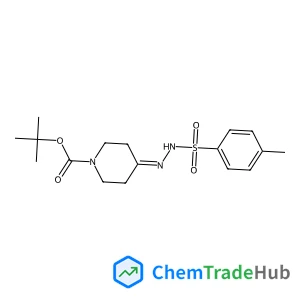
tert-Butyl 4-(2-(p-Tolylsulfonyl)hydrazono)piperidine-1-carboxylate
CAS番号:
1046478-89-0
分子式:
C17H25N3O4S
![[4-(Isobutyrylamino)phenyl]boronic acid structure](https://static.chemtradehub.com/structs/874/874219-50-8-6ab5.webp "[4-(Isobutyrylamino)phenyl]boronic acid structure")
おすすめサプライヤー





免責事項
このページに表示される学術雑誌情報は、参考および研究目的のみを目的としています。当社は雑誌出版社とは提携しておらず、投稿の取り扱いも行っておりません。出版に関するお問い合わせは、各雑誌出版社に直接ご連絡ください。
表示されている情報に誤りがある場合は、support@chemtradehub.com までご連絡ください。迅速に確認し、対応いたします。