


Theoretical insights into the formation and stability of radical oxygen species in cryptochromes
文献情報
出版日
2019-04-02
DOI
10.1039/C9CP00782B
インパクトファクター
3.676
著者
Padmabati Mondal, Miquel Huix-Rotllant
原文を見る
要旨
Cryptochrome is a blue-light absorbing flavoprotein containing a flavin adenine dinucleotide (FAD) cofactor. FAD can accept up to two electrons and two protons, which can be subsequently transferred to substrates present in the binding pocket. It is well known that reactive oxygen species are generated when triplet molecular oxygen is present in the cavity. Here, we investigate the formation and stability of radical oxygen species in Drosophila melanogaster cryptochrome using molecular dynamics simulations and electronic structure calculations. We find that the superoxide and hydroxyl radicals in doublet spin states are stabilized in the pocket due to the attractive electrostatic interactions and hydrogen bonding with partially reduced FAD. These findings validate from a molecular dynamics perspective that [FAD˙−–HO2˙] or [FADH˙–O2˙−] can be alternative radical pairs at the origin of magnetoreception.
おすすめジャーナル

Journal of Computer-Aided Molecular Design

Applied Composite Materials

Bio-Medical Materials and Engineering

Construction and Building Materials

Current Medicinal Chemistry

Main Group Metal Chemistry

Cement and Concrete Composites

Computational Materials Science

Advances in Cement Research

Heterocyclic Communications
関連文献
Towards technomimetic spoked wheels: dynamic hexakis-heteroleptic coordination at a hexakis-terpyridine scaffold
Michael Schmittel, Prasenjit Mal
2008-01-09
Communication
DOI: 10.1039/B718185J
Biomimetic trifunctional organocatalyst showing a great acceleration for the transesterification between vinyl ester and alcohol
Tadashi Ema, Daisuke Tanida, Tatsuya Matsukawa, Takashi Sakai
2008-01-22
Communication
DOI: 10.1039/B718763G
A phase separable polycarbonate polymerization catalyst
Chayanant Hongfa, Jianhua Tian, Jeremy Andreatta, Donald J. Darensbourg, David E. Bergbreiter
2007-12-17
Communication
DOI: 10.1039/B711861A
Crystal structure of tricyclo-DNA: an unusual compensatory change of two adjacent backbone torsion angles
Pradeep S. Pallan, Damian Ittig, Annie Héroux, Zdzislaw Wawrzak, Christian J. Leumann, Martin Egli
2007-12-21
Communication
DOI: 10.1039/B716390H
Amorphous oxide as a novel efficient catalyst for direct selective oxidation of methanol to dimethoxymethane
Sébastien Royer, Xavier Sécordel, Markus Brandhorst, Franck Dumeignil, Sylvain Cristol, Christophe Dujardin, Mickaël Capron, Edmond Payen, Jean-Luc Dubois
2007-12-20
Communication
DOI: 10.1039/B714260A
Capturing a [c2]daisy chain using the threading-followed-by-swelling approach
Shau-Hua Ueng, Sheng-Yao Hsueh, Chien-Chen Lai, Yi-Hung Liu, Shie-Ming Peng, Sheng-Hsien Chiu
2007-12-11
Communication
DOI: 10.1039/B716331B
Controlled synthesis of luminescent polymers using a bis-dithiobenzoate RAFT agent
Ming Chen, Kenneth P. Ghiggino, Ezio Rizzardo, San H. Thang, Gerard J. Wilson
2008-01-03
Communication
DOI: 10.1039/B716471H
Fabrication of zeolite-4A membranes on a catalyst particle level
Yijun Zhong, Mengfei Luo, Yunlong Xie, Weidong Zhu
2006-06-05
Communication
DOI: 10.1039/B603128E
Notable norbornene (NBE) incorporation in ethylene–NBE copolymerization catalysed by nonbridged half-titanocenes: better correlation between NBE incorporation and coordination energy
Kotohiro Nomura, Wei Wang, Michiya Fujiki, Jingyu Liu
2006-05-18
Communication
DOI: 10.1039/B605005K
こちらもおすすめ
化合物よくある質問
6- bromo-1-cyclopropyl-1H-benzimidazoleの市場動向や研究トレンドはどうですか?
6- bromo-1-cyclopropyl-1H-benzimidazoleは、抗炎症、抗ウイルス作用を持つことが報告されており、新薬開発の研究対象として注目...
1416713-53-56-Bromo-1-cyclopropy...
化合物よくある質問
環氧プロpanol-d5を取り扱う際の実験室安全事項は何ですか?
取り扱う際には、防護眼鏡と手袋を使用し、ドラフトチャンバー内で操作することを推奨します。漏洩時には適切な手順で処理し、安全データシートを常に参照してください。
1246819-20-4Glycidol-d5
化合物よくある質問
2,2’-ジメチル-3,3’-ビピリジンはどのように合成されますか?
2,2’-ジメチル-3,3’-ビピリジンは、ピリジンと2-メチルアクリルアミドを有機合成反応で合成します。この反応では、ピリジンと2-メチルアクリルアミドを含有...
86156-55-02,2’-Dimethyl-3,3’-b...
化合物よくある質問
6-甲基ピリジン-2-ボリック酸の主な用途は何ですか?
6-甲基ピリジン-2-ボリック酸は、合成化学、医薬品合成、以及研究用途などに広く使用され、特に組換えDNA技術や分子生物学の研究において重要な役割を果たします。
372963-50-3(6-Methyl-2-pyridiny...
化合物よくある質問
(R)-3-(1-甲基-2-氧環己基)プロpano酸メチルは安全ですか?
(R)-3-(1-甲基-2-氧環己基)プロpano酸メチルは一定の安全性がありますが、直接的な皮膚接触や吸入は避けるべきです。使用する際は適切な個々の安全データ...
94089-47-1methyl 3-[(1R)-1-met...
化合物よくある質問
ketorolacはどのように保存すればよいですか?
ketorolacは、密封して遮光容器に保管し、直射日光や高温を避けて保存してください。温度は常温で保存し、湿度をなるべく低く保つことが推奨されます。
74103-06-3rac Ketorolac
化合物よくある質問
L-2,3-二氨基丙酸二盐酸盐を取り扱う際の実験室安全事項は何ですか?
L-2,3-二氨基丙酸二盐酸盐は腐食性が強く、皮膚や粘膜に刺激を与える可能性があります。取り扱う際は、防塵マスク、ゴーグル、手袋を使用し、適切な排気設備を使用し...
19777-68-5(S)-2,3-Diaminopropa...
化合物よくある質問
2-(4-溴ピリジン-2-基)乙腈の物理化学的性質は何ですか?
2-(4-溴ピリジン-2-基)乙腈のCAS番号は312325-73-8です。主に結晶形態で存在し、分子量は159.01 g/molです。この化合物は水に溶けやす...
312325-73-8(4-Bromo-2-pyridinyl...
化合物よくある質問
3-フローロ-[1,1-ベンジレン]-3,4-ジカルボン酸を取り扱う際の実験室安全事項は何ですか?
この化合物は毒性は低いですが、直接的な接触や吸入に注意が必要です。PPE(個人防護具)を着用し、ドラフトチャンバーを使用して操作することを推奨します。また、漏洩...
1261915-32-53'-Fluoro-[1,1'-biph...
化合物よくある質問
3-(1-氧代-1,3-二氢-2H-2-异吲哚)丙酸の主な用途は何ですか?
3-(1-氧代-1,3-二氢-2H-2-异吲哚)丙酸は、薬理学研究や医薬品製造において広く用いられる化合物です。また、工業的な用途でも一部の化学反応の触媒や助剤...
83747-30-23-(1-Oxo-1,3-dihydro...
掲載誌
Physical Chemistry Chemical Physics

CiteScore:
5.5
自己引用率:
10.3%
年間論文数:
3036
Physical Chemistry Chemical Physics (PCCP) is an international journal co-owned by 19 physical chemistry and physics societies from around the world. This journal publishes original, cutting-edge research in physical chemistry, chemical physics and biophysical chemistry. To be suitable for publication in PCCP, articles must include significant innovation and/or insight into physical chemistry; this is the most important criterion that reviewers and Editors will judge against when evaluating submissions. The journal has a broad scope and welcomes contributions spanning experiment, theory, computation and data science. Topical coverage includes spectroscopy, dynamics, kinetics, statistical mechanics, thermodynamics, electrochemistry, catalysis, surface science, quantum mechanics, quantum computing and machine learning. Interdisciplinary research areas such as polymers and soft matter, materials, nanoscience, energy, surfaces/interfaces, and biophysical chemistry are welcomed if they demonstrate significant innovation and/or insight into physical chemistry. Joined experimental/theoretical studies are particularly appreciated when complementary and based on up-to-date approaches.
おすすめ化合物
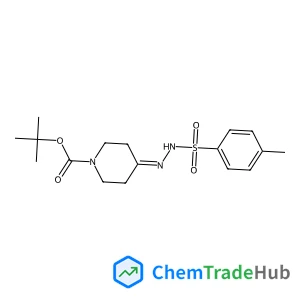
tert-Butyl 4-(2-(p-Tolylsulfonyl)hydrazono)piperidine-1-carboxylate
CAS番号:
1046478-89-0
分子式:
C17H25N3O4S
![[4-(Isobutyrylamino)phenyl]boronic acid structure](https://static.chemtradehub.com/structs/874/874219-50-8-6ab5.webp "[4-(Isobutyrylamino)phenyl]boronic acid structure")
おすすめサプライヤー






免責事項
このページに表示される学術雑誌情報は、参考および研究目的のみを目的としています。当社は雑誌出版社とは提携しておらず、投稿の取り扱いも行っておりません。出版に関するお問い合わせは、各雑誌出版社に直接ご連絡ください。
表示されている情報に誤りがある場合は、support@chemtradehub.com までご連絡ください。迅速に確認し、対応いたします。