












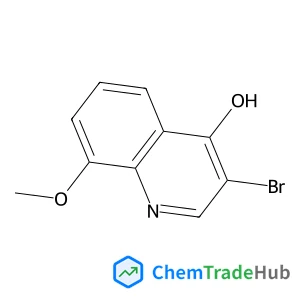
A new insight into π–π stacking involving remarkable orbital interactions
文献情報
出版日
2016-08-18
DOI
10.1039/C6CP05485D
インパクトファクター
3.676
著者
Rundong Zhao, Rui-Qin Zhang
原文を見る
要旨
For more than half a century, the phenomenon of π–π stacking has attracted much attention in several research fronts including materials science, chemical synthesis, and even drug design. Despite intense theoretical and experimental exploration, no unified description of the factors contributing to π–π stacking interactions and their weak bonding process has been proposed. In this work, based on calculations of the simplest prototype of π–π stacking, namely the benzene sandwich dimer (together with benzene–phenol, toluene and benzonitrile) using the density functional theory with dispersion correction, previously rarely studied intermolecular orbital interaction is discussed in detail and shown to involve considerable hybridizations of some of the orbitals which make a large contribution to the total interaction energy. We now propose a unified model for the often nebulous π–π stacking process and its analogs: firstly when the two monomers are too far apart, the dispersion effect will play a dominant role in bringing them together, but when they are too close, Pauli repulsion will force them apart. Secondly, at the equilibrium distance, electrostatic interaction, Pauli repulsion, dispersion and intermolecular orbital interaction are all pronounced, with part of the molecular orbitals of the two monomers interacting with each other to form a weak intermolecular bond.
関連文献
Click chemistry synthesis, stereocomplex formation, and enhanced thermal properties of well-defined poly(l-lactic acid)-b-poly(d-lactic acid) stereo diblock copolymers
Lili Han, Qing Xie, Jianna Bao, Guorong Shan, Yongzhong Bao, Pengju Pan
2016-12-21
Paper
DOI: 10.1039/C6PY01989G
Nano-structured magneto-responsive membranes from block copolymers and iron oxide nanoparticles
Mona Semsarilar, Rodrigo Fernández-Pacheco, Reyes Mallada, Isabel M. Coelhoso, Carla A. M. Portugal, João G. Crespo, André Deratani, Damien Quemener
2016-11-28
Paper
DOI: 10.1039/C6PY01870J
Post-polymerization modification of the side chain in optically active polymers by thiol–ene reaction
Naoya Kanbayashi, Sou Miyamoto, Yuki Ishido, Taka-aki Okamura, Kiyotaka Onitsuka
2016-12-06
Paper
DOI: 10.1039/C6PY01946C
(−)-Riboflavin (vitamin B2) and flavin mononucleotide as visible light photo initiators in the thiol–ene polymerisation of PEG-based hydrogels
G. Kwandou, P. T. Spicer
2016-12-20
Communication
DOI: 10.1039/C6PY02034H
こちらもおすすめ
化合物よくある質問
2,3-スチオエポキシマドルを取り扱う際の実験室安全事項は何ですか?
取り扱いにはPPE(プロテクティブ・パーソナル・エイド)が必要で、防ぐ手袋と保護眼鏡を着用してください。ドラフトチャンバーの使用を推奨します。漏洩した場合は、適...
4267-80-52,3-Thioepoxy Madol
53981-25-22-Amino-6-fluorophen...
化合物よくある質問
BOC-S-3-アミニ-4-(4-メチオキシベンチル)-ブタン酸の代替品はありますか?
この化合物の代替品としては、BOC保護基を有さないアミノ酸やその他の保護基化合物が考えられます。また、メチオキシ基を有しない他の芳香族アミノ酸も代替品として挙げ...
126800-59-7(3S)-4-(4-Methoxyphe...
化合物よくある質問
Methyl 2-(chloromethyl)-3-nitrobenzoate(1218910-61-2)の代替品はありますか?
Methyl 2-(chloromethyl)-3-nitrobenzoate(1218910-61-2)の代替品としては、化学組成を変えることで効果を達成する...
1218910-61-2Methyl 2-(chlorometh...
化合物よくある質問
(2R)-2-アミノ-N-ベンジル-3-ヒドロキシプロパナミドを含む廃棄物はどのように処理すべきですか?
(2R)-2-アミノ-N-ベンジル-3-ヒドロキシプロパナミドを含む廃棄物は、適切な廃棄物管理ガイドラインに基づき処理する必要があります。まず、廃棄物を適切に収...
175481-39-7(2R)-2-amino-N-benzy...
化合物よくある質問
6,7-二氢-咪唑並[1,2-a]ピリドイン-8(5h)-酮はどのように合成されますか?
6,7-二氢-咪唑並[1,2-a]ピリドイン-8(5h)-酮は、2-ブロモフェニルアセトインとリン酸ハロゲン化物を反応させることで合成できます。この反応は高温で...
457949-09-66,7-Dihydroimidazo[1...
化合物よくある質問
エチル(3R)-3-ピロリジニル酢酸水和塩とは何ですか?
エチル(3R)-3-ピロリジニル酢酸水和塩は、CAS番号1332459-32-1の化合物で、(R)-乙基2-(ピロリジン-3-基)酢酸塩水和塩と呼ばれます。この...
1332459-32-1Ethyl (3R)-3-pyrroli...
化合物よくある質問
(2S)-{[(2-メチルエチルオキシ]カルボニル}アミノ)[2-(トリアフルオロメチルフェニル]エチカシック酸の物理化学的性質は何ですか?
(2S)-{[(2-メチルエチルオキシ]カルボニル}アミノ)[2-(トリアフルオロメチルフェニル]エチカシック酸のCAS番号は1203454-45-8です。この...
1203454-45-8(2S)-({[(2-Methyl-2-...
化合物よくある質問
2-ブロモ-1-(2-メチル-2-プロパニル)-4-ニトロベンゼンはどのように保存すればよいですか?
2-ブロモ-1-(2-メチル-2-プロパニル)-4-ニトロベンゼンは、直射日光を避けて暗所で、室温(約15℃〜25℃)、乾燥した場所に保存する必要があります。ま...
6310-17-42-Bromo-1-(2-methyl-...
化合物よくある質問
1-[(4-硝基フェニル)スルホニル]-1H-1,2,4-三唑の市場動向や研究トレンドはどうですか?
市場動向としては、1-[(4-硝基フェニル)スルホニル]-1H-1,2,4-三唑は主に農業用除草剤や合成化学製品の原料として利用されています。研究トレンドとして...
57777-84-11-[(4-Nitrophenyl)su...
掲載誌
Physical Chemistry Chemical Physics

CiteScore:
5.5
自己引用率:
10.3%
年間論文数:
3036
Physical Chemistry Chemical Physics (PCCP) is an international journal co-owned by 19 physical chemistry and physics societies from around the world. This journal publishes original, cutting-edge research in physical chemistry, chemical physics and biophysical chemistry. To be suitable for publication in PCCP, articles must include significant innovation and/or insight into physical chemistry; this is the most important criterion that reviewers and Editors will judge against when evaluating submissions. The journal has a broad scope and welcomes contributions spanning experiment, theory, computation and data science. Topical coverage includes spectroscopy, dynamics, kinetics, statistical mechanics, thermodynamics, electrochemistry, catalysis, surface science, quantum mechanics, quantum computing and machine learning. Interdisciplinary research areas such as polymers and soft matter, materials, nanoscience, energy, surfaces/interfaces, and biophysical chemistry are welcomed if they demonstrate significant innovation and/or insight into physical chemistry. Joined experimental/theoretical studies are particularly appreciated when complementary and based on up-to-date approaches.
おすすめ化合物
![(R)-N-[(S)-1-[2-(Diphenylphosphino)phenyl]ethyl]-2-methylpropane-2-sulfinamide structure](https://static.chemtradehub.com/structs/159/1595319-98-4-33e7.webp "(R)-N-[(S)-1-[2-(Diphenylphosphino)phenyl]ethyl]-2-methylpropane-2-sulfinamide structure")
![5,10-Dihydroindeno[2,1-a]indene structure](https://static.chemtradehub.com/structs/654/6543-29-9-71ca.webp "5,10-Dihydroindeno[2,1-a]indene structure")
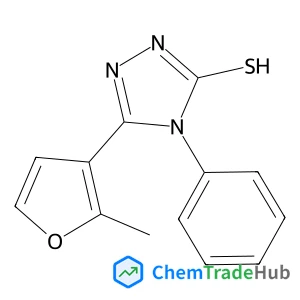
5-(2-Methyl-3-furyl)-4-phenyl-2,4-dihydro-3H-1,2,4-triazole-3-thione
CAS番号:
346464-59-3
分子式:
C13H11N3OS
![1-[4-(4-Methyl-1H-imidazol-1-yl)phenyl]ethanone structure](https://static.chemtradehub.com/structs/142/142161-53-3-7f55.webp "1-[4-(4-Methyl-1H-imidazol-1-yl)phenyl]ethanone structure")
おすすめサプライヤー



免責事項
このページに表示される学術雑誌情報は、参考および研究目的のみを目的としています。当社は雑誌出版社とは提携しておらず、投稿の取り扱いも行っておりません。出版に関するお問い合わせは、各雑誌出版社に直接ご連絡ください。
表示されている情報に誤りがある場合は、support@chemtradehub.com までご連絡ください。迅速に確認し、対応いたします。