












Structural influence of proteins upon adsorption to MoS2 nanomaterials: comparison of MoS2 force field parameters
文献情報
出版日
2016-12-15
DOI
10.1039/C6CP05260F
インパクトファクター
3.676
著者
Zonglin Gu, Phil De Luna, Zaixing Yang
原文を見る
要旨
Molybdenum disulfide (MoS2) has recently emerged as a promising nanomaterial in a wide range of applications due to its unique and impressive properties. For example, MoS2 has gained attention in the biomedical field because of its ability to act as an antibacterial and anticancer agent. However, the potential influence of this exciting nanomaterial on biomolecules is yet to be extensively studied. Molecular dynamics (MD) simulations are invaluable tools in the examination of protein interactions with nanomaterials such as MoS2. Previous protein MD studies have employed MoS2 force field parameters which were developed to accurately model bulk crystal structures and thermal heat transport but may not necessarily be amendable to its properties at the interface with biomolecules. By adopting a newly developed MoS2 force field, which was designed to better capture its interaction with water and proteins, we have examined the changes in protein structures between the original and refitted MoS2 force field parameters of three representative proteins, polyalanine (α-helix), YAP65 WW-domains (β-sheet), and HP35 (globular protein) when adsorbed onto MoS2 nanomaterials. We find that the original force field, with much larger van der Waals (vdW) contributions, resulted in more dramatic protein structural damage than the refitted parameters. Importantly, some denaturation of the protein tertiary structure and the local secondary structure persisted with the refitted force field albeit overall less severe MoS2 denaturation capacity was found. This work suggests that the denaturation ability of MoS2 to the protein structure is not as dire as previously reported and provides noteworthy findings on the dynamic interactions of proteins with this emergent material.
関連文献
How photon pump fluence changes the charge carrier relaxation mechanism in an organic–inorganic hybrid lead triiodide perovskite
Piotr Piatkowski, Boiko Cohen, Samrana Kazim, Shahzada Ahmad, Abderrazzak Douhal
2016-06-10
Paper
DOI: 10.1039/C6CP02682F
Theory of solid effect and cross effect dynamic nuclear polarization with half-integer high-spin metal polarizing agents in rotating solids
2016-08-12
Paper
DOI: 10.1039/C6CP04621E
Thermoelectric properties of fullerene-based junctions: a first-principles study
Rui-Ning Wang, Guo-Yi Dong, Shu-Fang Wang, Guang-Sheng Fu, Jiang-Long Wang
2016-09-08
Paper
DOI: 10.1039/C6CP04339A
Charge-transfer and isomerization reactions of trans-4-(N-arylamino)stilbenes
Hsuan-Hsiao Yao, Hsu-Hsiang Cheng, Chao-Han Cheng, Cheng-Kai Lin, Jye-Shane Yang, I-Chia Chen
2016-09-21
Paper
DOI: 10.1039/C6CP05514A
Sulfur ion concentration dependent morphological evolution of CdS thin films and its subsequent effect on photo-electrochemical performance
Bhavesh Sinha, Ganesh Agawane, Sharad Vanalakar, In young Kim, Jin Young Kim, Sampat S. Kale, Pramod Patil, Jin Hyeok Kim
2016-09-09
Paper
DOI: 10.1039/C6CP00903D
Photochemistry of Zr-based MOFs: ligand-to-cluster charge transfer, energy transfer and excimer formation, what else is there?‡
Mario Gutierrez, Boiko Cohen, Félix Sánchez, Abderrazzak Douhal
2016-08-09
Paper
DOI: 10.1039/C6CP03791G
Temperature dependence of the reaction of anti-CH3CHOO with water vapor
Chun-Hung Chang, Kaito Takahashi
2016-09-09
Paper
DOI: 10.1039/C6CP05171E
Effect of caffeic acid adsorption in controlling the morphology of gold nanoparticles: role of surface coverage and functional groups
Kyeounghak Kim, Jeong Woo Han
2016-08-15
Paper
DOI: 10.1039/C6CP04122A
Direct photoisomerization of CH2I2vs. CHBr3 in the gas phase: a joint 50 fs experimental and multireference resonance-theoretical study
Veniamin A. Borin, Sergey M. Matveev, Darya S. Budkina, Patrick Z. El-Khoury, Alexander N. Tarnovsky
2016-09-20
Paper
DOI: 10.1039/C6CP05129D
Benzoannelated aza-, oxa- and azaoxa[8]circulenes as promising blue organic emitters
Nataliya N. Karaush, Valentina A. Minaeva, Alexandr N. Sinelnikov, Stephan K. Pedersen, Michael Pittelkow, Hans Ågren
2016-09-12
Paper
DOI: 10.1039/C6CP03060B
こちらもおすすめ
化合物よくある質問
4'-ブロモビフェニル-3-メトークシーディ.ActionBarはどのように保存すればよいですか?
4'-ブロモビフェニル-3-メトークシーディ.ActionBarは、冷暗所で、直射日光を避け、密栓の容器に保存し、遠隔場所に保管してください。温度は常温(0〜2...
149506-25-24'-Bromo-biphenyl-3-...
2947-60-6(3-Methylphenyl)acet...
化合物よくある質問
2-異丙基フェニルヒドラジン塩酸塩とは何ですか?
2-異丙基フェニルヒドラジン塩酸塩は、CAS番号58928-82-8を有する化合物で、構造式はC11H14N2HClです。これは塩基性化合物であり、水に溶けやす...
58928-82-8(2-Isopropylphenyl)h...
化合物よくある質問
5-(4-クロロフェニル)-4H-1,2,4-三氮唑-3-アミンを取り扱う際の実験室安全事項は何ですか?
5-(4-クロロフェニル)-4H-1,2,4-三氮唑-3-アミンは取り扱いに注意が必要です。PPEとして防塵マスク、ゴーグル、手袋を使用し、ドラフトチャンバーを...
98554-00-85-(4-Chlorophenyl)-1...
化合物よくある質問
去甲基雷贝拉唑硫醚はどのように合成されますか?
去甲基雷贝拉唑硫醚は、ベンジミダゾール硫化物と3-メチル-4-ピリジノールの反応によって合成されます。具体的には、2-チオキシドベンジミダゾールと3-メチル-4...
117976-91-73-({2-[(1H-Benzimida...
化合物よくある質問
2-ブロモ-5-フロロ-N-(2-フェノールメチル)ベンゼンウレアは安全ですか?
2-ブロモ-5-フロロ-N-(2-フェノールメチル)ベンゼンウレアは、毒性や刺激性の実験データに基づき、適切な取扱いと防護措置を講じることで安全に使用できます。...
923722-86-52-Bromo-5-fluoro-N-(...
化合物よくある質問
対甲苯磺酸酯-四聚乙二醇-四氢吡喃醚の物理化学的性質は何ですか?
対甲苯磺酸酯-四聚乙二醇-四氢吡喃醚のCAS番号は86259-89-4です。この化合物は無色の液体で、分子量は約724.8です。高濃度では溶血性が報告されており...
86259-89-42-(2-{2-[2-(Tetrahyd...
化合物よくある質問
2-(3-(二氟甲基)-4-氟苯基)-4,4,5,5-四甲基-1,3,2-二噁硼戊環はどのように保存すればよいですか?
2-(3-(二氟甲基)-4-氟苯基)-4,4,5,5-四甲基-1,3,2-二噁硼戊環は、室温で暗い場所に保管し、直射日光から遠ざけ、容器は密閉状態で保存してくだ...
445303-65-12-[3-(difluoromethyl...
化合物よくある質問
6-アミノ-5-クロロ-2-シクロプロピルピリミジンカルボン酸の代替品はありますか?
この化合物の代替品には、ピロリミジン酸やその類似物、またピロリミジンカルボン酸の他の異性体があります。これらの代替品は、特定の化学反応や目的に応じて選択すること...
858956-08-86-Amino-5-chloro-2-c...
化合物よくある質問
5-クロロベンゾ[1,3]二オキセイン-4-アミンに適用される法規ガイドラインは何ですか?
5-クロロベンゾ[1,3]二オキセイン-4-アミンはCAS番号379228-45-2に該当します。この化合物はGHS分類でH314(接触により急性毒性がある)と...
379228-45-25-Chloro-1,3-benzodi...
掲載誌
Physical Chemistry Chemical Physics

CiteScore:
5.5
自己引用率:
10.3%
年間論文数:
3036
Physical Chemistry Chemical Physics (PCCP) is an international journal co-owned by 19 physical chemistry and physics societies from around the world. This journal publishes original, cutting-edge research in physical chemistry, chemical physics and biophysical chemistry. To be suitable for publication in PCCP, articles must include significant innovation and/or insight into physical chemistry; this is the most important criterion that reviewers and Editors will judge against when evaluating submissions. The journal has a broad scope and welcomes contributions spanning experiment, theory, computation and data science. Topical coverage includes spectroscopy, dynamics, kinetics, statistical mechanics, thermodynamics, electrochemistry, catalysis, surface science, quantum mechanics, quantum computing and machine learning. Interdisciplinary research areas such as polymers and soft matter, materials, nanoscience, energy, surfaces/interfaces, and biophysical chemistry are welcomed if they demonstrate significant innovation and/or insight into physical chemistry. Joined experimental/theoretical studies are particularly appreciated when complementary and based on up-to-date approaches.
おすすめ化合物
![(3S,4aS,8aS)-2-[(2R,3S)-3-Amino-2-hydroxy-4-phenylbutyl]-N-(2-methyl-2-propanyl)decahydro-3-isoquinolinecarboxamide structure](https://static.chemtradehub.com/structs/136/136522-17-3-4d77.webp "(3S,4aS,8aS)-2-[(2R,3S)-3-Amino-2-hydroxy-4-phenylbutyl]-N-(2-methyl-2-propanyl)decahydro-3-isoquinolinecarboxamide structure")
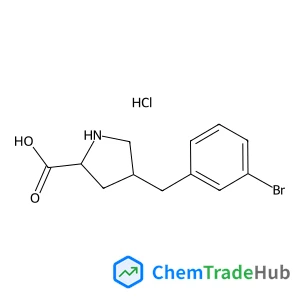
(2S,4R)-4-(3-Bromobenzyl)pyrrolidine-2-carboxylic acid hydrochloride
CAS番号:
1049734-10-2
分子式:
C12H15BrClNO2
おすすめサプライヤー





免責事項
このページに表示される学術雑誌情報は、参考および研究目的のみを目的としています。当社は雑誌出版社とは提携しておらず、投稿の取り扱いも行っておりません。出版に関するお問い合わせは、各雑誌出版社に直接ご連絡ください。
表示されている情報に誤りがある場合は、support@chemtradehub.com までご連絡ください。迅速に確認し、対応いたします。